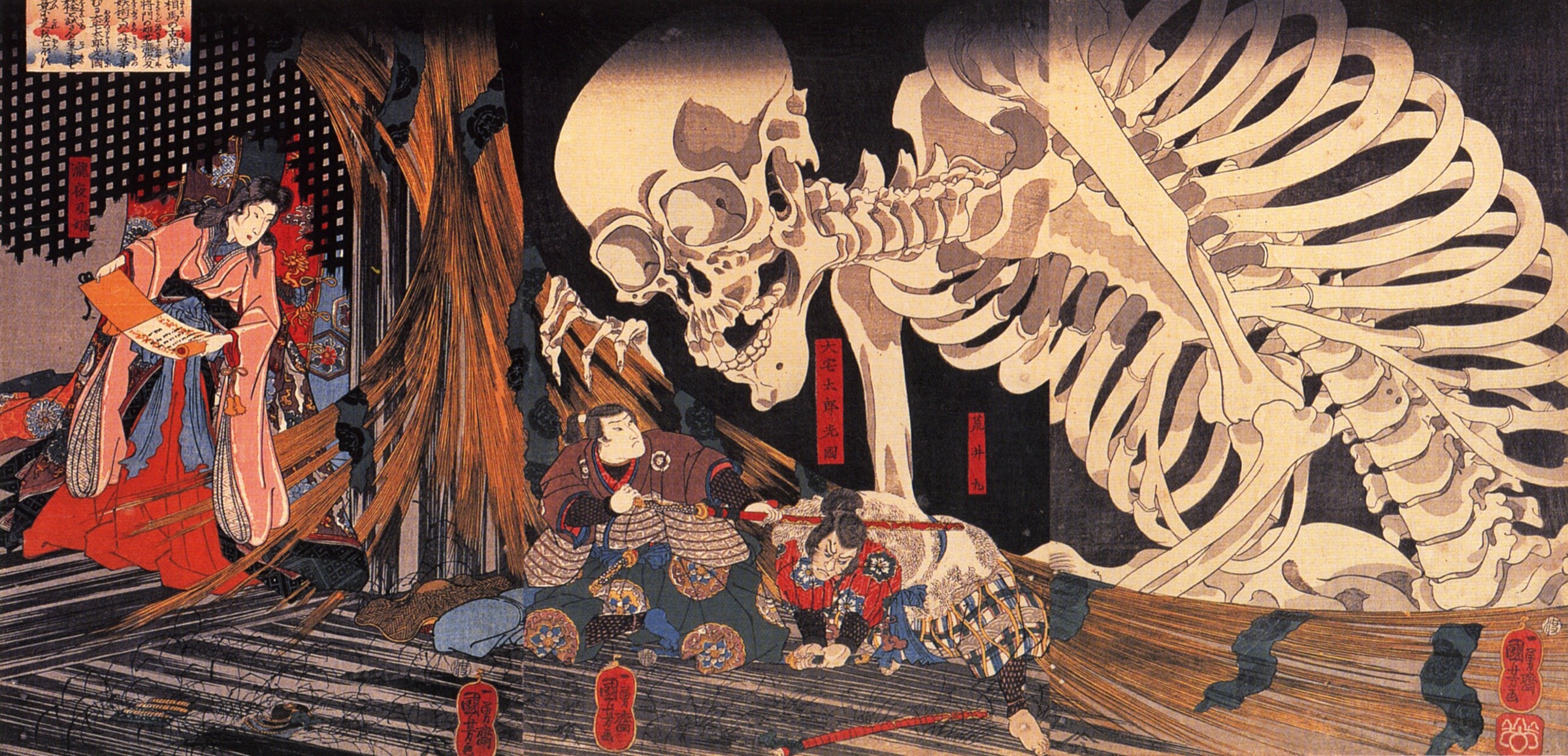
Gashadokuro
gashadokuro
Also known as: Odokuro、Giant Skeleton
A colossal skeleton of war-dead grudges, stalking at night to bite off heads.
- Era
- Heian Period
- Region
- Nationwide
- Type
- Undead
Overview
The gashadokuro (餓者髑髏, "starving-dead skull") is a colossal skeleton assembled from the combined resentment of those who died of hunger, disease, or on the battlefield and were left unburied. Fifteen times the height of a person, it stalks rural roads after midnight, seizing the living in its bony fist and biting off their heads.
Name and Sound
"Gasha-" may echo the clattering sound of its bones; "dokuro" means skull. Legend says that an approaching gashadokuro causes a ringing in the ears — the only warning before it strikes.
The Warrior Taira no Masakado
The most celebrated gashadokuro tradition links to the ill-fated rebel Taira no Masakado, whose 940 CE uprising against the imperial court was crushed. His daughter Takiyasha-hime, consumed by grief and vengeful sorcery, reportedly summoned Masakado's restless warriors back as a giant skeleton to terrorize the Kantō plain. This story is the subject of Utagawa Kuniyoshi's famous 1844 triptych, which defines the monster's visual form.
Hokusai's Skeleton
Katsushika Hokusai's "Soma no Furudaira" (ca. 1845) depicts a vast skeleton looming over two warriors — an image that, while not explicitly labeled "gashadokuro," became part of the creature's cultural DNA and influenced generations of artists.
Modern Influence
The gashadokuro archetype — enormous animated skeleton as undead enemy — recurs throughout global fantasy gaming and film, often cited directly as the inspiration for skeletal boss characters.
Sources
- 『Konjaku Gazu Zoku Hyakki』 Toriyama Sekien (1779)
Related Yokai
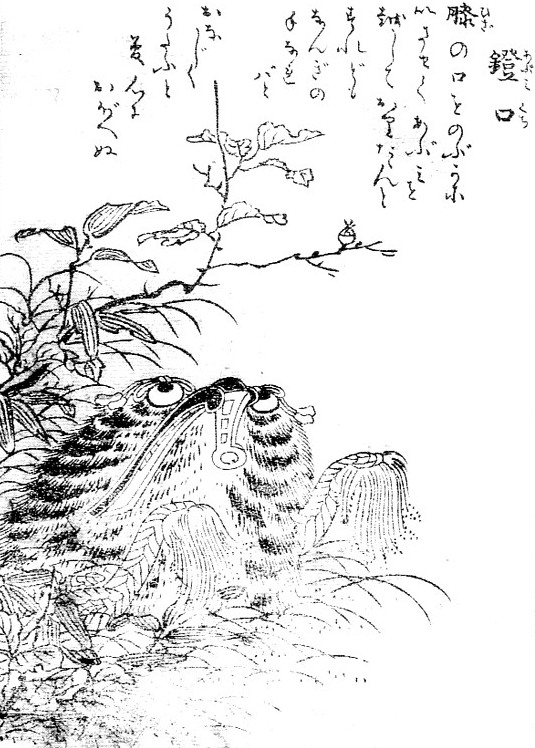
Abumi-guchi
abumi-guchi
A tsukumogami born from a horse's stirrup abandoned on a battlefield, still waiting for the master who never returned — grief and loyalty made monstrous.
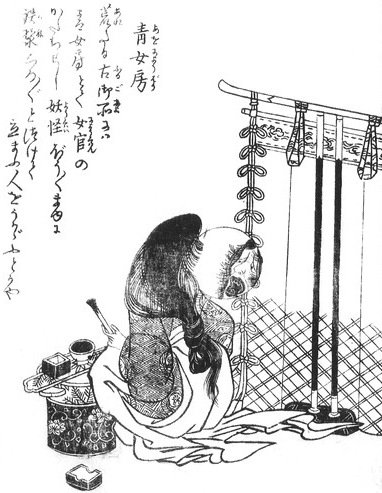
Aonyōbō
aonyobo
The spirit of a Heian court lady who haunts ruined aristocratic mansions, still applying her blackened teeth makeup centuries after her death.

Bake-Kujira
bake-kujira
A colossal ghost whale said to appear off the coasts of Shimane and Yamaguchi, rising from the night sea as a massive skeleton surrounded by strange birds and fish.