Abumi-guchi
abumi-guchi
Also known as: Stirrup Mouth、Stirrup Spirit
A tsukumogami born from a horse's stirrup abandoned on a battlefield, still waiting for the master who never returned — grief and loyalty made monstrous.
- Era
- Heian Period
- Region
- Nationwide
- Type
- Tsukumogami、Undead
Overview
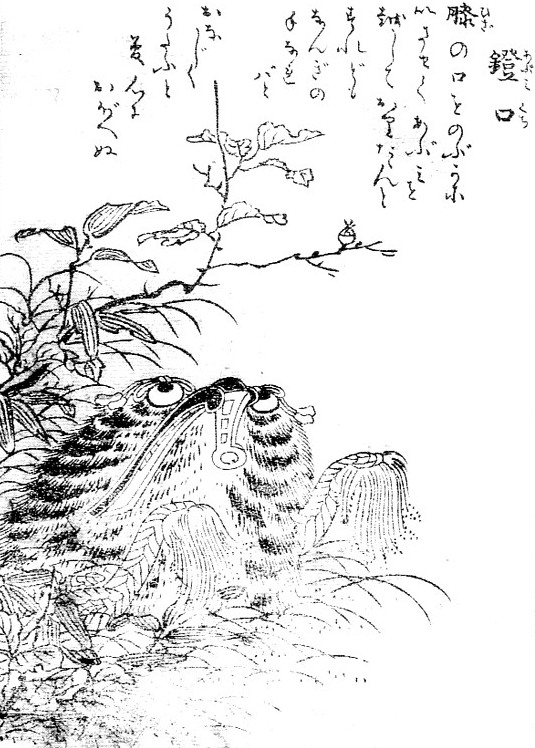
The abumi-guchi is a tsukumogami born from a horse's stirrup (abumi) left behind on a battlefield after its rider was killed in combat. Depicted by Toriyama Sekien in the Gazu Hyakki Yagyō, it is among the most poignant of all animated object spirits — a piece of war equipment that has waited so long for its master's return that grief and spiritual energy have transformed it into something uncanny. Its era is set in the Heian period, referencing Japan's great civil wars such as the Genpei War.
Appearance
In Sekien's illustration, the abumi-guchi appears as a metal stirrup overgrown with coarse hair, with the stirrup's foot-opening gaping like a mouth. Tendrils or fur extend from the metal frame, suggesting a creature halfway between manufactured object and living animal. There is something deeply forlorn about the image — the stirrup is still recognizably itself, a functional piece of riding equipment, but now animate and abandoned, neither tool nor creature.
War, Loyalty, and the Animated Object
In Japanese warrior culture, weapons and riding equipment were not merely practical tools — they were extensions of the samurai's soul, objects bound to the warrior's identity by oaths, rituals, and years of shared hardship. A sword might be given a name; armor might be treated as a spiritual heir. When a warrior fell in battle, the equipment left behind was understood to retain something of his spirit and loyalty. The abumi-guchi crystallizes this belief: the stirrup that supported a warrior's weight through years of campaigns, suddenly abandoned in the mud of defeat, becomes haunted by the unfulfilled relationship between soldier and tool.
Battlefield Ghosts and Material Memory
The Heian and Kamakura periods were eras of catastrophic warfare in Japan, during which thousands of warriors fell in battles like the Genpei War and the Jōkyū Disturbance. The battlefields of these conflicts were scattered with the abandoned equipment of the dead. The abumi-guchi can be read as a meditation on the material aftermath of violence — on the objects that outlast their owners and carry the weight of unfinished lives. It is one of the few tsukumogami whose origin is explicitly tragic rather than merely the result of long use and neglect.
Sources
- 『Gazu Hyakki Yagyō』 Toriyama Sekien (1776)
Related Yokai
Aka-name
aka-name
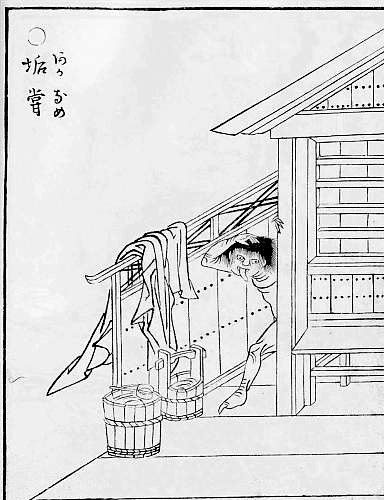
A yokai that visits neglected bathrooms to lick up the accumulated grime and scum — harmless to people, but a vivid supernatural reminder to keep the bath clean.
Amanojaku
amanojaku
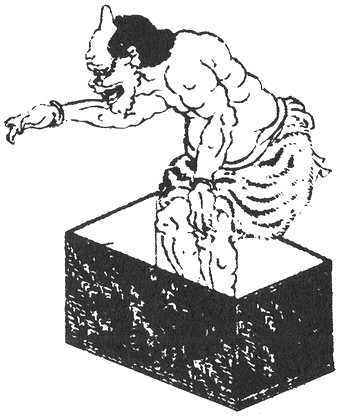
A small, perverse demon that reads human hearts and does the opposite of what is desired. Famous as the villain of folk tales like Uriko-hime, and depicted in Buddhist sculpture as a creature trampled underfoot by guardian deities.
Aonyōbō
aonyobo
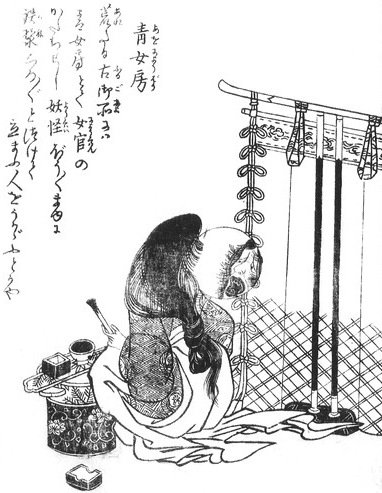
The spirit of a Heian court lady who haunts ruined aristocratic mansions, still applying her blackened teeth makeup centuries after her death.