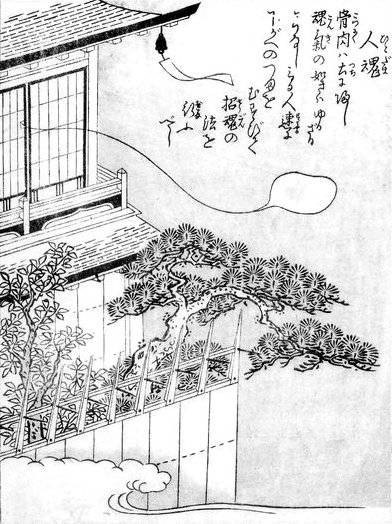
Hitodama
hitodama
Also known as: Soul Fire、Death Light
A glowing ball of blue-white fire believed to be the soul of a dying or deceased person, separating from the body and drifting through the night air. Seeing a hitodama is considered an omen of death.
- Era
- Unknown
- Region
- Nationwide
- Type
- Fire Yokai、Undead
Overview
The hitodama — literally "human soul" — is one of Japan's most intimate supernatural phenomena: the visible form of the soul as it departs from the body at or near the moment of death. Seen as a ball of blue-white or pale yellow light trailing a comet-like tail, it drifts slowly and purposefully through the air, often above or near the home where a death has just occurred or is imminent. Unlike more aggressive supernatural phenomena, the hitodama is understood primarily as a messenger — a visible sign that the boundary between life and death has been crossed nearby.
Appearance
The hitodama typically appears as a sphere of pale, cold light, slightly larger than a human fist, glowing blue-white or occasionally pale green or orange. Its motion is distinctive: it floats unhurriedly, often at waist height or slightly above, and trails a faint luminescent tail as it moves. Multiple hitodama can sometimes be seen together, particularly in the weeks around Obon (the Buddhist festival of the dead in mid-August), when the souls of ancestors are believed to return to visit their families. The hitodama makes no sound and produces no warmth.
The Soul's Journey
In traditional Japanese belief, the soul (or tama) is understood as a distinct entity that can temporarily or permanently separate from the body. During sleep, the soul wanders; at death, it departs more definitively. The hitodama represents this departing soul at its most visible — a moment when the soul, for reasons that may include unfinished business, strong emotion, or the residue of a lifetime's experiences, becomes perceivable to the living as it begins its journey.
Families who saw a hitodama near their home after the death of a loved one generally interpreted it as the soul of that person taking a final look at their earthly home before moving on. This interpretation gave the hitodama a quality of poignant farewell rather than pure supernatural terror, distinguishing it from more threatening ghost fire phenomena.
Folk Belief and Practice
The hitodama's strong association with death made it a central element of Obon observances. The tradition of lighting lanterns to guide returning ancestral souls home — and then floating those lanterns on rivers to guide souls back to the other world — reflects the same underlying belief that souls can be made visible as lights. Hitodama sightings cluster around Obon in folk memory, suggesting that the holiday's spiritual atmosphere shaped perception of otherwise ambiguous lights.
Cultural Legacy
The hitodama remains a constant in Japanese ghost story imagery, appearing in kaidan collections, woodblock prints, and contemporary horror media. Its distinctive silhouette — a trailing, glowing orb — is immediately recognizable in Japanese visual culture as a marker of death and the supernatural, making it one of the most enduring icons of Japan's rich tradition of engaging with mortality through folk belief.
Sources
- 『Wakan Sansai Zue』 Terajima Ryoan (1713)
Related Yokai
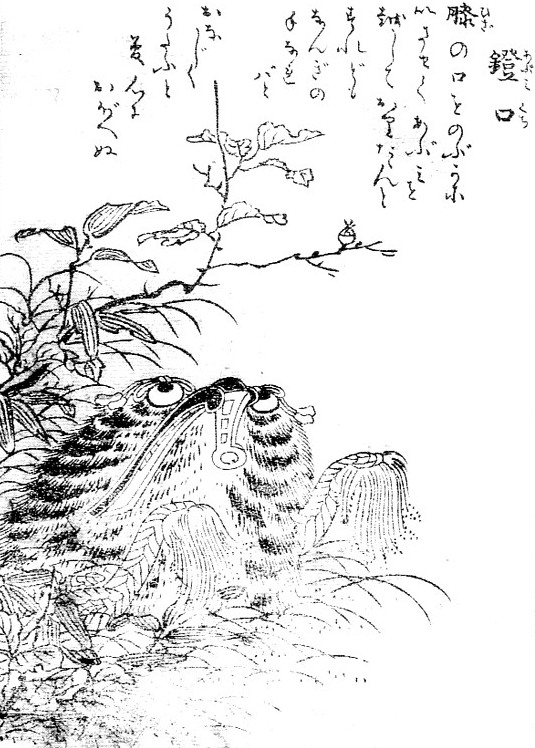
Abumi-guchi
abumi-guchi
A tsukumogami born from a horse's stirrup abandoned on a battlefield, still waiting for the master who never returned — grief and loyalty made monstrous.
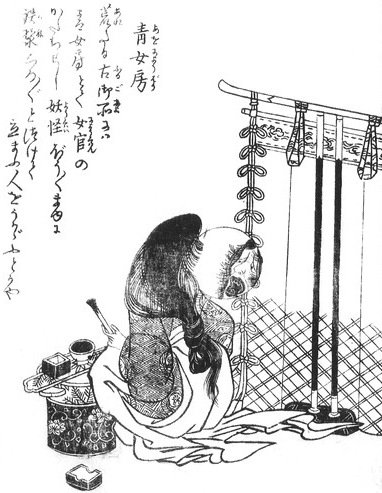
Aonyōbō
aonyobo
The spirit of a Heian court lady who haunts ruined aristocratic mansions, still applying her blackened teeth makeup centuries after her death.

Bake-Kujira
bake-kujira
A colossal ghost whale said to appear off the coasts of Shimane and Yamaguchi, rising from the night sea as a massive skeleton surrounded by strange birds and fish.