
Hone-karakuri
hone-karakuri
Also known as: Skeleton Machine、Bone Automaton
A supernatural skeleton that assembles itself from scattered bones and moves with mechanical, puppet-like animation. Best known from Hokusai's famous woodblock print of a giant skeleton confronting terrified humans at the ruins of Soma Palace.
- Era
- Edo Period
- Region
- Nationwide
- Type
- Undead
Overview
The hone-karakuri — "bone mechanism" or "skeleton puppet" — describes the phenomenon of skeletal remains that animate and move with mechanical, puppet-like movement. While Japan has numerous traditions involving the walking dead and vengeful spirits inhabiting corpses, the hone-karakuri specifically emphasizes the mechanical, assembled quality of bone animation: bones that were scattered or disarticulated coming together, clicking into place joint by joint, and rising to move with terrible purpose. The concept is most visually famous through the work of the artist Katsushika Hokusai, whose Hokusai Manga (1814) and related prints include some of the most powerful imagery of animated skeletons in world art.
Hokusai's Great Skeleton
The image most closely associated with the hone-karakuri tradition is Hokusai's triptych woodblock print depicting the scene from the tale of Princess Takiyasha (Takiyasha Hime) and the Sōma Palace. Princess Takiyasha, daughter of the rebel leader Taira no Masakado, uses sorcery to summon an enormous skeleton from the earth to attack warriors who have come to destroy the remnants of her father's revolt. In Hokusai's depiction, the skeleton is truly massive — its skull towers above the three-story palace ruins, its ribcage wide enough to contain a house. Two samurai flee in terror while a third draws his bow against the impossible enemy.
This image draws on an older textual tradition but transforms it through Hokusai's extraordinary draftsmanship into one of the defining images of Japanese supernatural art. The "karakuri" element — the mechanical, assembled quality — comes through in Hokusai's careful rendering of each bone and joint, as though the skeleton is indeed a constructed thing rather than a simple revenant.
Bone Traditions in Japanese Folk Religion
The animation of bones relates to fundamental Japanese beliefs about death, burial, and the spirit's relationship to the physical remains. In Japanese tradition, the bones of the deceased — particularly the bone fragments collected after cremation — are treated with great reverence because they retain a connection to the deceased person's spirit. Improperly buried or neglected bones, particularly those scattered on battlefields far from home, are considered spiritually dangerous. The hone-karakuri can thus be understood as the ultimate expression of this anxiety: bones that have been denied proper burial returning to assert their presence with violent emphasis.
Cultural Legacy
Hokusai's skeleton print has had enormous influence on Japanese and global visual culture. The image of a giant assembled skeleton confronting tiny human figures has been cited as an influence by filmmakers, manga artists, and game designers working in genres from horror to fantasy. In Japan, it remains one of the most recognized images from the Edo period and one of the clearest visual statements of what the animated dead could look like at their most imposing and terrible.
Sources
- 『Hokusai Manga』 Katsushika Hokusai (1814)
Related Yokai
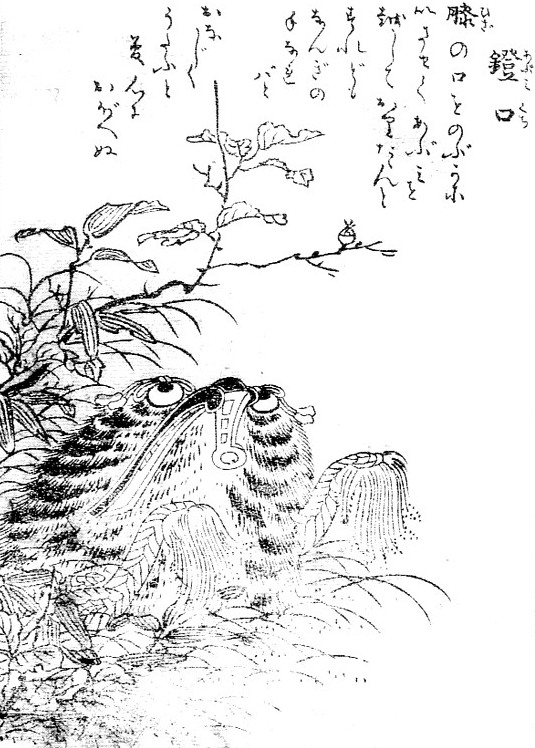
Abumi-guchi
abumi-guchi
A tsukumogami born from a horse's stirrup abandoned on a battlefield, still waiting for the master who never returned — grief and loyalty made monstrous.
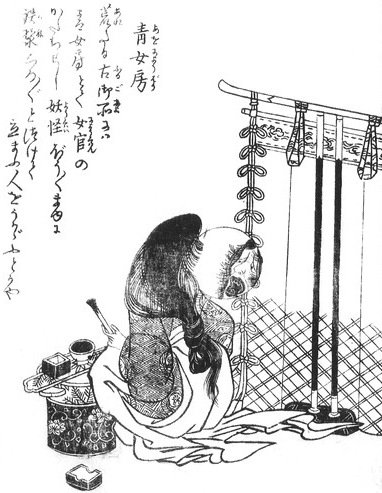
Aonyōbō
aonyobo
The spirit of a Heian court lady who haunts ruined aristocratic mansions, still applying her blackened teeth makeup centuries after her death.
Bake-Kujira
bake-kujira
A colossal ghost whale said to appear off the coasts of Shimane and Yamaguchi, rising from the night sea as a massive skeleton surrounded by strange birds and fish.