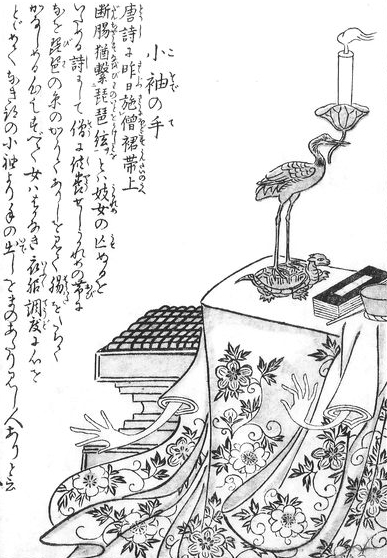
Kosode-no-te
kosode-no-te
Also known as: Sleeve Hand、Hand of the Kosode
A yokai in which a human hand emerges from the sleeve of an old kosode kimono — the spirit of a woman's attachment to her most treasured garment, persisting beyond death.
- Era
- Edo Period
- Region
- Nationwide
- Type
- Tsukumogami、Undead
Overview
Kosode-no-te is a yokai in which a pale, feminine hand reaches out from the sleeve of an old kosode — the elegant, narrow-sleeved kimono that was the central garment of Edo-period women's fashion. Illustrated by Toriyama Sekien in his Hyakki Tsurezure Bukuro, the spirit is understood as the lingering attachment of a woman who loved her kimono so deeply that her feeling survived her death and settled into the garment itself. The name is simply descriptive: "the hand of the kosode."
Appearance
In Sekien's illustration, a beautifully patterned kimono is displayed as if laid flat or draped on a stand, and from within one of its narrow sleeves, a slender white hand extends outward. The hand is delicate and clearly feminine, reaching as if to grasp or beckon. The contrast between the garment's gorgeous decorative patterns and the uncanny emergence of a living hand from within it creates a deeply unsettling image that lingers in the mind.
The Kimono as Personal Identity
In Edo-period Japan, a woman's kosode was far more than clothing — it was a statement of identity, taste, and social standing. Fine silk kimono with intricate hand-painted or embroidered designs represented significant wealth and were treasured possessions passed down through generations. The emotional attachment a woman might feel for a beloved garment was intense, and Japanese ghost lore often features spirits animated by intense personal attachments: to places, people, and objects. Kosode-no-te represents the haunting of a garment by exactly this kind of lingering affection.
Clothing Yokai in Japanese Tradition
Garments and textiles appear repeatedly in Japanese supernatural tradition as vehicles for spiritual energy. A kimono worn by someone who died violently or unhappily might absorb their grief. Memorial services were performed for worn-out clothing in some communities, reflecting the belief that discarded garments needed proper spiritual release. Kosode-no-te is the most vivid expression of this idea — the hand that continues to reach from within the sleeve, searching for what it can no longer hold.
Sources
- 『Hyakki Tsurezure Bukuro』 Toriyama Sekien (1784)
Related Yokai
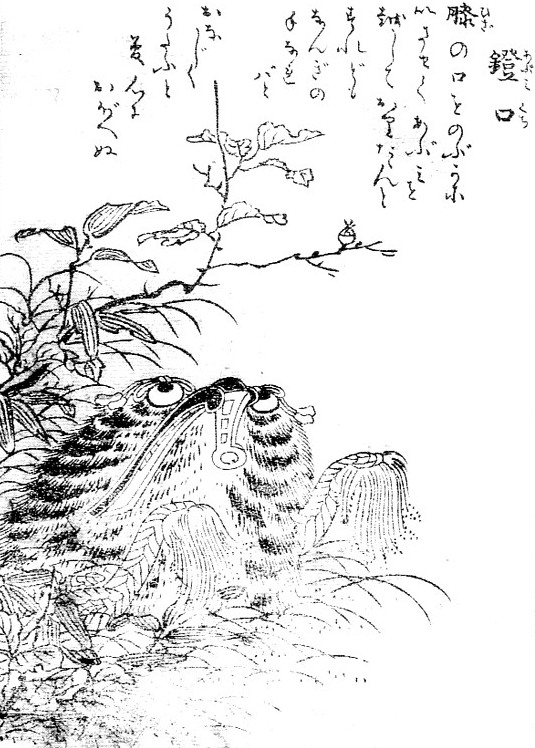
Abumi-guchi
abumi-guchi
A tsukumogami born from a horse's stirrup abandoned on a battlefield, still waiting for the master who never returned — grief and loyalty made monstrous.
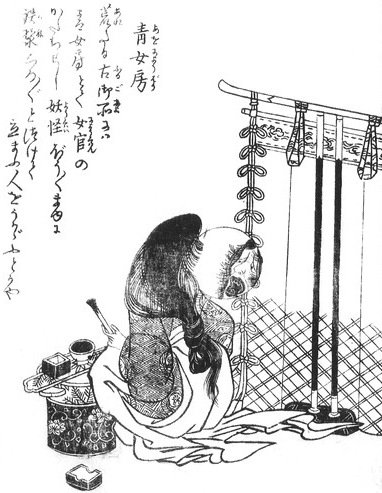
Aonyōbō
aonyobo
The spirit of a Heian court lady who haunts ruined aristocratic mansions, still applying her blackened teeth makeup centuries after her death.

Bake-Kujira
bake-kujira
A colossal ghost whale said to appear off the coasts of Shimane and Yamaguchi, rising from the night sea as a massive skeleton surrounded by strange birds and fish.