Onibi
onibi
Also known as: Demon Fire、Oni Flame
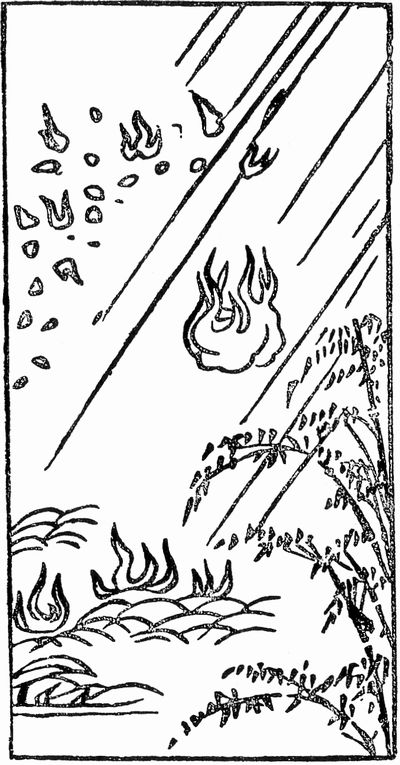
Mysterious floating flames seen drifting over graveyards, marshes, and lonely roads at night. The onibi is the Japanese counterpart of the will-o'-the-wisp — ghostly fire believed to be the souls of the dead or demons made visible as flame.
- Era
- Unknown
- Region
- Nationwide
- Type
- Fire Yokai、Undead
Overview
Onibi — "demon fire" or "oni flame" — is the Japanese term for the mysterious floating lights seen drifting silently over graveyards, swamps, and desolate roads after nightfall. These ghostly flames, ranging in color from blue-white to orange or red, hover just above the ground or rise through the air before fading from sight. The onibi is the Japanese equivalent of the will-o'-the-wisp found in European folklore, and like its Western counterpart, it is primarily associated with the souls of the dead and supernatural danger. The onibi is considered a collective phenomenon: a general category of ghost fire rather than a single distinct creature.
Appearance
Onibi typically manifest as small, glowing orbs of light that drift without wind, appearing and disappearing unpredictably. Their most common color is described as blue or blue-white, though red and orange variants are also reported. They are generally small — perhaps the size of a fist — and may appear singly or in clusters of dozens or hundreds. Unlike a torch or lantern, they produce no heat and cast no useful light, instead serving only as eerie markers of supernatural presence. Accounts consistently note that the flames extinguish if one attempts to approach them directly.
Beliefs and Interpretations
Traditional Japanese belief attributes onibi to several different supernatural sources. Most commonly, they are understood as the souls of the unquiet dead — people who died in sudden or violent circumstances, whose spirits have not been properly laid to rest. Graves from which onibi rise are considered particularly unlucky, and the appearance of ghost fires above a specific location could indicate that someone buried there was troubled in spirit and required additional prayers or memorial rites.
Other traditions associate onibi with oni — demons who manifest their presence through flames rather than solid form. Still other accounts connect the fires to the emanations of old, sick, or dying animals whose bodies emit a supernatural luminescence in their final moments. Wakan Sansai Zue (1713) records a scientific-adjacent theory that onibi arise from the gases produced by decomposing organic matter — an observation that roughly anticipates the modern understanding of marsh gas and phosphine ignition.
Cultural Significance
As one of the most commonly reported supernatural phenomena in pre-modern Japan, onibi hold a significant place in the country's folk horror tradition. They appear in countless kaidan (ghost story) collections, woodblock prints, and literary works as the ambient sign of supernatural presence — not a monster to be confronted, but an atmosphere to be feared. In contemporary Japanese media, onibi remain a standard element of horror and fantasy settings, appearing in games, anime, and films wherever an eerie supernatural atmosphere is desired.
Sources
- 『Wakan Sansai Zue』 Terajima Ryoan (1713)
Related Yokai
Abumi-guchi
abumi-guchi
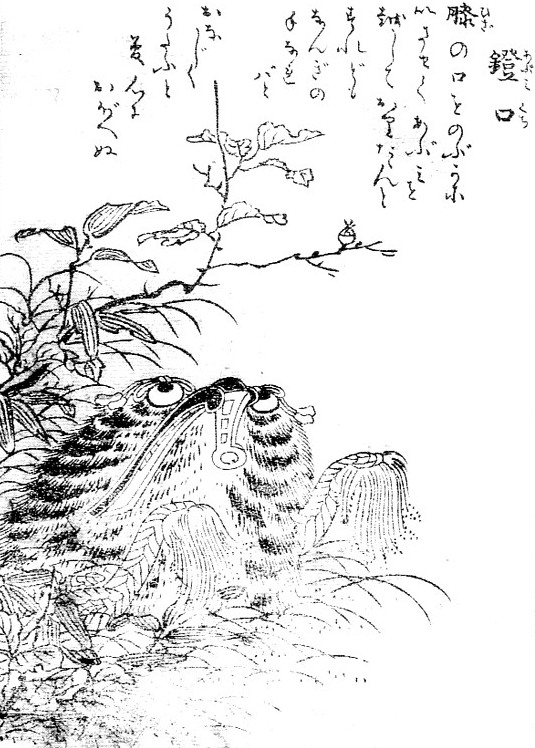
A tsukumogami born from a horse's stirrup abandoned on a battlefield, still waiting for the master who never returned — grief and loyalty made monstrous.
Aonyōbō
aonyobo
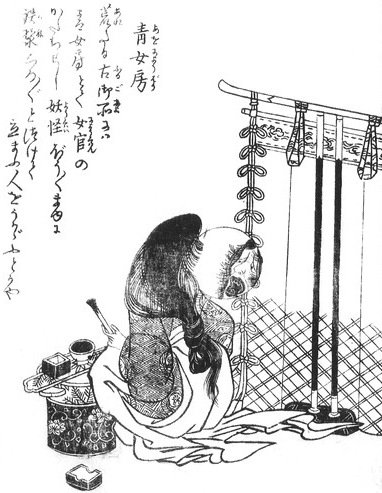
The spirit of a Heian court lady who haunts ruined aristocratic mansions, still applying her blackened teeth makeup centuries after her death.

Bake-Kujira
bake-kujira
A colossal ghost whale said to appear off the coasts of Shimane and Yamaguchi, rising from the night sea as a massive skeleton surrounded by strange birds and fish.