
Tenbin-kozo
tenbin-kozo
Also known as: Scale Boy、Balance Beam Child
A mysterious child-like yokai carrying a tenbin (shoulder pole with balanced loads) who appears on roads and paths. The tenbin-kozo is an Edo period road spirit associated with travelers and merchants, whose encounter may bring good or ill fortune.
- Era
- Edo Period
- Region
- Nationwide
- Type
- Road Yokai
Overview
The tenbin-kozo is a supernatural child encountered on roads and travel routes, carrying a tenbin — the traditional Japanese shoulder pole used by merchants and peddlers to balance loads on each end. The word "kozo" means "boy" or "young monk," and the creature takes the form of a small child dressed in the manner of a traveling merchant's assistant, complete with the distinctive pole balanced across the shoulders. The tenbin-kozo appears in Edo period accounts of road spirits and is associated with the commercial culture of traveling merchants that was central to Edo-era economic life.
Appearance and Behavior
The tenbin-kozo appears as a child of indeterminate age, perhaps eight to twelve years old in apparent form, carrying a tenbin pole with balanced bundles, boxes, or baskets hanging from each end. It walks along roads and paths in the manner of an ordinary traveler's helper, and may not be immediately recognizable as supernatural. What distinguishes it from a real child is typically some uncanny detail — it moves too quietly, it travels alone at odd hours, its feet may not quite touch the ground, or its face, when glimpsed directly, has an ageless quality that does not match the body's childlike form.
In some accounts, encountering a tenbin-kozo who is carrying a balanced load is a good omen for merchants and travelers — balance in the loads symbolizes balance in trade and safe travel. In others, the creature is a trickster who will mislead travelers, steal goods, or cause confusion on roads and at crossroads.
Commercial Culture and Road Spirits
The tenbin-kozo reflects the deep integration of commercial life with folk spiritual belief in the Edo period. Merchants who regularly traveled between cities carried not just goods but prayers, talismans, and beliefs about the supernatural entities that governed safe passage and commercial fortune. Roads were understood as liminal spaces governed by their own spirits, and the tenbin-kozo — a spirit who takes the form of a merchant's helper — represents the projection of commercial anxieties and hopes onto the supernatural world.
The tenbin itself is a significant symbol in Japanese culture: it represents balance, the fair measurement of goods, and the hardships of physical labor. A supernatural being that carries such a pole occupies a space between trickster and guardian, potentially embodying either the fairness of honest commerce or the deceptions of fraudulent trade.
Cultural Significance
The tenbin-kozo is a relatively minor figure in the broader yokai pantheon, but it represents an important principle in Japanese folk belief: that every significant human activity and environment has its corresponding supernatural entities. The roads of Edo Japan were among the most commercially active in the world, and it is fitting that they would generate their own specialized spirit population, including a supernatural merchant's boy who watches over — or preys upon — those who travel for trade.
Sources
- 『Kasshi Yawa』 Matsura Seizan (1821)
Related Yokai
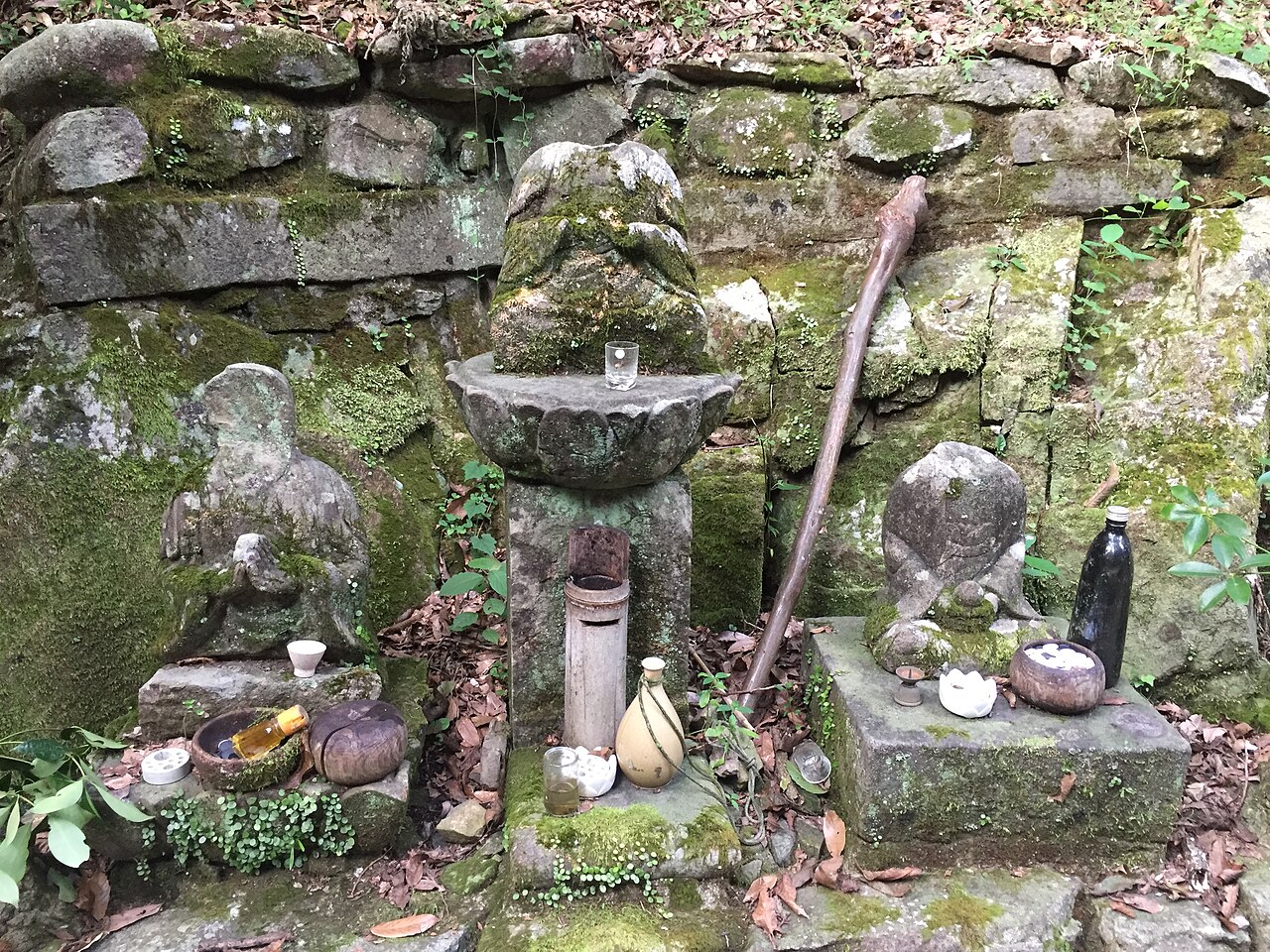
Abura-Sumashi
abura-sumashi
A straw-cloaked figure on a Kumamoto pass who declares his ancestor haunted it.
Betobeto-San
betobeto-san
An invisible yokai that follows travelers on dark roads, heard only as footsteps behind them. Saying "go ahead of me" makes it disappear.
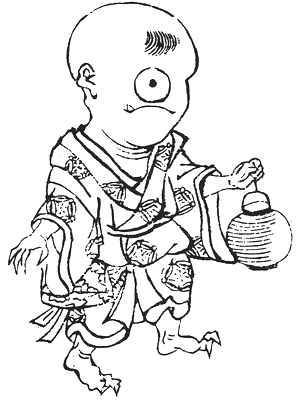
Hitotsume-kozō
hitotsume-kozo
A child-monk yokai with a single large eye in the center of its face, associated with certain calendar days and known to fear objects with many holes.