Hitotsume-kozō
hitotsume-kozo
Also known as: one-eyed monk boy、one-eyed imp
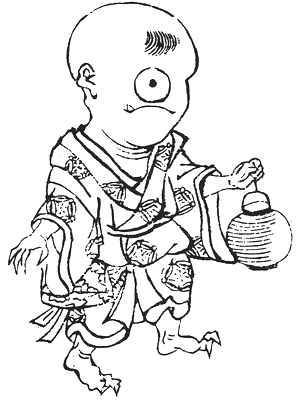
A child-monk yokai with a single large eye in the center of its face, associated with certain calendar days and known to fear objects with many holes.
- Era
- Edo Period
- Region
- Nationwide
- Type
- Road Yokai
Overview
The Hitotsume-kozō ("one-eyed monk boy") is a yokai found throughout Japan, depicted as a child dressed in the robes of a Buddhist acolyte but with a single enormous eye dominating the center of its face. It is closely associated with specific calendar dates — particularly the 8th day of the 2nd month (February 8th) and the 8th day of the 12th month (December 8th) — collectively known as koto-yōka ("the eighth of the event"). Toriyama Sekien included the creature in his Gazu Hyakki Yagyō anthology, cementing it as one of the classic yokai of Edo-period Japan.
Appearance
The Hitotsume-kozō resembles a small boy in Buddhist monk's garb, but its single, outsized eye gives it an immediately unsettling appearance. The eye is described as large, round, and intensely focused. Despite its childlike stature, the creature has an otherworldly stillness. Some accounts say it can cause illness simply by staring at someone.
Folklore and Calendar Customs
On the two koto-yōka dates, the Hitotsume-kozō is said to wander through villages and towns, peering into homes and taking note of which households have been industrious and which have been lazy. To ward it off, people traditionally hung bamboo sieves (zaru) or woven baskets outside their doors — objects with many holes. The belief was that one-eyed creatures are repelled by things with many eyes (holes), outnumbered and overwhelmed by what they lack. Beans thrown during setsubun (bean-scattering) ceremonies in early February were similarly thought to drive the creature away.
Folklore Scholarship
Kunio Yanagita, Japan's pioneering folklorist, discussed the Hitotsume-kozō in the context of mountain deities and visiting spirits (marebito). He theorized that the single-eyed, single-legged yokai common throughout Japanese mountain lore were manifestations of mountain gods appearing in human territory. The asymmetry of a single eye marks the creature as fundamentally Other — beyond the bilateral symmetry that defines humanity.
Cultural Significance
The Hitotsume-kozō straddles the line between frightening yokai and mischiefmaker. It doesn't typically harm humans directly, but its stare and its association with accountability give it a morally instructive quality. Over the centuries it has appeared in storybooks, prints, and modern media, remaining a beloved figure in Japan's rich yokai tradition.
Sources
- 『Gazu Hyakki Yagyō』 Toriyama Sekien (1776)
- 『Yōkai Dangi』 Kunio Yanagita (1956)
Related Yokai
Abumi-guchi
abumi-guchi
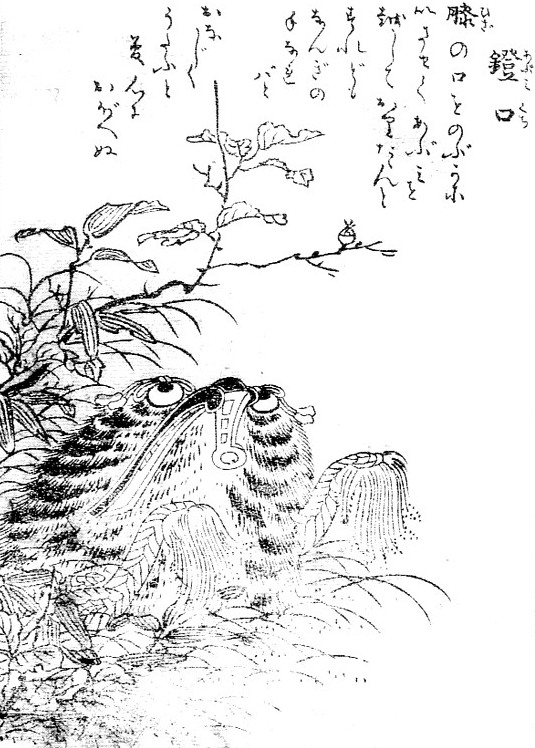
A tsukumogami born from a horse's stirrup abandoned on a battlefield, still waiting for the master who never returned — grief and loyalty made monstrous.
Abura-Sumashi
abura-sumashi
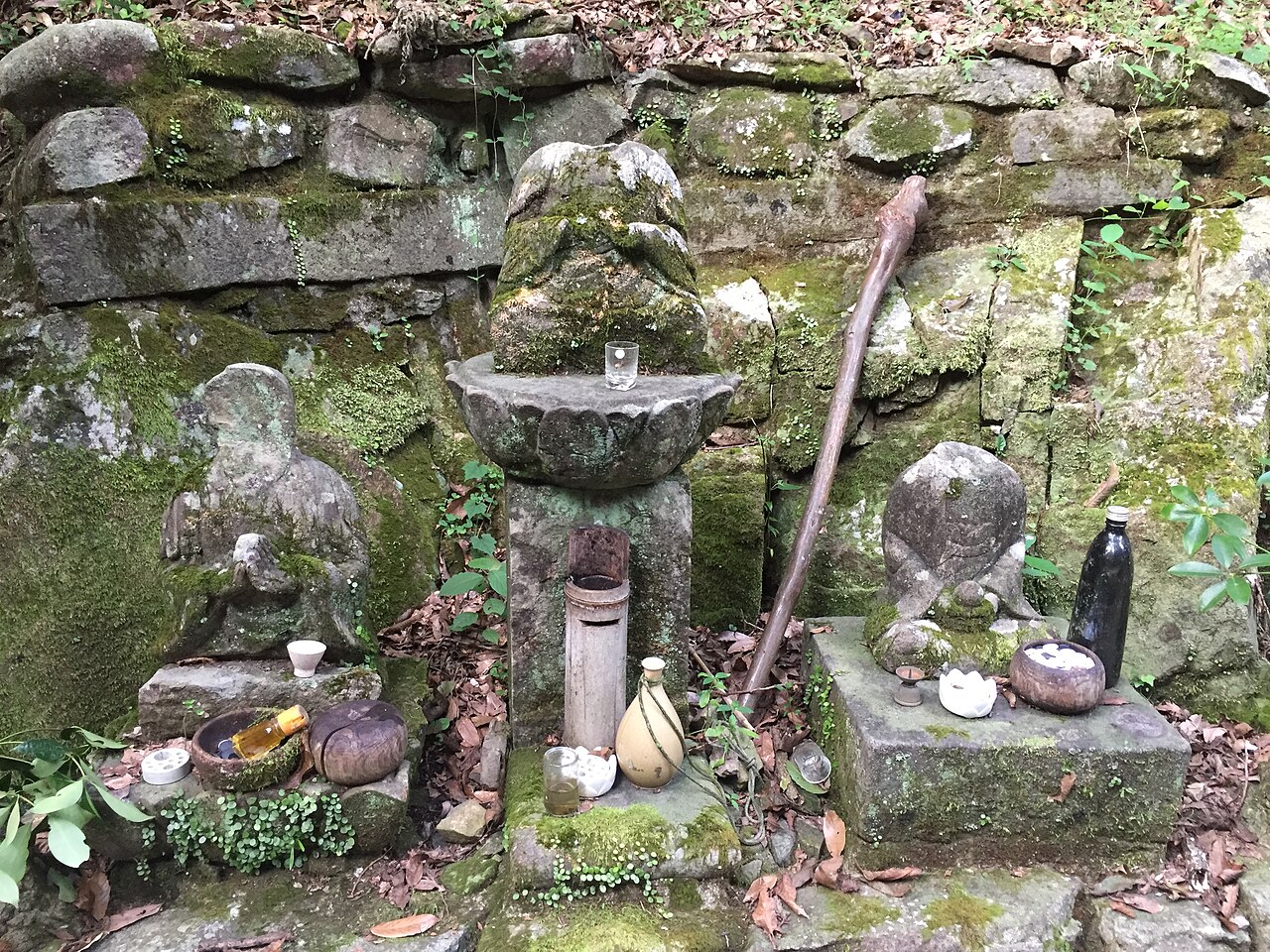
A straw-cloaked figure on a Kumamoto pass who declares his ancestor haunted it.
Aka-name
aka-name
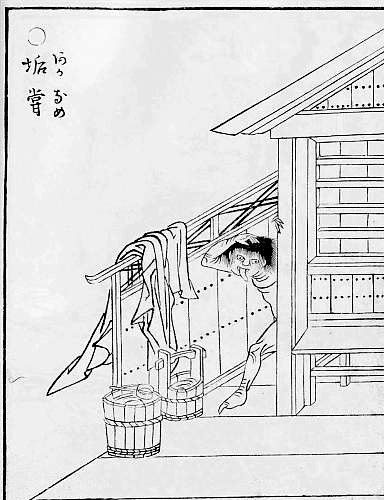
A yokai that visits neglected bathrooms to lick up the accumulated grime and scum — harmless to people, but a vivid supernatural reminder to keep the bath clean.