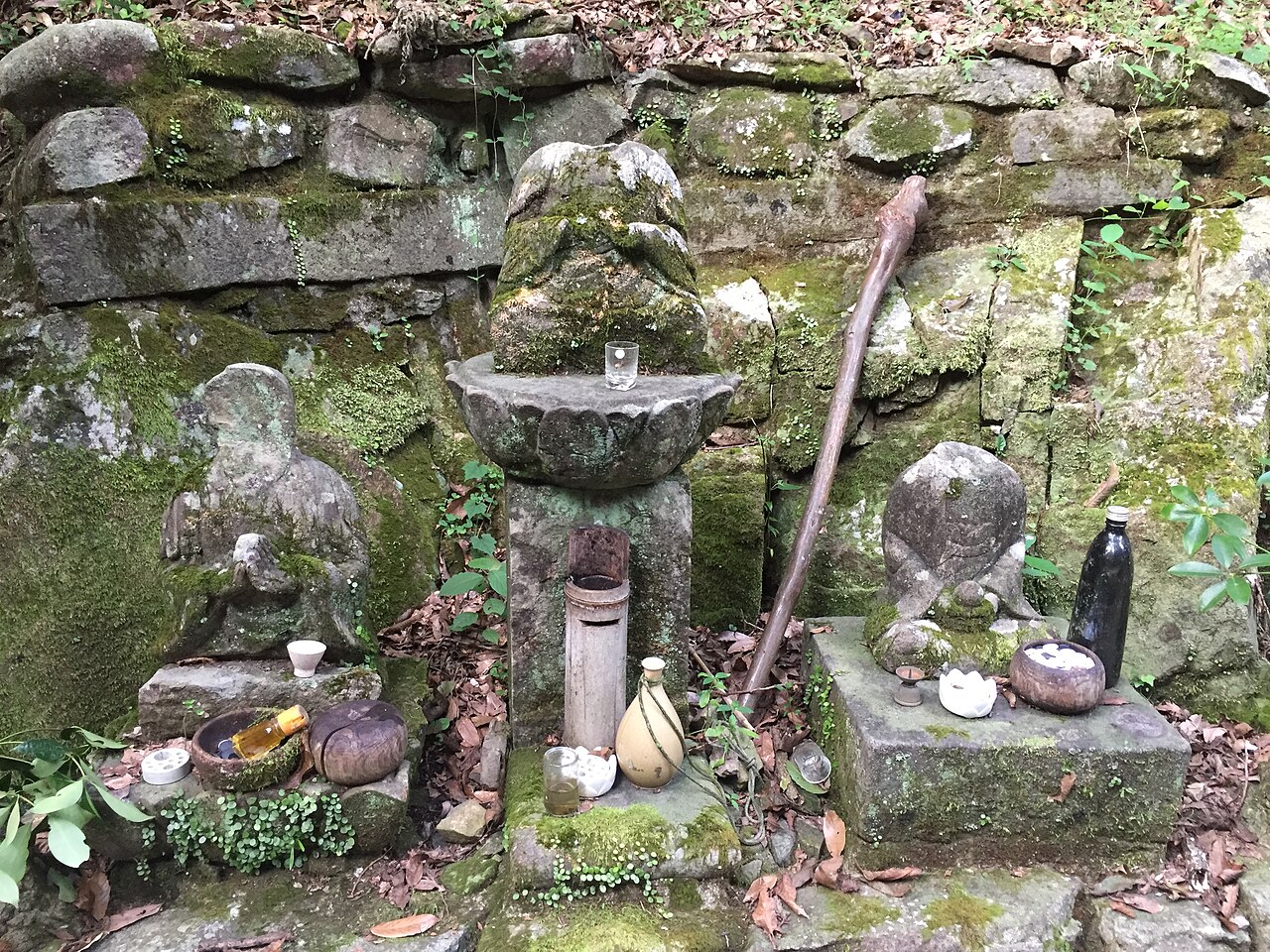
Abura-Sumashi
abura-sumashi
Also known as: oil presser
A straw-cloaked figure on a Kumamoto pass who declares his ancestor haunted it.
- Era
- Edo Period
- Region
- Kyushu
- Type
- Road Yokai
Overview
The abura-sumashi appears on the Kusamakura Pass in Kumamoto Prefecture, dressed in straw rain gear (mino) and a broad hat. It does not attack. It does not chase. It appears, and then it says something that lodges in the listener's memory: "Long ago, people said my ancestor appeared at this pass. And here I am."
Name and Origins
The name abura-sumashi connects to oil (abura) — possibly the oil merchants who once traveled the mountain roads, or the process of pressing oil. One interpretation holds that it is the transformed spirit of someone who stole oil along these routes in life. Another treats it simply as a local pass spirit whose name happened to involve oil. The Higo Kokushi (1742), a regional gazetteer of what is now Kumamoto Prefecture, is among the earliest sources to record it.
The Self-Referential Specter
What makes abura-sumashi philosophically interesting is its statement. The creature announces its own tradition. It knows it is a yokai. It knows there were yokai before it. It is telling you that the haunting will continue — not as a threat, but as a simple statement of fact. The pass was haunted before. The pass is haunted now. Presumably, the pass will be haunted later.
Shigeru Mizuki's Version
Shigeru Mizuki popularized abura-sumashi nationwide, depicting it as a squat figure with a potato-like head and a calm, almost philosophical demeanor that matches its strange announcement. A statue stands on the Mizuki Shigeru Road in Sakaiminato. For a yokai rooted so specifically in a single Kyushu mountain road, it has traveled remarkably far.
Sources
- 『Higo Kokushi』 Unknown (1742)
Related Yokai

Betobeto-San
betobeto-san
An invisible yokai that follows travelers on dark roads, heard only as footsteps behind them. Saying "go ahead of me" makes it disappear.
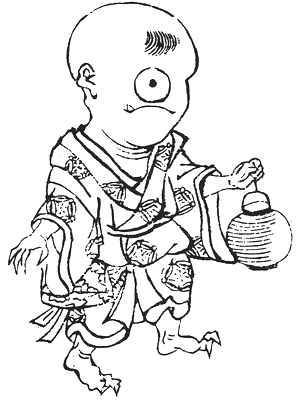
Hitotsume-kozō
hitotsume-kozo
A child-monk yokai with a single large eye in the center of its face, associated with certain calendar days and known to fear objects with many holes.
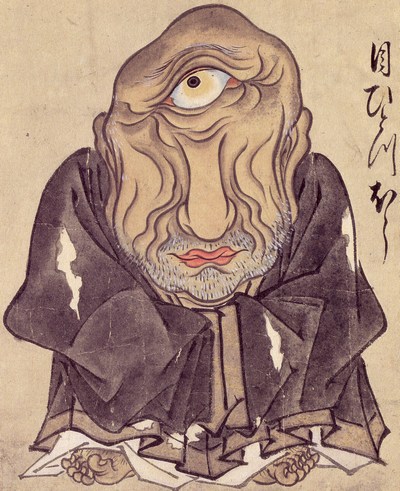
Hitotsume-nyudo
hitotsume-nyudo
A giant monk-shaped yokai with a single enormous eye in the center of its face, which appears on mountain roads and night paths. The hitotsume-nyudo combines the cyclops archetype with Japan's tradition of supernatural "nyudo" priest spirits.