Tesso
tesso
Also known as: Iron Rat、Rat Demon of Hieizan
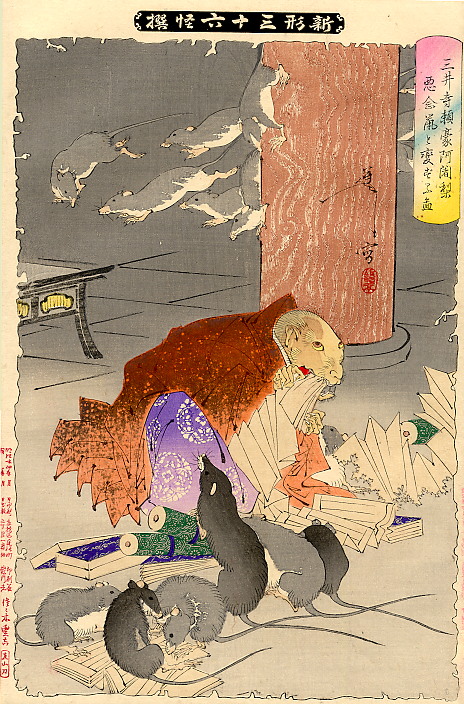
A supernatural swarm of rats connected to the great Buddhist temple complex of Mount Hiei. In the most famous legend, the accumulated grudge of a high monk transforms into countless iron-toothed rats that destroy his enemies.
- Era
- Heian Period
- Region
- Kinki
- Type
- Animal Yokai、Undead
Overview
The tesso is a yokai associated with Enryaku-ji, the great Tendai Buddhist temple complex on Mount Hiei near Kyoto. Its name means "iron rat," referring to the creature's legendarily hard teeth that can gnaw through anything. The most celebrated tesso legend is connected to Ryōgen (912–985), the eighteenth abbot of Enryaku-ji, who is still venerated today under the title Ganzan Daishi. According to tradition, the resentment and spiritual power of this extraordinary monk transformed upon death into an army of supernatural rats that swarmed his enemies, devouring scrolls, buildings, and anyone who stood in their way.
The Legend of Ryōgen and the Iron Rats
Ryōgen was a real historical figure — a reformer and scholar who revitalized the Tendai sect and transformed Enryaku-ji into a center of Buddhist learning and influence. His supernatural reputation arose from the combination of his formidable spiritual power and the intense rivalries within Heian-period Buddhism.
In the legend as preserved in the Konjaku Monogatarishū and later sources, Ryōgen faces persistent harassment and obstruction from rival monks during his years of deep meditation practice. As his resentment accumulates, it takes supernatural form: when his anger reaches its peak, his spirit manifests as an inexhaustible horde of rats with teeth hard as iron. These creatures pour through the corridors of the temple, chewing through scriptures and support beams, scattering his enemies in terror. The name "tesso" — iron rat — refers specifically to these iron-hard teeth, which can destroy what normal teeth cannot.
The Historical Ryōgen
The real Ryōgen is still worshipped today through the "Ganzandaishi" cult at Enryaku-ji and throughout Japan. The "Tsuno Daishi" (Horned Daishi) and "Mame Daishi" (Bean Daishi) protective talismans sold at temples across Japan derive from legends of his supernatural power. Ryōgen's association with the tesso legend reflects a pattern in Japanese folk religion where the exceptional spiritual power of historical religious figures becomes the seed of supernatural storytelling — the monk's documented intensity in life transformed into something monstrous in the imagination of later generations.
Rats in Japanese Religious Belief
The rat occupies an ambivalent position in Japanese spiritual culture. On one hand, it is revered as the messenger of Daikokuten (the god of wealth and fortune), and rat imagery appears as a positive omen in New Year iconography. On the other hand, swarms of rats destroying food supplies, gnawing through buildings, and invading sacred spaces have always been seen as ominous — potential signs of divine displeasure. In this context, the tesso serves as a vivid embodiment of the destructive potential of unaddressed spiritual resentment (onryō).
Cultural Legacy
The tesso stands out among Japanese yokai for its specific grounding in a named historical person and a real, still-functioning religious institution. Water Shigeru included it in his encyclopedic yokai works, and it continues to appear in modern yokai reference materials. The image of a unstoppable swarm of rats with supernatural hardness and destructive purpose resonates with modern horror aesthetics, and the tesso appears in various forms in contemporary manga, games, and supernatural fiction set in the world of Heian-period Japan.
Sources
- 『Konjaku Monogatarishū』 Various authors (1120)
Related Yokai
Abumi-guchi
abumi-guchi
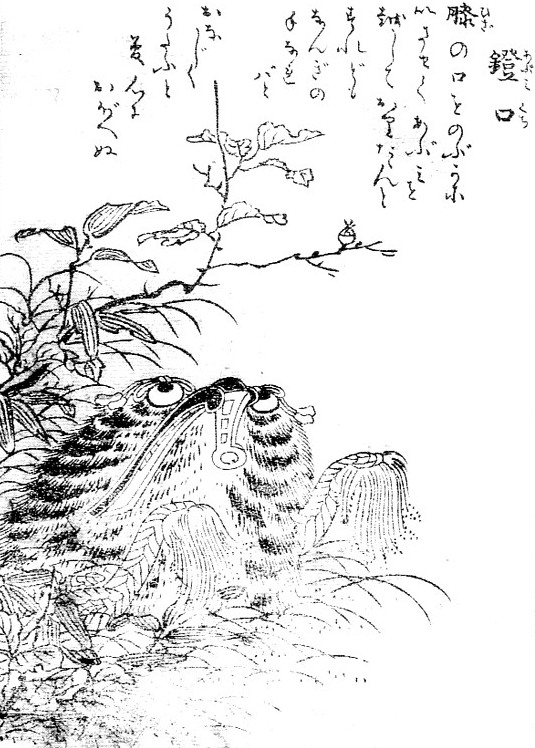
A tsukumogami born from a horse's stirrup abandoned on a battlefield, still waiting for the master who never returned — grief and loyalty made monstrous.
Aonyōbō
aonyobo
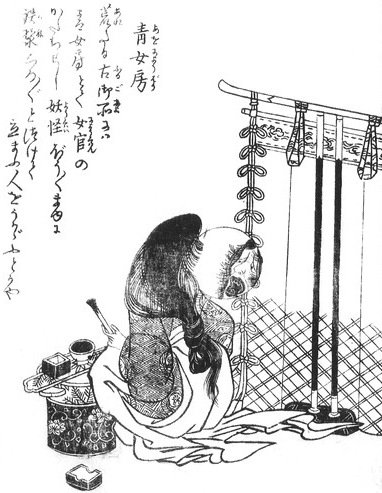
The spirit of a Heian court lady who haunts ruined aristocratic mansions, still applying her blackened teeth makeup centuries after her death.

Bake-Kujira
bake-kujira
A colossal ghost whale said to appear off the coasts of Shimane and Yamaguchi, rising from the night sea as a massive skeleton surrounded by strange birds and fish.