Ubagabi
ubagabi
Also known as: old woman's fire、hag's flame
A ghostly fire from the Kinki region, said to be the transformed spirit of an old woman who ate the forbidden flesh of cattle and horses and was cursed to wander as a flame after death.
- Era
- Edo Period
- Region
- Kinki
- Type
- Fire Yokai
Overview
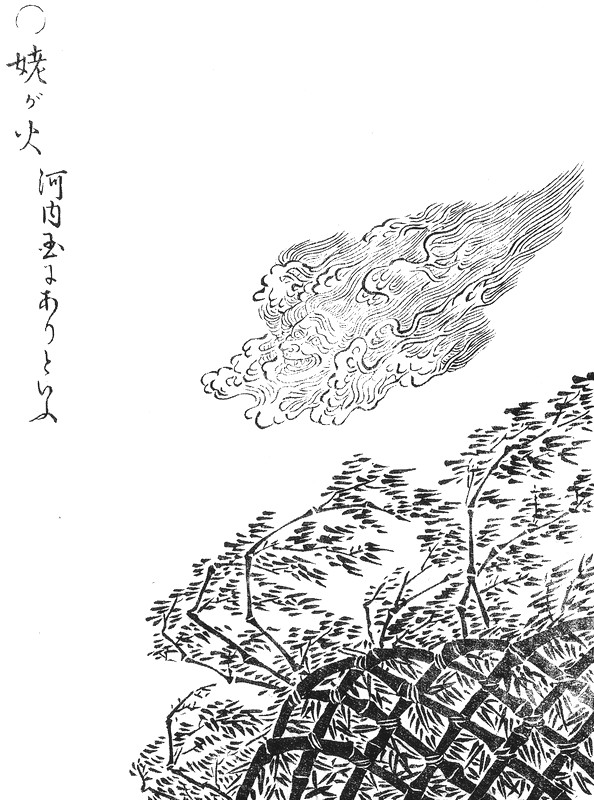
The Ubagabi ("old woman's fire" or "hag-fire") is a ghostly fire yokai from the Kinki region of Japan, with the strongest associations in the old province of Settsu (now parts of Osaka and Hyōgo prefectures). According to the tradition recorded by Toriyama Sekien in Konjaku Hyakki Shūi (1781), the Ubagabi was once a woman who secretly ate the meat of cattle and horses — strictly forbidden in her community — and was cursed after death to wander forever as a disembodied flame. Sekien's illustration shows a pale fire with an old woman's anguished face floating within it, an image of a soul that cannot rest and cannot be extinguished.
Appearance
The Ubagabi manifests as a floating ball of pale white or faint orange fire, moving low over mountain paths, rice paddies, and lonely rural roads at night. Unlike a simple ball of light (kitsunebi or foxfire), the Ubagabi carries within it or takes the shape of a woman's face — old, haggard, and suffering. The face does not speak; it simply drifts, always just out of reach, fading if you approach too quickly.
The Taboo Behind the Legend
The Ubagabi legend is rooted in a real historical taboo. For much of Japanese history, particularly under Buddhist influence, eating the meat of animals used in agriculture — cattle and horses — was considered deeply sinful. These animals were partners in the work of farming, often treated almost as family members, and consuming them was a violation of a profound social and religious bond. The woman in the legend did not merely commit a dietary infraction; she betrayed her community's way of life and its relationship with the animals that sustained it. The punishment — eternal wandering as fire — fits the crime of consuming living things wrongfully.
Ghostly Fires in Japanese Folklore
Japan has a rich tradition of mysterious lights and ghostly fires: hitodama (soul-fires), kitsunebi (fox-fires), ōnibi (great demon-fires), and many regionally specific phenomena. The Ubagabi belongs to a subcategory of these fires that carry a specific human backstory — they are not simply elemental manifestations but the spirits of people bound to their transgressions. This narrative dimension distinguishes them from purely atmospheric phenomena and gives them moral weight.
Regional Identity
The Ubagabi is one of many yokai with a specifically Kinki regional identity, alongside figures like the Aonyōbō and the Tanuki traditions of the area. Its association with Settsu gives it historical grounding in a place with a long cultural history, and local variant traditions continue to preserve it as a piece of regional heritage.
Sources
- 『Konjaku Hyakki Shūi』 Toriyama Sekien (1781)
- 『Wakan Sansai Zue』 Terajima Ryōan (1713)
Related Yokai
Enenra
enenra
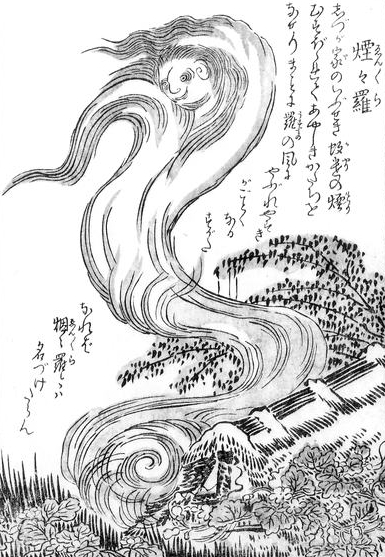
A supernatural entity that lives in smoke and manifests as a writhing form within flames or incense. First depicted by Toriyama Sekien, the enenra emerges from smoke as a face or figure of impossible definition.
Hitodama
hitodama
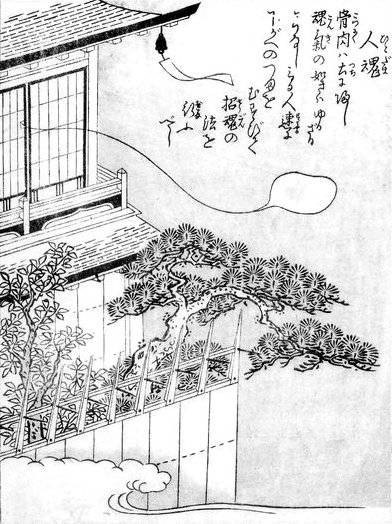
A glowing ball of blue-white fire believed to be the soul of a dying or deceased person, separating from the body and drifting through the night air. Seeing a hitodama is considered an omen of death.
Kasha
kasha
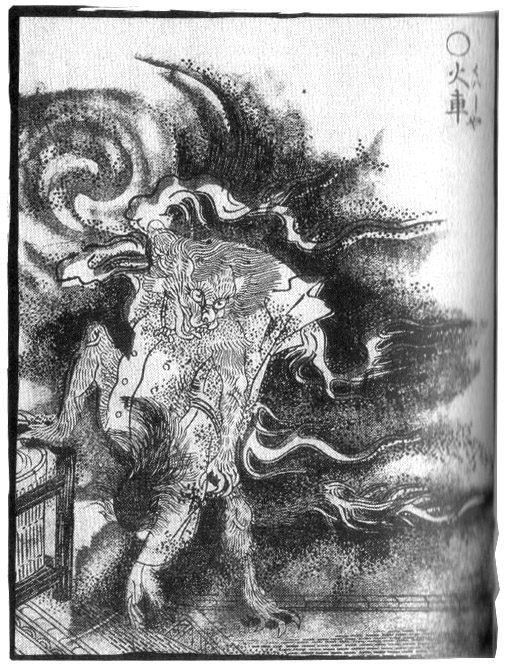
A fire demon that steals corpses from funerals, appearing as a blazing wheel or a monstrous cat. Rooted in Buddhist hell imagery, it has haunted Japanese funeral rites since the Heian period.