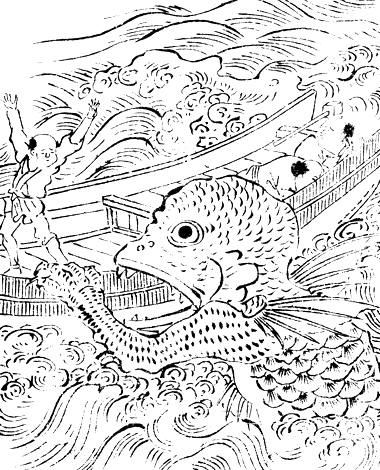
Umi-bōzu
umibouzu
Also known as: Sea Monk、Sea Giant
A colossal black shape rising from calm seas to capsize ships like a sea monk.
- Era
- Edo Period
- Region
- Nationwide
- Type
- Sea Yokai
Overview
The umi-bōzu (海坊主, "sea monk") is the terror of Japan's coastal sailors: a colossal black shape that heaves up from a calm, moonlit sea without warning. Its smooth, domed head — resembling a monk's shaved scalp — towers above the masts before it crushes or swamps its target.
Appearance and Behavior
No two umi-bōzu accounts are identical, but common features include enormous size, jet-black coloring, and luminous eyes. It emerges on deceptively still nights and seems drawn to ships that have somehow broken a maritime taboo or carry something the ocean wants back.
The Bucket Trick
A famous survival strategy: when the umi-bōzu demands a barrel or tub (to fill with seawater and drown the crew), the clever sailor passes a bottomless barrel. The creature cannot fill it and, frustrated, retreats beneath the surface.
Suzuki Bokushi's Account
The 1837 travelogue Hokuetsu Seppu (Snow Country Tales) by Suzuki Bokushi records a credible-seeming umi-bōzu sighting off the Echigo (Niigata) coast, lending the legend a documentary weight that made it widely cited.
Interpretations
Scholars have proposed that umi-bōzu sightings were inspired by large marine animals (whale, giant squid), unusual wave phenomena, or waterspouts glimpsed at night. The "monk" association may reflect fear of the restless dead — drowned sailors or monks lost at sea seeking revenge.
Sources
- 『Shokoku Hyaku Monogatari』 Unknown (1677)
- 『Hokuetsu Seppu』 Suzuki Bokushi (1837)
Related Yokai
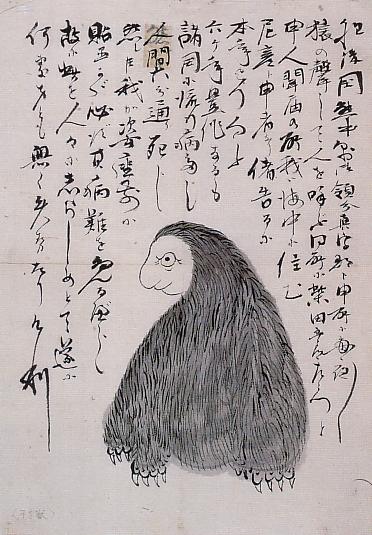
Amabie
amabie
An 1846 sea spirit that foretold plague, asking its image be shown to the sick.
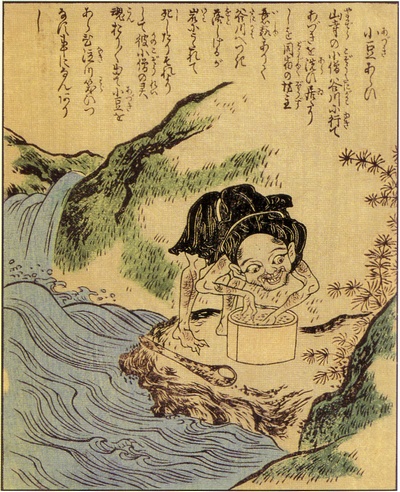
Azuki-Arai
azuki-arai
A yokai heard but rarely seen, washing azuki beans by a riverbank at night.

Bake-Kujira
bake-kujira
A colossal ghost whale said to appear off the coasts of Shimane and Yamaguchi, rising from the night sea as a massive skeleton surrounded by strange birds and fish.