Azuki-Arai
azuki-arai
Also known as: azuki-togi、bean washer
A yokai heard but rarely seen, washing azuki beans by a riverbank at night.
- Era
- Unknown
- Region
- Nationwide
- Type
- Water Yokai
Overview
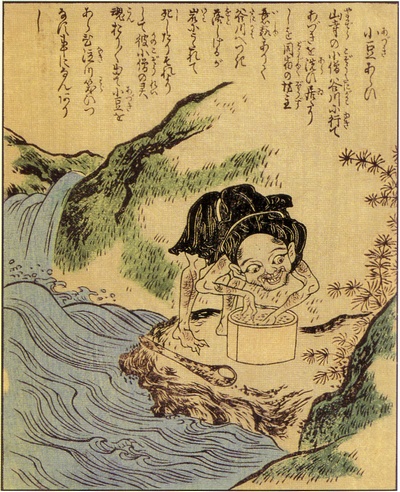
The azuki-arai ("bean washer") is heard far more often than it is seen. Near rivers and streams at night, travelers report a rhythmic scraping sound — the noise of azuki red beans being washed against stone — accompanied by a chanted refrain: "Shall I wash my beans, or shall I eat a person?" (azuki togōka, hito kutte yarōka). The exact words vary by region, but the pattern is consistent.
Appearance
No single appearance is agreed upon. Regional traditions describe the azuki-arai as an old woman, a child, a small demon, or simply a disembodied sound with no visible source at all. The shapelessness is part of its character — it is fundamentally a sound yokai, a piece of supernatural auditory folklore.
Folklore and Meaning
Kunio Yanagita analyzed this category of "sound yokai" in his Yōkai Dangi, noting how a wide range of unexplained nocturnal sounds across Japan were personified as bean-washing creatures. The mundane domestic action of washing beans, transposed to a dark riverside at night, becomes deeply unsettling. Many traditions warn that approaching the source of the sound risks being pulled into the water.
A Warning in Disguise
Like many water-related yokai, the azuki-arai likely served as a communal warning against approaching rivers after dark — a real danger in an era without reliable lighting. Giving the hazard a name and a voice made the warning memorable and transmissible across generations.
Sources
- 『Yōkai Dangi』 Kunio Yanagita (1956)
- 『Konjaku Hyakki Shūi』 Toriyama Sekien (1781)
Related Yokai
Amabie
amabie
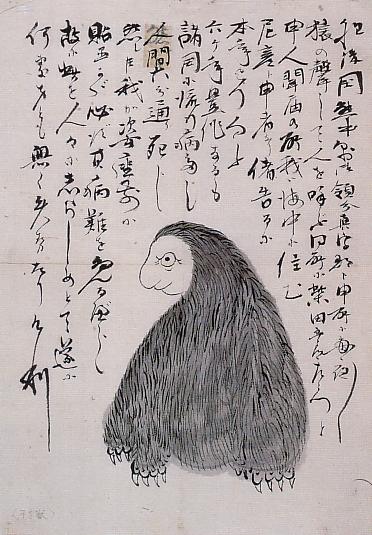
An 1846 sea spirit that foretold plague, asking its image be shown to the sick.

Azuki-Babaa
azuki-babaa
A dangerous old-woman yokai who scrapes azuki beans in mountain streams. Related to the azuki-arai but more specifically formed and more actively threatening.
Bake-Kujira
bake-kujira
A colossal ghost whale said to appear off the coasts of Shimane and Yamaguchi, rising from the night sea as a massive skeleton surrounded by strange birds and fish.