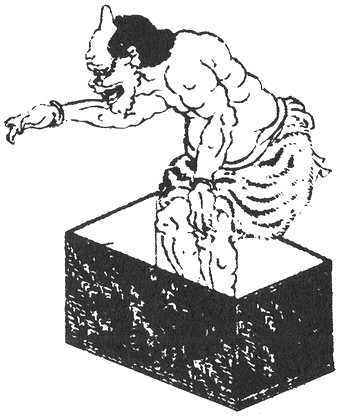
Amanojaku
amanojaku
Also known as: Contrary Demon、Perverse Imp
A small, perverse demon that reads human hearts and does the opposite of what is desired. Famous as the villain of folk tales like Uriko-hime, and depicted in Buddhist sculpture as a creature trampled underfoot by guardian deities.
- Era
- Heian Period
- Region
- Nationwide
- Type
- Oni
Overview
The amanojaku is a small, perverse demon defined by its fundamental contrariness: it possesses the ability to read human desires and emotions, and responds by doing precisely the opposite of what is wished or expected. If you want it to leave, it stays; if you command it to be quiet, it screams; if you want it to tell the truth, it lies with relish. The amanojaku's contrarianism is not mere random mischief but a purposeful inversion of human will, making it a creature that embodies obstinacy, deception, and the frustration of good intentions. It appears in Japanese folk tales, Buddhist iconography, and in the common language itself — "amanojaku" remains a living Japanese word for a contrarian or willfully perverse person.
Appearance
The amanojaku is depicted as a small oni — a diminutive demon with horns, wild eyes, bared teeth, and the musculature of a creature that punches above its weight class. In Buddhist sculpture, it appears most famously as the creature trampled underfoot by the Four Heavenly Kings (Shitenno) or by guardian deity statues at temple gates. These trampled demons represent evil being subdued by righteous power, and they are typically depicted in poses of contorted agony, their bodies twisted beneath the weight of the divine being that stands on them.
The Tale of Uriko-hime
The most famous amanojaku legend is the folk tale of Uriko-hime (Melon Princess), which exists in multiple regional variants across Japan. In the most common version, a beautiful girl is born from a melon. An amanojaku hears about her and comes to deceive her. Using its knowledge of her desires — she wants to be admired, she wants to be treated gently — it manipulates her into letting it into her home. It then kills her, steals her form and clothes, and takes her place. Because the amanojaku knows exactly what people expect and says exactly what they want to hear, it successfully impersonates her for a time, until the deception is discovered and the creature is punished.
Buddhist Origins
The term "amanojaku" derives from a Sanskrit concept transmitted through Buddhist texts — a class of minor demons (yaksha or similar) associated with heavens who nevertheless act against celestial order. In Japanese Buddhism, these contrary celestial demons became a convenient way of visualizing the principle that evil can masquerade as good, that perversity can appear in unexpected places, and that even beings in elevated positions are not guaranteed to act virtuously.
Cultural Legacy
The amanojaku's enduring legacy in Japanese culture is the survival of its name as a common descriptor for contrarian human behavior. Calling someone "amanojaku" in contemporary Japanese conversation immediately conveys that they habitually do the opposite of what is expected or desired. This linguistic survival is unusual even among well-known yokai, and it testifies to how deeply the creature's defining characteristic resonated with Japanese social experience.
Sources
- 『Gazu Hyakki Yagyo』 Toriyama Sekien (1776)
- 『Konjaku Monogatarishu』 Unknown (1120)
Related Yokai
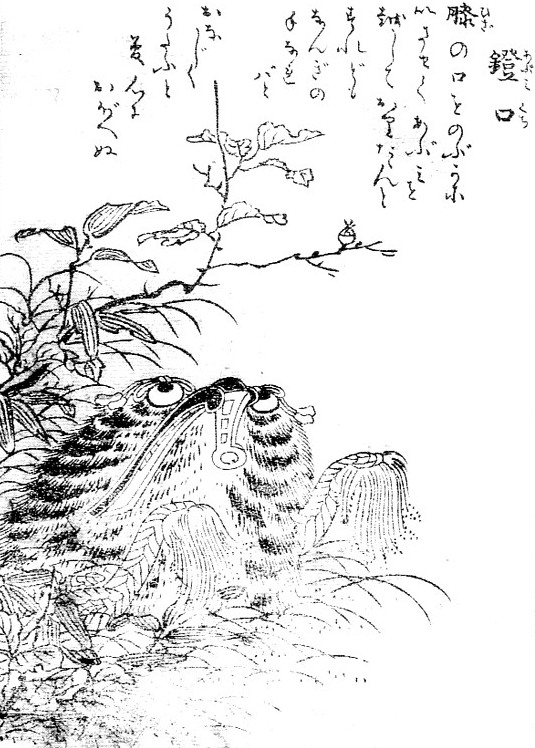
Abumi-guchi
abumi-guchi
A tsukumogami born from a horse's stirrup abandoned on a battlefield, still waiting for the master who never returned — grief and loyalty made monstrous.
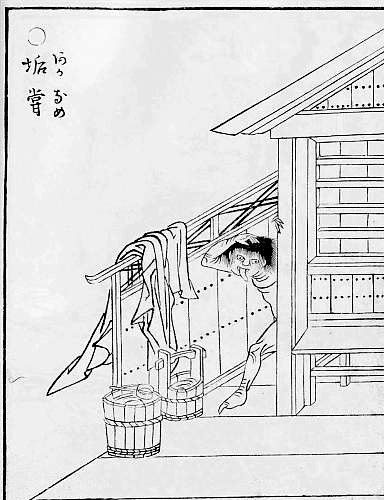
Aka-name
aka-name
A yokai that visits neglected bathrooms to lick up the accumulated grime and scum — harmless to people, but a vivid supernatural reminder to keep the bath clean.
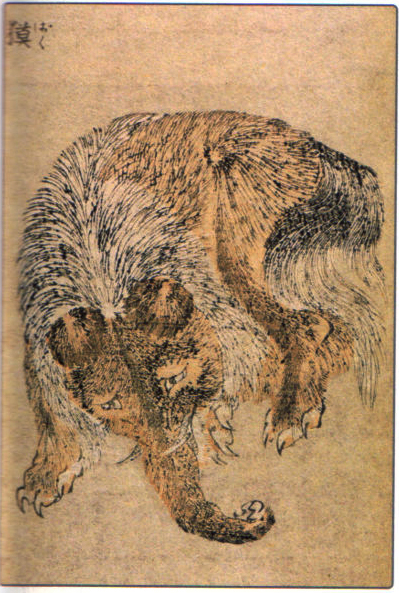
Baku
baku
A chimeric dream-eater invoked after nightmares to consume ill omens.