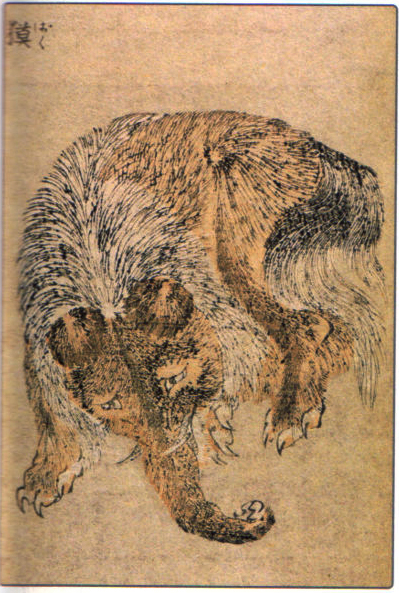
Baku
baku
Also known as: Dream Eater
A chimeric dream-eater invoked after nightmares to consume ill omens.
- Era
- Edo Period
- Region
- Nationwide
- Type
- Animal Yokai
Overview
The baku is a benevolent chimera assembled from leftover parts after the gods finished creating the other animals: an elephant's trunk, tiger's paws, ox's tail, bear's body, and rhinoceros eyes. It dwells at the boundary of sleep and waking, consuming the nightmares of those who call on it.
Chinese Origins
The baku derives from the Chinese mo (貘), a creature recorded in classical bestiaries as eating copper, iron, fire, and smoke. In China it was also confused with the giant panda (mao xiong) and the tapir. Japanese tradition refined it into a dream-eating spirit, giving it a protective domestic role.
Warding Off Bad Dreams
The Edo-period custom: upon waking from a nightmare, recite "Baku, eat this dream" three times before speaking to anyone. An alternative was to slip a drawing of a takarabune (treasure ship) with the palindrome poem Naka ki yo no / Tōki no nemuri no / Mina mezame / Nami nori fune no / Oto no yoki kana under your pillow. If nightmares still came, the paper was cast into a river to let the baku consume them.
A Cautionary Note
Some legends warn against summoning the baku too readily: if it runs out of nightmares to eat, it will consume hopes and desires as well, leaving the dreamer with a hollow life.
Modern Imagery
Contemporary baku appear most often in video games and anime as gentle, tapir-like guardians of sleep. The real-world tapir (baku in modern Japanese) inherits the mystical name, its distinctive proboscis linking it visually to its supernatural namesake.
Sources
- 『Gazu Hyakki Yagyō』 Toriyama Sekien (1776)
- 『Wakan Sansai Zue』 Terajima Ryōan (1712)
Related Yokai
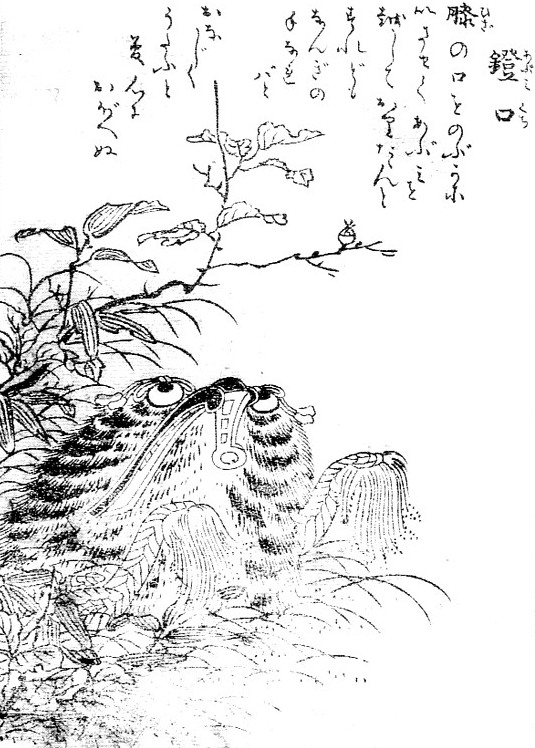
Abumi-guchi
abumi-guchi
A tsukumogami born from a horse's stirrup abandoned on a battlefield, still waiting for the master who never returned — grief and loyalty made monstrous.
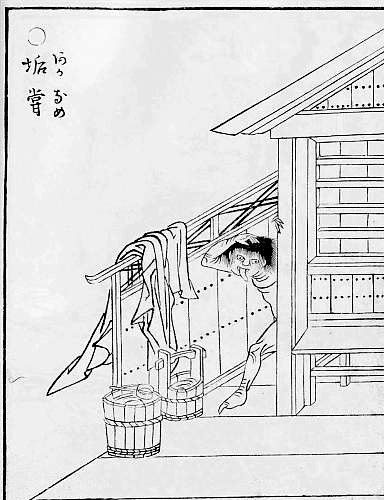
Aka-name
aka-name
A yokai that visits neglected bathrooms to lick up the accumulated grime and scum — harmless to people, but a vivid supernatural reminder to keep the bath clean.
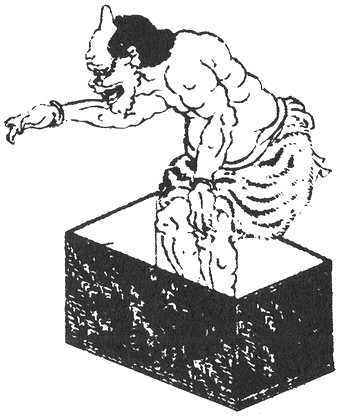
Amanojaku
amanojaku
A small, perverse demon that reads human hearts and does the opposite of what is desired. Famous as the villain of folk tales like Uriko-hime, and depicted in Buddhist sculpture as a creature trampled underfoot by guardian deities.