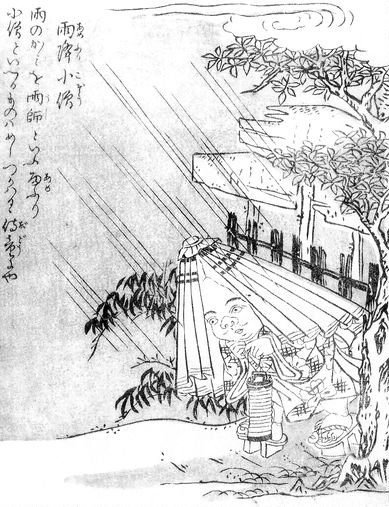
Amefuri-Kozo
amefuri-kozo
Also known as: rain-bringing boy、rain sprite
A rain sprite from Edo-period illustration, depicted as a small boy in a straw hat and rain cloak whose appearance heralds or brings rainfall.
- Era
- Edo Period
- Region
- Nationwide
- Type
- Weather Yokai
Overview
The amefuri-kozo ("rain-bringing boy") is a charming figure among Japan's supernatural beings — not a monster but a spirit, not threatening but elemental. He appears as a small child dressed for wet weather: a broad straw hat (kasa), a rain cloak, perhaps wooden clogs (geta). His arrival signals rain, or perhaps brings it; the relationship between the boy and the rainfall is one of intimate accompaniment rather than sinister causation.
Toriyama Sekien's Depiction
Toriyama Sekien included the amefuri-kozo in his influential illustrated compendium, where he rendered the figure with characteristic warmth. The image of a small, hat-wearing boy striding through rain is genuinely endearing — Sekien's amefuri-kozo reads less as a supernatural menace and more as a personification of rainfall itself, given legs and a child's plodding gait.
This aesthetic decision — framing the rain sprite as childlike and appealing — shaped all subsequent representations of the yokai and made it one of the most beloved figures in Japanese supernatural imagery.
Rain as Blessing and Burden
In agricultural Japan, rain was profoundly ambivalent. Too little, and crops died; too much, and they flooded. The right rain at the right time was a gift; untimely rain was a hardship. By giving rain a personality — a small boy, cheerful and unhurried — folk tradition found a way to hold both aspects of rain simultaneously. You could resent the inconvenience while still feeling a kind of affection for the little figure who brought it.
The amefuri-kozo has connections to the classical Chinese concept of the Yushi (Rain Master), a divine official responsible for precipitation — the kozo can be read as a vernacular, humanized descendant of this tradition.
Modern Presence
The amefuri-kozo remains widely known in contemporary Japan, appearing in children's songs, on rain-gear brands, and as a mascot figure for the rainy season (tsuyu). His image — the small figure in hat and cloak, undeterred by the downpour — has become a cultural shorthand for making peace with rain, a cheerful acknowledgment that wet days are simply part of life.
Sources
- 『Gazu Hyakki Yagyō』 Toriyama Sekien (1776)
Related Yokai
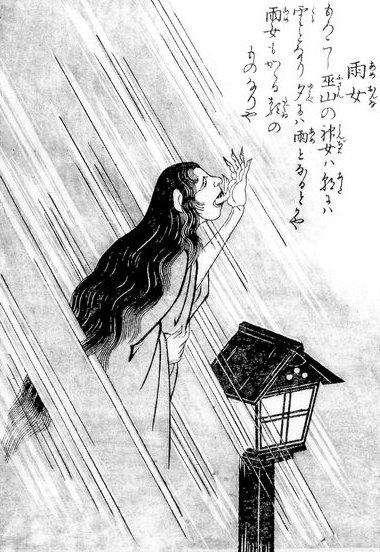
Ame-onna
ame-onna
A woman yokai associated with rainfall, appearing on rainy nights as a drenched figure sometimes carrying an infant, connected to both weather spirits and the spirits of women who died in childbirth.
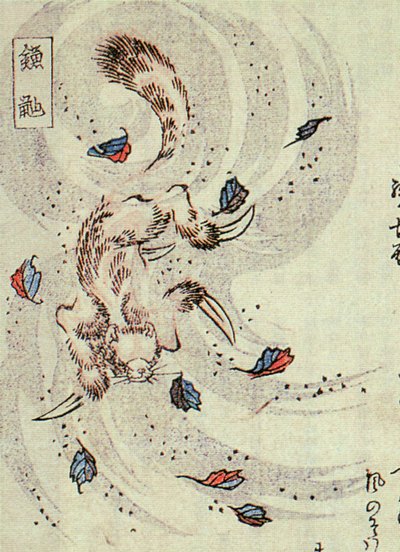
Kamaitachi
kamaitachi
A trio of weasel yokai from central Japan said to ride whirlwinds and slash travelers with razor-sharp claws. Victims find bloodless wounds on their legs with no memory of pain, typically after a sudden gust of wind.
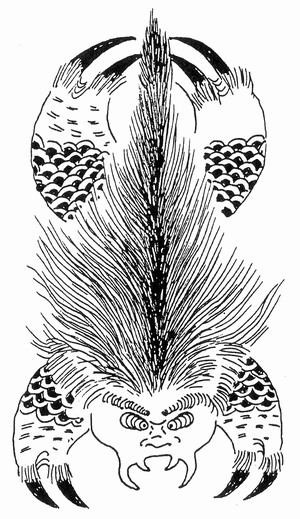
Raiju
raiju
A mysterious beast said to descend from the sky during thunderstorms. Its form varies by region — weasel, raccoon dog, cat, or monkey — but it always bears sharp claws and carries the destructive energy of lightning.