Kamaitachi
kamaitachi
Also known as: Sickle Weasel、Whirlwind Weasel
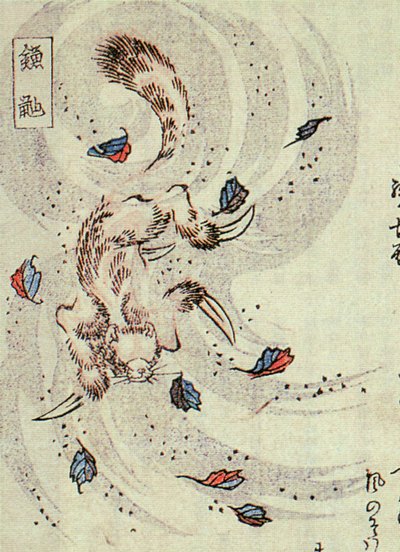
A trio of weasel yokai from central Japan said to ride whirlwinds and slash travelers with razor-sharp claws. Victims find bloodless wounds on their legs with no memory of pain, typically after a sudden gust of wind.
- Era
- Unknown
- Region
- Chubu
- Type
- Weather Yokai、Animal Yokai
Overview
The kamaitachi, literally "sickle weasel," is a yokai blamed for a peculiar type of mysterious injury. Travelers walking mountain paths or open fields in central and northern Japan would sometimes discover clean, blade-sharp cuts on their legs — wounds that appeared with no pain, no memory of being struck, and remarkably little bleeding. The kamaitachi was the explanation: an invisible weasel-like creature riding a whirlwind that slashes its victims in the blink of an eye. Traditions of this yokai are especially concentrated in the Chubu and Hokuriku regions, including present-day Nagano, Niigata, Toyama, and Ishikawa Prefectures.
The Three Weasels
The most elaborate and widely repeated version of the kamaitachi legend involves a coordinated attack by three weasels working as a team. The first weasel rides the whirlwind to knock the victim off balance, causing them to stumble. The second weasel, moving with supernatural speed, slashes the fallen person with claws sharp as scythes. The third weasel then immediately applies a healing ointment to the wound, which is why the cuts feel painless and bleed only slightly.
This three-weasel structure appears repeatedly in Edo-period literature. Matsura Seizan's essay collection Kasshi Yawa (1821) contains one of the most detailed accounts, and similar descriptions appear in other collections of strange tales from the period. The weasel (itachi) held a special and somewhat ambivalent place in Japanese folk belief — fast, elusive, and connected to the supernatural — making it a natural vehicle for such a legend.
Connection to Whirlwinds
The kamaitachi is inseparable from the phenomenon of the sudden whirlwind, or tsujikaze. The experiential reality behind the legend appears to be this: a person walks through a sudden small whirlwind, and shortly afterward notices a cut on their leg with no clear cause. The folk explanation attributed this to invisible weasels hidden within the spinning air. In rural communities, whirlwinds were themselves considered ominous, and prohibitions against walking into one were common — beliefs that merged seamlessly with kamaitachi lore.
Modern physical explanations have been proposed as well. The strong pressure differentials and static electrical charges within a small vortex could theoretically cause superficial skin injuries, which might explain the painless, bloodless quality of the wounds attributed to the kamaitachi.
Regional Spread
While the tradition is strongest in central and northern Honshu, versions of the kamaitachi legend appear as far as the Tōhoku region to the north and the Kantō plain to the east. Local names vary — "itachi no kaze" (weasel wind), "tsumujikaze no itachi" (whirlwind weasel) — reflecting the same underlying belief in different linguistic forms.
Cultural Legacy
The kamaitachi's vivid imagery — an invisible slashing force riding the wind — has made it one of the most visually reimagined yokai in modern Japanese popular culture. It appears frequently in fantasy novels, video games, and anime, often recast as a wind-element attack or a ninja technique. The term "kamaitachi" is sometimes used metaphorically in Japanese to describe something sudden, invisible, and cutting, demonstrating how deeply embedded this yokai has become in the cultural vocabulary.
Sources
- 『Kasshi Yawa』 Matsura Seizan (1821)
Related Yokai
Ame-onna
ame-onna
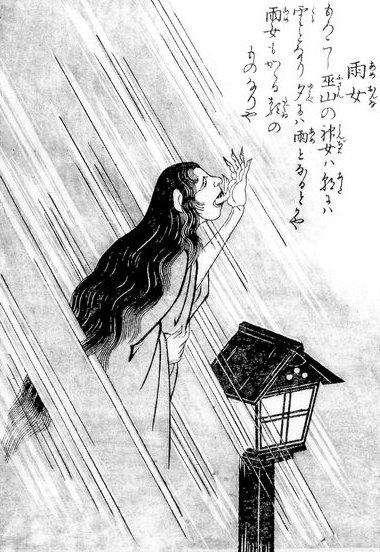
A woman yokai associated with rainfall, appearing on rainy nights as a drenched figure sometimes carrying an infant, connected to both weather spirits and the spirits of women who died in childbirth.
Amefuri-Kozo
amefuri-kozo
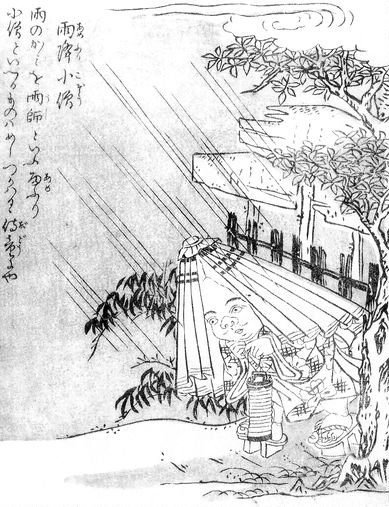
A rain sprite from Edo-period illustration, depicted as a small boy in a straw hat and rain cloak whose appearance heralds or brings rainfall.
Baku
baku
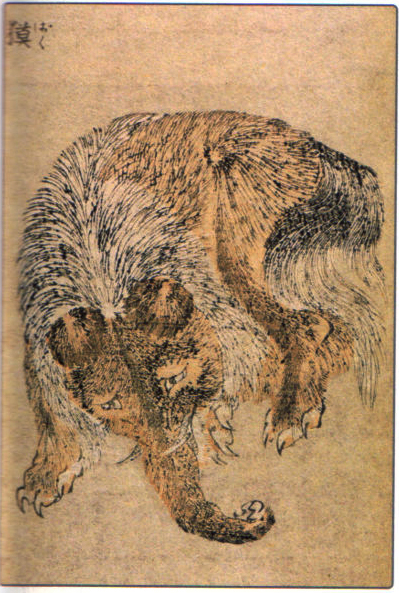
A chimeric dream-eater invoked after nightmares to consume ill omens.