Ashiarai Yashiki
ashiarai-yashiki
Also known as: Foot-Washing Mansion
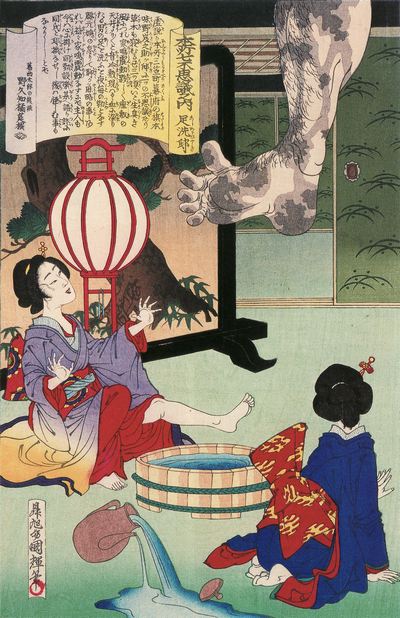
A haunted Edo mansion terrorized by an enormous disembodied foot that crashes through the ceiling demanding to be washed. This famous Edo kaidan is one of Japan's most distinctively absurd ghost stories.
- Era
- Edo Period
- Region
- Kanto
- Type
- House Yokai
Overview
The ashiarai yashiki — the "foot-washing mansion" — is one of Edo Japan's most memorably bizarre ghost stories. The haunting involves a single, enormous, disembodied human foot that crashes through the ceiling of a samurai's residence in Edo (modern Tokyo), dangling down from above and demanding, through some supernatural compulsion or direct vocalization, to be washed. The story is simultaneously terrifying and absurd, combining the horror of supernatural intrusion with the strangely mundane demand for foot hygiene.
The Haunting
According to the most common version of the story, a samurai lord and his household in Edo are disturbed one evening when the ceiling of a room bursts open and an enormous bare foot descends through the hole. The foot is of impossible size — far too large to belong to any normal human — and is caked with dirt and grime. The spirit attached to or represented by the foot somehow communicates its desire: it wants to be washed. The household, confronted with this surreal and terrifying demand, has no choice but to comply. Servants are dispatched with basins of water to wash the foot, which retreats back through the ceiling once the task is complete, only to return on subsequent nights with the same demand.
Interpretations and Origins
The ashiarai yashiki is documented in Kasshi Yawa (1821) by Matsura Seizan, who recorded numerous supernatural anecdotes heard from his contemporaries. The tale is identified with a specific location in Edo, lending it a degree of concrete credibility within the storytelling tradition. The story's origins may lie in older beliefs about giant earth spirits or land deities whose bodies were enormous beyond human scale. The foot demanding to be cleaned may represent a ritual obligation to a territorial spirit — failure to maintain proper relations with local supernatural powers could have serious consequences for a household.
Some folklorists interpret the ashiarai yashiki as a variation on the widespread Japanese motif of demanding spirits who require specific services from humans. The specificity of the demand — not violence, not possession, just foot-washing — transforms what could be a straightforwardly terrifying encounter into something oddly negotiable, even comic.
Cultural Significance
The ashiarai yashiki has endured as one of the most distinctive entries in Edo kaidan literature precisely because of its mix of genuine dread and absurdist humor. It exemplifies the Japanese storytelling tradition of finding the uncanny in the mundane, and has been retold, illustrated, and adapted across centuries. In modern yokai culture, it is frequently cited as evidence of Japanese horror's unique capacity for strangeness that defies easy categorization as either pure terror or pure comedy.
Sources
- 『Kasshi Yawa』 Matsura Seizan (1821)
Related Yokai
Aka-name
aka-name
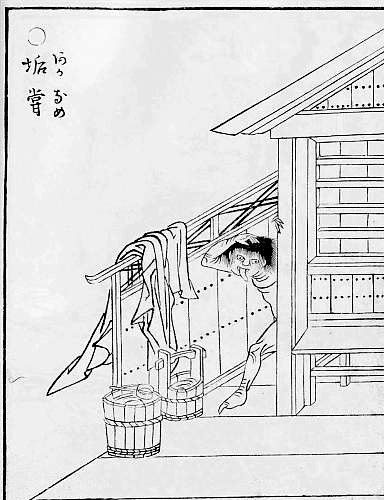
A yokai that visits neglected bathrooms to lick up the accumulated grime and scum — harmless to people, but a vivid supernatural reminder to keep the bath clean.
Aonyōbō
aonyobo
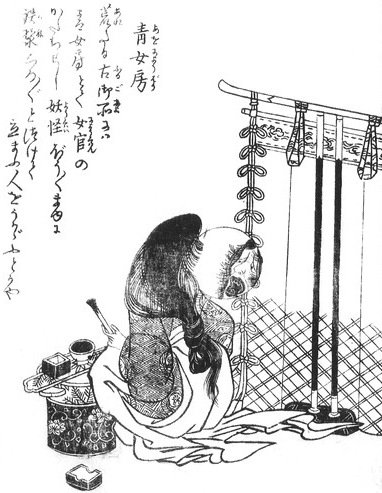
The spirit of a Heian court lady who haunts ruined aristocratic mansions, still applying her blackened teeth makeup centuries after her death.
Chochin-obake
chochin-obake
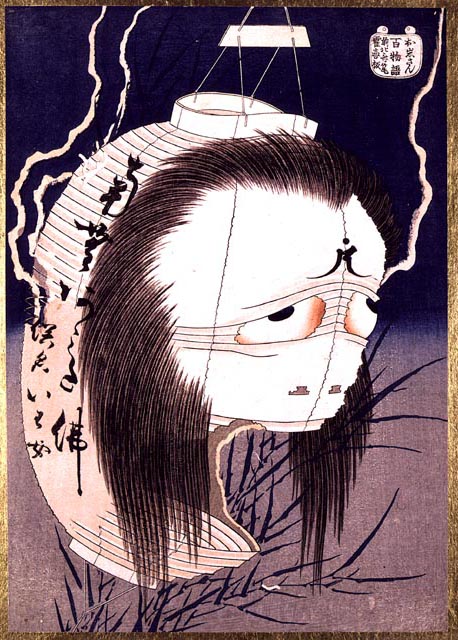
A tsukumogami born from an old paper lantern, with a gaping mouth and single eye — a fixture of Edo-period ghost stories and candlelit horror gatherings.