
Azuki-Babaa
azuki-babaa
Also known as: bean-washing hag、azuki old woman
A dangerous old-woman yokai who scrapes azuki beans in mountain streams. Related to the azuki-arai but more specifically formed and more actively threatening.
- Era
- Unknown
- Region
- Nationwide
- Type
- Mountain Yokai、Water Yokai
Overview
The azuki-babaa ("bean-washing hag") is a nocturnal yokai found near mountain streams and water sources, scraping azuki red beans with a rhythmic shoki-shoki sound. She is related to, but distinct from, the azuki-arai (the "bean washer"): where the azuki-arai is often formless — pure sound, source unseen — the azuki-babaa has a body, a face, and intention. She is an old woman, and she is hungry.
Relationship to the Azuki-Arai
The azuki-babaa represents a fiercer, more embodied version of the bean-washing tradition. Both share the distinctive chant: "Shall I wash my beans, or shall I eat a person?" (azuki togōka, hito kuōka). But where the azuki-arai tends to flee when approached, the azuki-babaa may grab, drag toward the water, or devour those who get too close.
This shift from uncanny sound to dangerous old woman reflects the layering of supernatural tradition across regions and time periods. The two yokai exist on a continuum of the same core legend, differentiated by degree of concreteness and menace.
The Old-Woman Yokai Tradition
In Japanese supernatural folklore, the dangerous old woman (baba or babaa) is a recurring archetype. The yamauba (mountain hag), the onibaba (demon grandmother), and related figures share a consistent cluster of attributes: mountain or waterside dwelling, cannibalistic appetite, great supernatural power, and a disturbing combination of the familiar (a grandmother figure) with the monstrous.
The azuki-babaa participates in this tradition. She is not merely an inexplicable sound in the dark; she is a recognizable figure — an elderly woman at a stream — whose wrongness only becomes apparent when she turns around, or when you realize she has noticed you.
Regional Distribution and Warning Function
Traditions of the azuki-babaa are especially strong in Tohoku (northeast Japan), where mountain streams and remote valleys provided appropriate settings. As a practical matter, the yokai served as a warning against approaching rivers and streams alone at night — a real hazard in an era without artificial lighting or rescue services.
The vivid, specific image of the bean-washing hag was more memorable and transmissible than an abstract warning about river danger. The yokai did the work of the warning.
Sources
- 『Yōkai Dangi』 Kunio Yanagita (1956)
Related Yokai
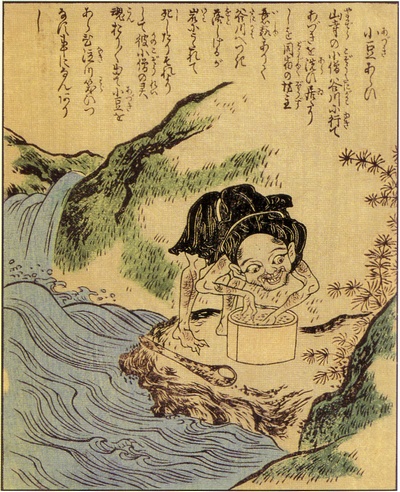
Azuki-Arai
azuki-arai
A yokai heard but rarely seen, washing azuki beans by a riverbank at night.
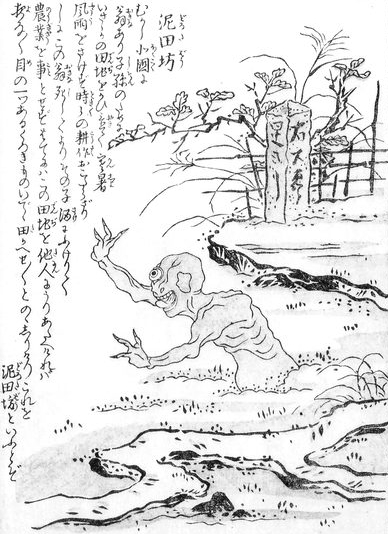
Dorotabō
dorotabo
The vengeful spirit of an old farmer whose children sold his beloved rice paddies, rising from the mud at night with three-fingered hands raised, crying for his fields to be returned.
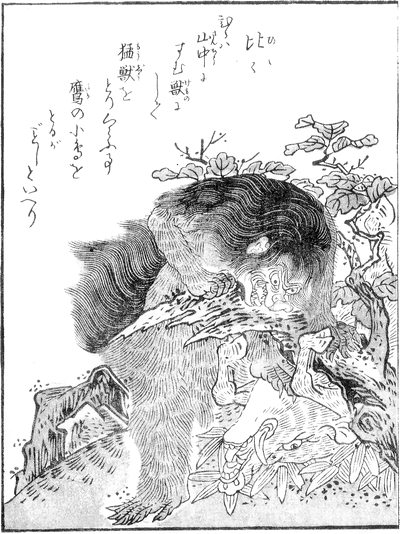
Hihi
hihi
A gigantic ape-like mountain demon known for abducting villagers. Despite its fearsome strength, it has a notorious weakness for sake, and many folk tales describe heroes using alcohol to defeat it.