Bakezori
bakezori
Also known as: Sandal Ghost、Straw Sandal Spirit
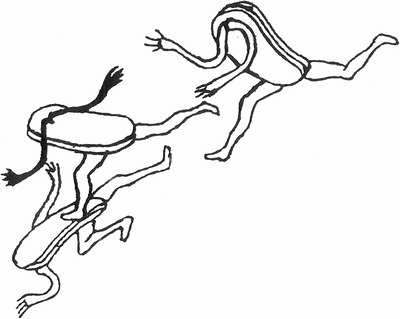
A tsukumogami born from a worn-out straw sandal (zori) that wanders through houses at night, crying out a strange counting chant tied to its thong holes.
- Era
- Edo Period
- Region
- Nationwide
- Type
- Tsukumogami
Overview
The bakezori is a tsukumogami — an animated object spirit — that inhabits an old, discarded zori, the traditional Japanese woven straw sandal. Once the sandal has been worn down through years of daily use and finally abandoned, it develops limbs and a face and begins to wander the house at night. According to some traditions, the bakezori calls out a counting chant as it moves, enumerating a sequence that corresponds to the holes in the sandal's thong. It is among the most endearing examples of the tsukumogami type.
Appearance
Bakezori are typically depicted as a straw sandal with eyes appearing in the woven body of the sole, arms formed from the thong straps, and stubby legs growing from the heel. The creature's round, woven face gives it a surprised, wide-eyed expression. Some illustrations show a pair of bakezori working together, as sandals naturally come in pairs — the spirit animating both simultaneously or the two operating as a team.
Footwear as Sacred Object
Footwear occupies a unique symbolic position across many cultures as the boundary object between the human body and the earth. In Japan, zori and geta (wooden clogs) were worn constantly and were among the most personal of everyday possessions. The sole of a sandal absorbs the wearer's weight, warmth, and movement over thousands of daily steps. That such an intimate, heavily used object would accumulate spiritual energy and eventually animate is a natural consequence of the tsukumogami belief system.
The Tsukumogami Emaki Legacy
The bakezori appears in the Tsukumogami Emaki, a picture scroll from the Muromachi period that is one of the foundational documents of the tsukumogami tradition. In the scroll's narrative, neglected household objects band together, transform into demons, and wreak havoc before ultimately being redeemed through Buddhist teachings. The scroll served both as moral instruction — care for your possessions — and as entertainment, with the comical parade of animated sandals, pots, and brushes providing plenty of visual delight.
Sources
- 『Wakan Sansai Zue』 Terajima Ryōan (1713)
Related Yokai
Abumi-guchi
abumi-guchi
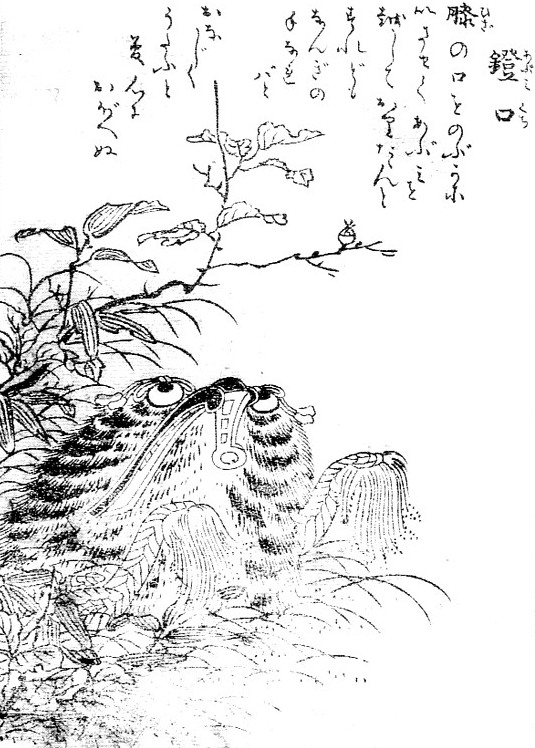
A tsukumogami born from a horse's stirrup abandoned on a battlefield, still waiting for the master who never returned — grief and loyalty made monstrous.
Biwa-bokuboku
biwa-bokuboku
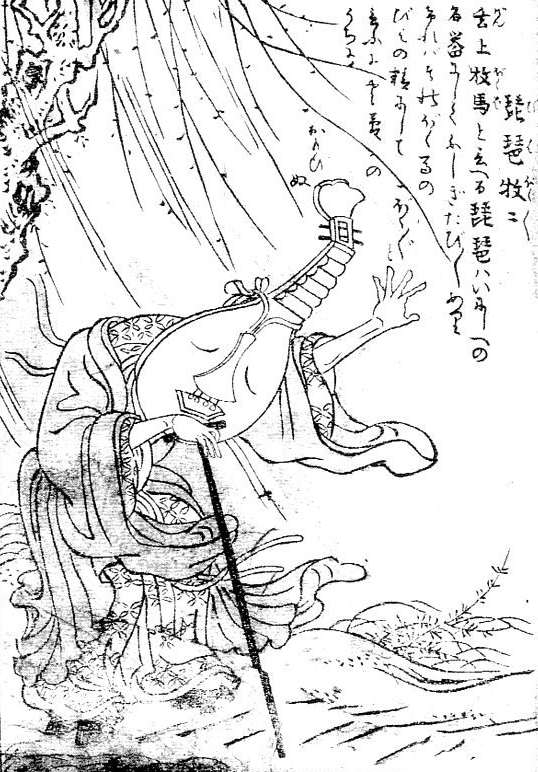
A tsukumogami animated from an old biwa lute, said to play music by itself in the night — the soul of a player or the accumulated longing for music made manifest.
Chochin-obake
chochin-obake
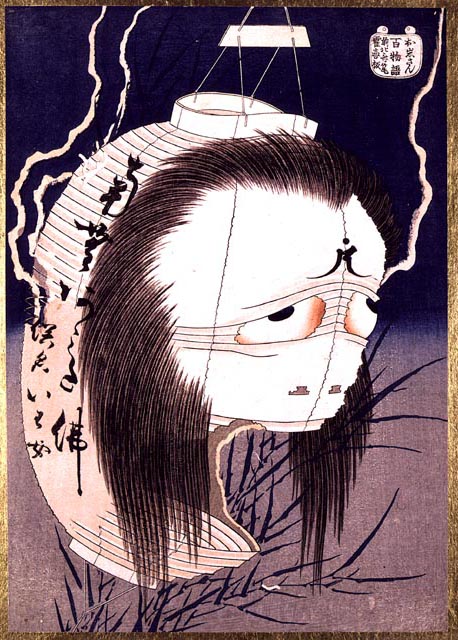
A tsukumogami born from an old paper lantern, with a gaping mouth and single eye — a fixture of Edo-period ghost stories and candlelit horror gatherings.