Biwa-bokuboku
biwa-bokuboku
Also known as: Animated Biwa、Lute Spirit
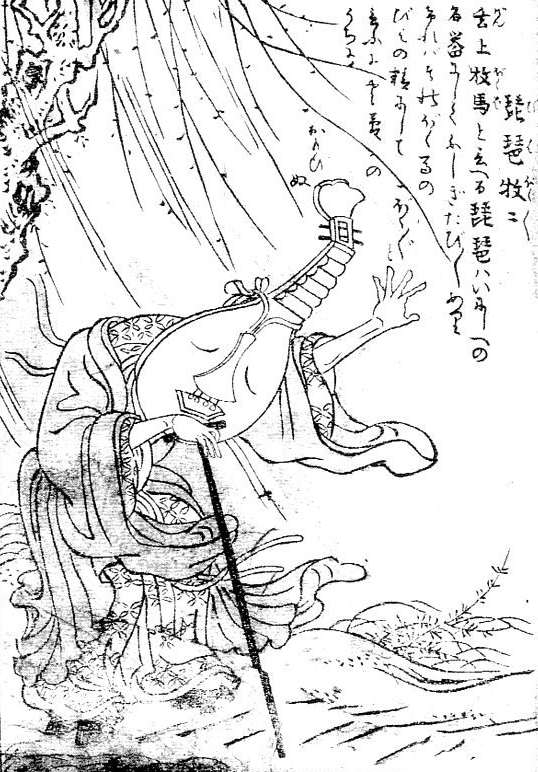
A tsukumogami animated from an old biwa lute, said to play music by itself in the night — the soul of a player or the accumulated longing for music made manifest.
- Era
- Edo Period
- Region
- Nationwide
- Type
- Tsukumogami
Overview
Biwa-bokuboku is a tsukumogami born from an old biwa — the four-stringed Japanese lute — that has been played and cherished for so many years that it has developed a life and will of its own. Depicted by Toriyama Sekien in his Gazu Hyakki Yagyō, it joins the night parade of demons as one of several animated musical instruments. The name's second element, "bokuboku," may be an onomatopoeic echo of the biwa's resonant plucked tones, or a corruption of the word for wood (moku).
Appearance
Sekien shows the biwa-bokuboku as a biwa with limbs and a face — legs extending from its rounded body, and eyes and a neck emerging from the instrument's neck. It has the posture of a figure in motion, as if walking in procession. The spirit is often interpreted as containing the soul of a biwa hōshi (a blind traveling musician who performed epic tales to biwa accompaniment), whose devotion to the instrument outlasted their physical existence.
The Biwa and Japanese Spiritual Culture
The biwa arrived in Japan from China and India during the Nara and Heian periods and became central to Japanese court music and religious performance. Blind biwa hōshi monks were the primary transmitters of the Heike Monogatari (Tale of the Heike), chanting the epic of the Genpei War to biwa accompaniment as a form of memorial prayer for the war dead. The instrument thus carried deep associations with spirits, the dead, and the liminal space between worlds — making the idea of a biwa animated by spirit entirely natural within this cultural framework.
Music as Spiritual Force
Unlike most other tsukumogami, biwa-bokuboku is defined by sound as much as form. The ghostly music it plays in the night represents the residual emotional charge of performances, prayers, and grief-songs that saturated the instrument over decades of use. This link between artistic devotion and spiritual animation appears throughout Japanese folklore, and the motif of an instrument playing itself in an empty room continues to appear in modern horror and fantasy. Biwa-bokuboku stands as a haunting reminder that the arts are never merely entertainment — they are conduits for something deeper.
Sources
- 『Gazu Hyakki Yagyō』 Toriyama Sekien (1776)
Related Yokai
Abumi-guchi
abumi-guchi
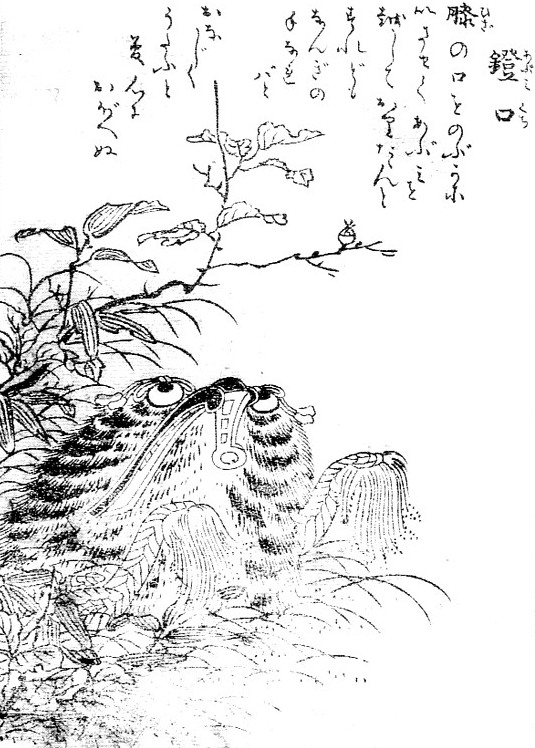
A tsukumogami born from a horse's stirrup abandoned on a battlefield, still waiting for the master who never returned — grief and loyalty made monstrous.
Aka-name
aka-name
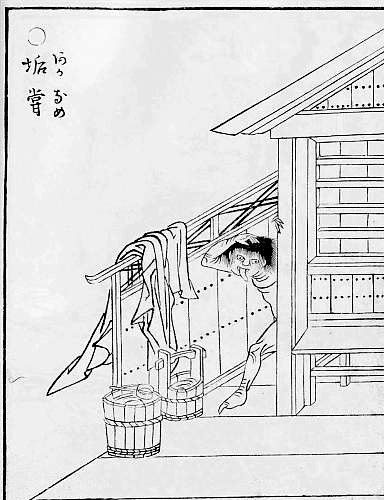
A yokai that visits neglected bathrooms to lick up the accumulated grime and scum — harmless to people, but a vivid supernatural reminder to keep the bath clean.
Amanojaku
amanojaku
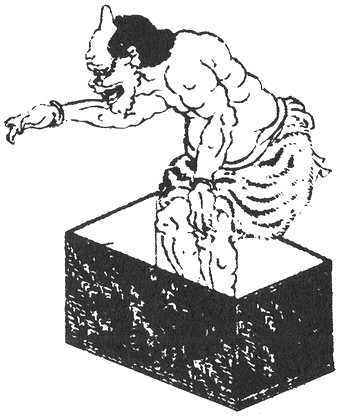
A small, perverse demon that reads human hearts and does the opposite of what is desired. Famous as the villain of folk tales like Uriko-hime, and depicted in Buddhist sculpture as a creature trampled underfoot by guardian deities.