Dodomeki
dodomeki
Also known as: hundred-eyed demon、coin-stealer spirit
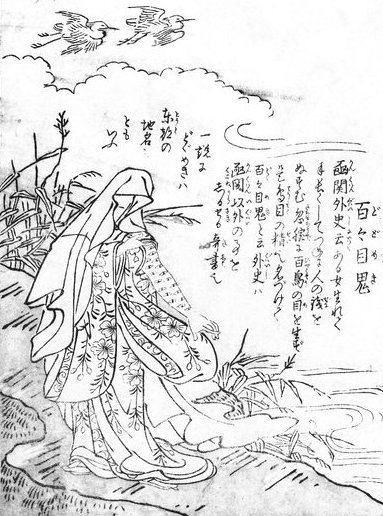
A yokai covered in countless eyes along both arms, created by Toriyama Sekien as the transformed spirit of a woman who stole coins.
- Era
- Edo Period
- Region
- Nationwide
- Type
- Undead
Overview
The Dodomeki is a yokai introduced by Toriyama Sekien in his 1781 collection Konjaku Hyakki Shūi ("Supplement to the Hundred Demons of Long Ago"). Its most striking feature is the dense covering of eyeballs that lines both of its arms from shoulder to fingertip, each eye moving independently. According to Sekien's accompanying text, the Dodomeki was once a woman who habitually stole small coins; as punishment, her arms transformed into this grotesque landscape of watching eyes. The name "dodo" refers to the hundred-penny coin (hyakume), while "me" means "eye" — a multilayered pun at the heart of the yokai's identity.
Appearance
Sekien's illustration shows a woman — young or middle-aged — whose arms are entirely covered in a dense tessellation of eyes. The eyes stare outward in all directions simultaneously, the irises and pupils distinct and animate. The rest of her form appears human: long dark hair, a composed if unnerving expression. The arms are the entire spectacle. In some interpretations, the eyes occasionally blink or swivel, suggesting that the arms now possess their own will.
Sekien's Wordplay
The Dodomeki is a masterwork of Edo-period visual and linguistic wit. The word hyakume meant both "one hundred eyes" and the denomination of a hundred-mon coin. By transforming a thief who stole small change into a creature whose arms sprout a hundred eyes, Sekien made a precise moral pun: the coins she took became the eyes watching her, and the very act of theft became permanently inscribed on her body. This kind of layered allusion was highly valued in Edo literary and artistic circles.
Moral and Symbolic Meaning
The Dodomeki literalizes the concept of guilt made visible. In many cultures, the eye is associated with conscience, judgment, and the inability to hide — "all-seeing" deities and the phrase "I see what you did." The woman's stolen coins have become the instruments of her endless exposure; she can never hide what she has done, because the evidence is written across her body in a hundred staring eyes. The transformation is also a kind of imprisonment: she is watched from within, by herself, forever.
Legacy
While the Dodomeki is largely a creation of Sekien rather than a creature rooted in folk tradition, it has been enthusiastically adopted into modern Japanese pop culture. Video games featuring yokai often include her as a powerful enemy, and the image of arms covered in eyes has become a recognizable horror motif in manga and anime.
Sources
- 『Konjaku Hyakki Shūi』 Toriyama Sekien (1781)
Related Yokai
Abumi-guchi
abumi-guchi
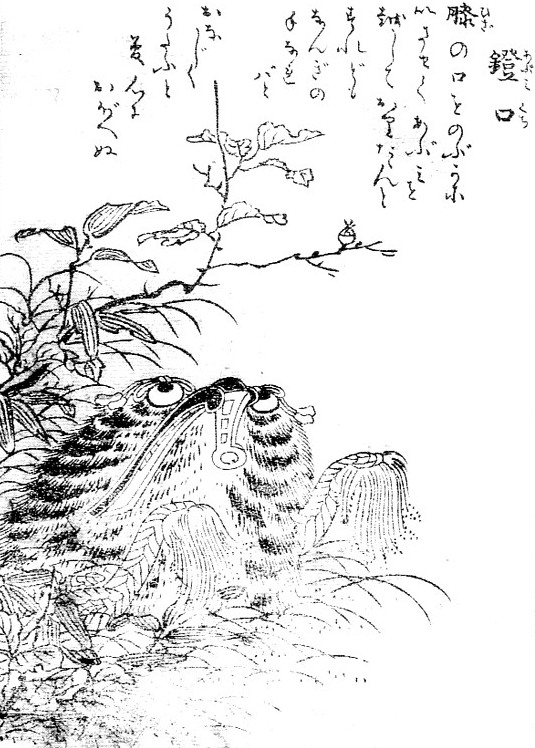
A tsukumogami born from a horse's stirrup abandoned on a battlefield, still waiting for the master who never returned — grief and loyalty made monstrous.
Aka-name
aka-name
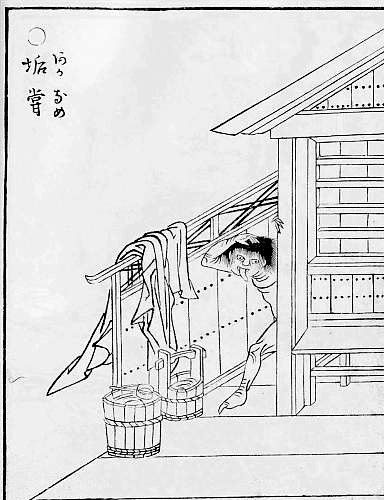
A yokai that visits neglected bathrooms to lick up the accumulated grime and scum — harmless to people, but a vivid supernatural reminder to keep the bath clean.
Amanojaku
amanojaku
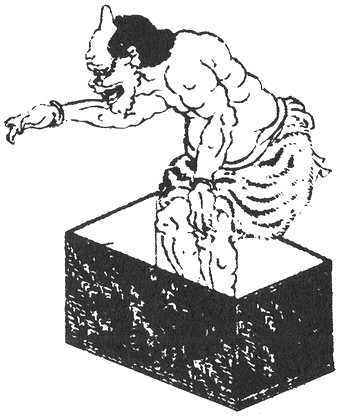
A small, perverse demon that reads human hearts and does the opposite of what is desired. Famous as the villain of folk tales like Uriko-hime, and depicted in Buddhist sculpture as a creature trampled underfoot by guardian deities.