
Goryō
goryou
Also known as: vengeful spirit、august spirit
The wrathful spirit of a person who died unjustly — executed, exiled, or destroyed by political intrigue. Appeasement through enshrinement as a deity became the foundation of a major Heian religious tradition.
- Era
- Heian Period
- Region
- Kinki
- Type
- Undead
Overview
A goryō (literally "august spirit," often translated as "vengeful spirit" or onryō) is the ghost of a person who died in circumstances of profound injustice: political exile, false conviction, execution, or the crushing of legitimate ambition by enemies at court. The unresolved rage and grief of such a person, according to Heian belief, became a force capable of causing epidemics, famines, storms, and the deaths of those who wronged them.
The response to this threat — not exorcism, but enshrinement — defines the goryō cult and distinguishes it from most other supernatural traditions.
Famous Goryō
Sugawara no Michizane (845–903) is the archetypal goryō. A scholar-statesman of brilliant reputation, he was brought down by the Fujiwara clan and exiled to Dazaifu in Kyushu, where he died in misery. Within years of his death, lightning struck the imperial palace, court officials died in rapid succession, and the capital was afflicted by plague. The court, terrified, posthumously restored his rank, and eventually enshrined him as Tenjin, the thunder deity and patron of learning. The Kitano Tenman-gū in Kyoto was founded specifically for his appeasement; he is now worshipped at thousands of Tenman-gū shrines nationwide.
Taira no Masakado (?–940), who led a rebellion against the court and was killed, became one of the great malevolent goryō of the Kanto region. Several shrines, including Kanda Myōjin in Tokyo, enshrine him as a protective deity.
The Logic of the Goryō Cult
The goryō tradition operates on a principle that recurs throughout Japanese religion: that the most dangerous spirits become the most powerful protectors when properly honored. A spirit destroyed by injustice carries enormous potential energy — that same energy, redirected through ritual acknowledgment and respect, becomes a guardian force.
The first recorded formal goryō ceremony (goryōe) took place in Kyoto in 863, convened by the imperial court to pacify the spirits of those who had died violently during political turmoil. This institutionalized the practice of addressing supernatural threats through festival and enshrinement rather than exorcism.
Living Legacy
Many of Japan's most popular festivals — including the Gion Festival in Kyoto, now a UNESCO Intangible Cultural Heritage — originated as goryō appeasement ceremonies. The template of the wronged individual transformed into a wrathful supernatural force, and ultimately into a god, remains one of the structuring myths of Japanese spiritual and political culture.
Sources
- 『Wakan Sansai Zue』 Terajima Ryōan (1713)
Related Yokai
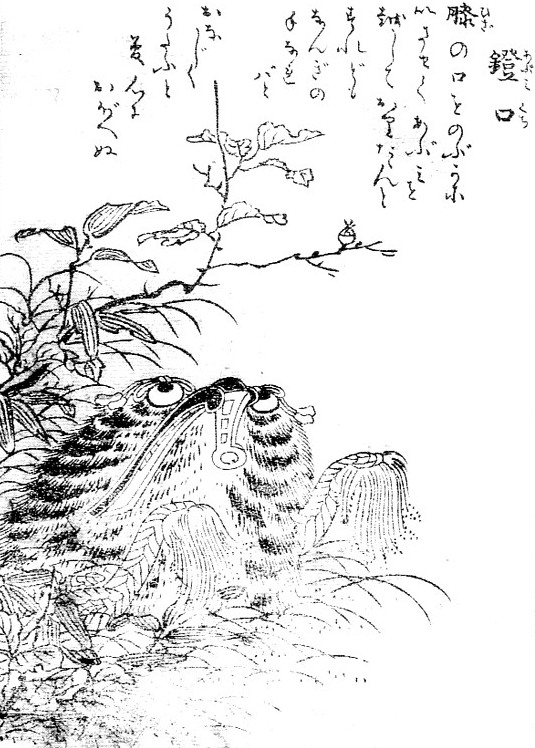
Abumi-guchi
abumi-guchi
A tsukumogami born from a horse's stirrup abandoned on a battlefield, still waiting for the master who never returned — grief and loyalty made monstrous.
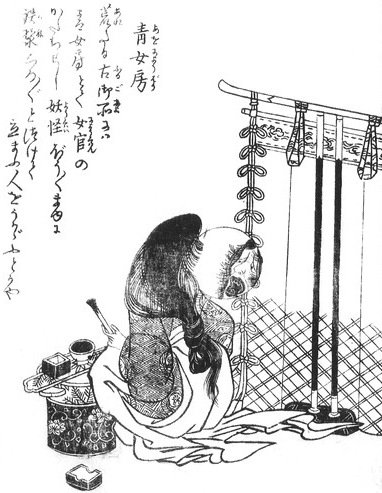
Aonyōbō
aonyobo
The spirit of a Heian court lady who haunts ruined aristocratic mansions, still applying her blackened teeth makeup centuries after her death.
Bake-Kujira
bake-kujira
A colossal ghost whale said to appear off the coasts of Shimane and Yamaguchi, rising from the night sea as a massive skeleton surrounded by strange birds and fish.