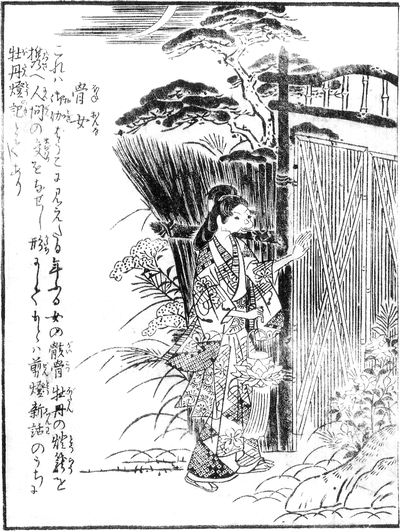
Hone-Onna
hone-onna
Also known as: skeleton woman
A female skeleton ghost whose obsessive love survives death. She returns nightly to the man she loved in life, appearing beautiful until her true form is revealed.
- Era
- Edo Period
- Region
- Nationwide
- Type
- Undead
Overview
The hone-onna ("bone woman" or "skeleton woman") is among the most haunting figures in Edo-period supernatural art and literature. She is the ghost of a woman who died with her love — or her obsession — unresolved. That emotion, refusing to release her, reconstitutes her body as a skeleton and sends her back to the man she cannot leave.
Toriyama Sekien depicted her in Gazu Hyakki Yagyō (1776) with memorable force: a skeleton in an elegant kimono, sleeves spread wide in a gesture of graceful dance, moonlight catching the white of bone through the silk.
The Pattern of the Story
The classic hone-onna narrative begins with an apparently living woman who visits a man by night. They spend nights together; the man is enchanted. Then — in the light of morning, or when a lamp is lit, or when a priest or talisman reveals the truth — he sees what is actually beside him: not a woman but a skeleton, clothed in the memory of who she was.
This structure appears across multiple Edo-period ghost story genres: the kaidan collections, the rakugo storytelling tradition, and the woodblock print illustration that was Sekien's medium.
Literary Connections
The hone-onna tradition intersects with several celebrated Edo-period works. Ueda Akinari's Ugetsu Monogatari (1776) includes "Asaji ga Yado," in which a husband returns home to find his wife waiting — only to discover she has been dead for years. The story of Botan Doro (The Peony Lantern), adapted from a Chinese original by Rakugo master San'yutei Enchō, features a skeleton woman who visits her former lover nightly.
Beauty and Death
The hone-onna's power as an image lies in its collision of opposites. The kimono — a garment of beauty, femininity, and living warmth — encloses a skeleton. Graceful movement animates bones that should be still. The beloved woman and the death's-head coexist in the same figure. This is the aesthetic the Edo period called mono no aware pushed to its extreme: the pathos of beautiful things that do not last, given a form that insists they do.
Sources
- 『Gazu Hyakki Yagyō』 Toriyama Sekien (1776)
Related Yokai
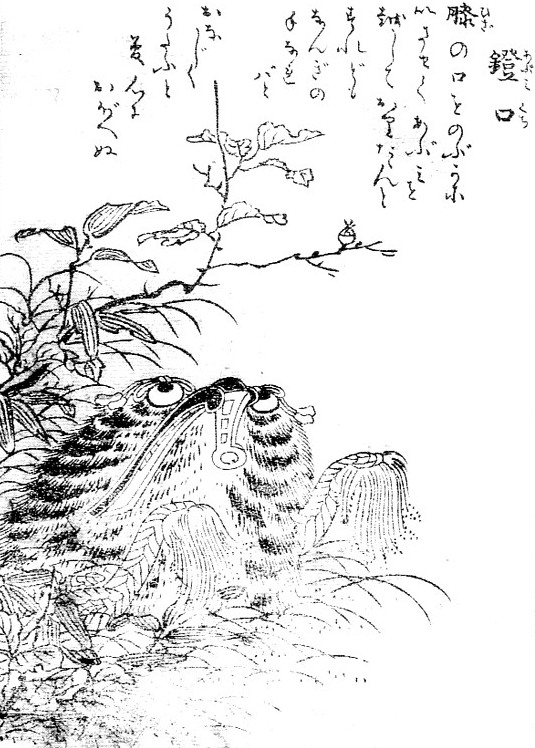
Abumi-guchi
abumi-guchi
A tsukumogami born from a horse's stirrup abandoned on a battlefield, still waiting for the master who never returned — grief and loyalty made monstrous.
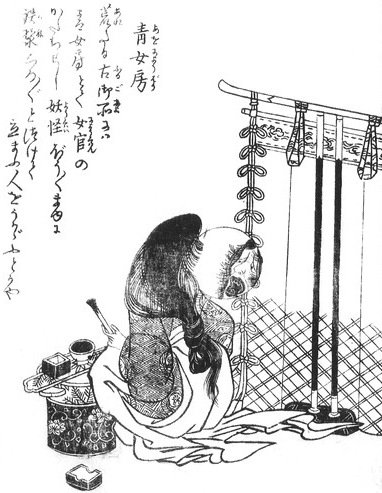
Aonyōbō
aonyobo
The spirit of a Heian court lady who haunts ruined aristocratic mansions, still applying her blackened teeth makeup centuries after her death.
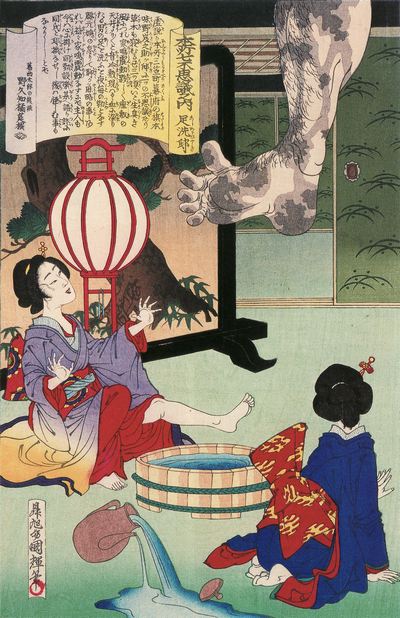
Ashiarai Yashiki
ashiarai-yashiki
A haunted Edo mansion terrorized by an enormous disembodied foot that crashes through the ceiling demanding to be washed. This famous Edo kaidan is one of Japan's most distinctively absurd ghost stories.