Ibaraki-doji
ibaraki-doji
Also known as: Demon of Ibaraki、Rashomon Demon
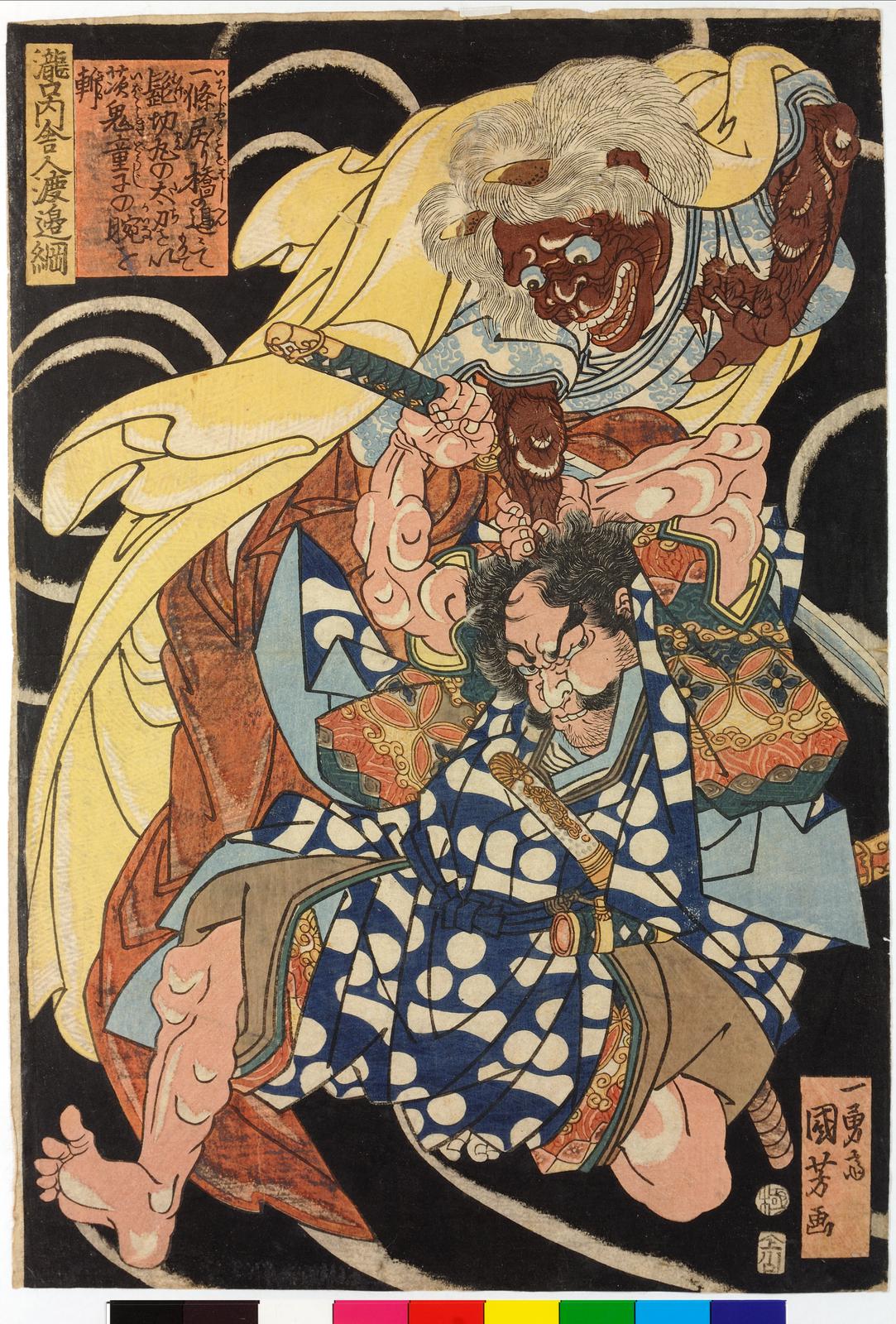
A fearsome female oni who served as Shuten-doji's most powerful lieutenant on Mount Oeyama. Ibaraki-doji is also famous for haunting Rashomon Gate in Kyoto, where her arm was severed by the warrior Watanabe no Tsuna.
- Era
- Heian Period
- Region
- Kinki
- Type
- Oni
Overview
Ibaraki-doji is one of the most famous individual oni in Japanese legend — a powerful demon woman who served as chief lieutenant to the demon lord Shuten-doji on Mount Oeyama. Her name is associated with the Ibaraki region, though she is primarily connected to the Kinki area around Kyoto. She is celebrated in two distinct narrative traditions: as a participant in the Oeyama demon campaign and as the haunter of Rashomon Gate, where she came into direct conflict with the warrior Watanabe no Tsuna and lost her arm.
Appearance and Power
Ibaraki-doji is typically depicted as a young woman of extraordinary beauty whose true nature as an oni is revealed by distinctive features: wild eyes, sharp claws, a fang-lined mouth, and supernatural physical strength. Some depictions show her with reddish skin and oni horns, while others portray her as nearly indistinguishable from a human noblewoman until the moment of transformation. Her beauty served as a weapon — she was able to approach humans and lure them into dangerous situations before revealing her true demonic nature.
The Rashomon Encounter
The most famous legend associated with Ibaraki-doji involves Rashomon Gate in Kyoto — the great southern gate of the imperial capital, which had fallen into disrepair and become associated with crime, darkness, and supernatural danger. Watanabe no Tsuna, one of Yorimitsu's legendary retainers, was said to have encountered Ibaraki-doji at this gate after dark. In the ensuing struggle, Tsuna severed her arm with his blade. The demon fled, and Tsuna brought the arm back to Yorimitsu's residence as proof of his encounter.
Several days later, an old woman appeared at Tsuna's door claiming to be his long-lost aunt and requesting to see the arm. Moved by filial piety, Tsuna showed her the arm — at which point the woman revealed herself to be Ibaraki-doji in disguise, snatched back her severed arm, and fled into the night. This tale demonstrates both the demon's cunning and the danger of letting emotional sentiment override spiritual caution.
Cultural Significance
Ibaraki-doji is one of the few female oni given significant individual characterization in Japanese legend, and this makes her a figure of particular interest in discussions of gender and the supernatural in Japanese culture. She is also notable for her partial victory: she was wounded and driven off, but she recovered her arm and escaped — an outcome far different from the complete defeat and death of Shuten-doji. This survival gives her a persistent quality that has sustained her as a cultural figure across centuries of Japanese literature, theater, and art.
Sources
- 『Oeyama Ekotoba』 Unknown (1400)
Related Yokai
Amanojaku
amanojaku
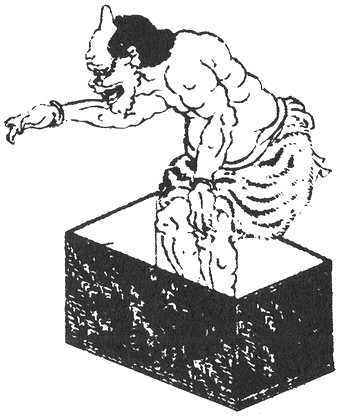
A small, perverse demon that reads human hearts and does the opposite of what is desired. Famous as the villain of folk tales like Uriko-hime, and depicted in Buddhist sculpture as a creature trampled underfoot by guardian deities.
Oni
oni
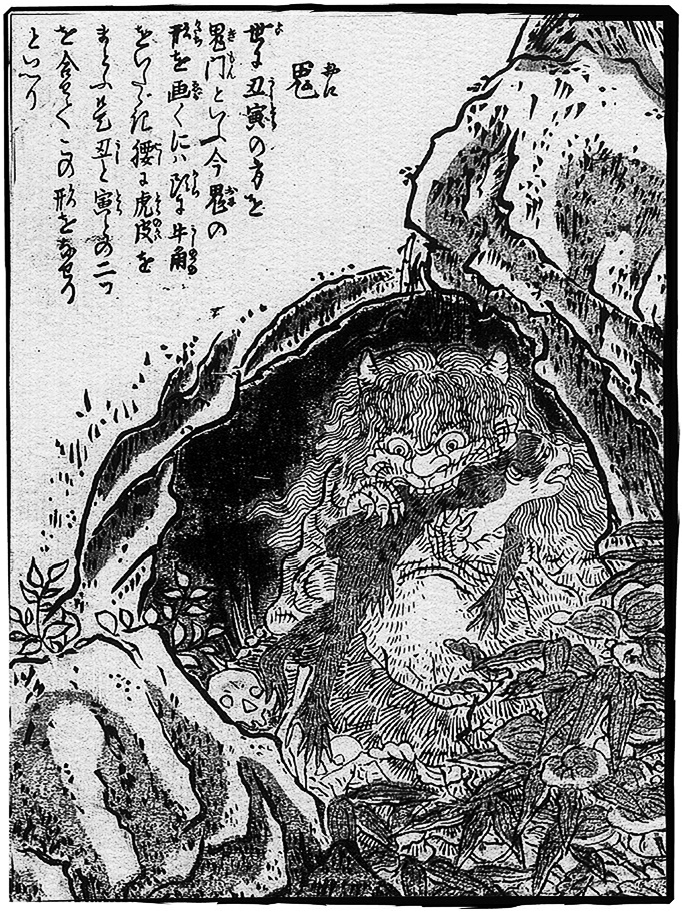
Horned club-wielding demons: hell's jailers and Japan's most iconic monsters.
Sazae-oni
sazae-oni
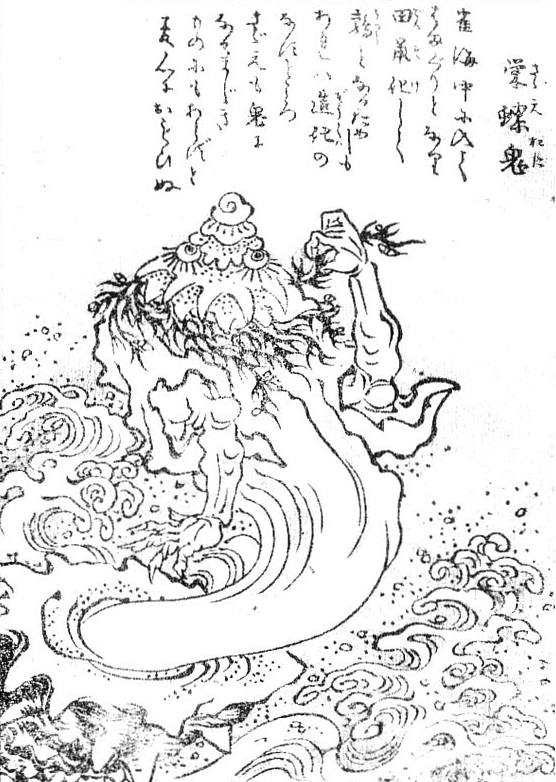
A sea demon from Kyushu formed when a turban shell (sazae) transforms into an oni after years in the ocean. Said to sink boats and attack fishermen, it was illustrated by Toriyama Sekien as a shell-bodied female demon.