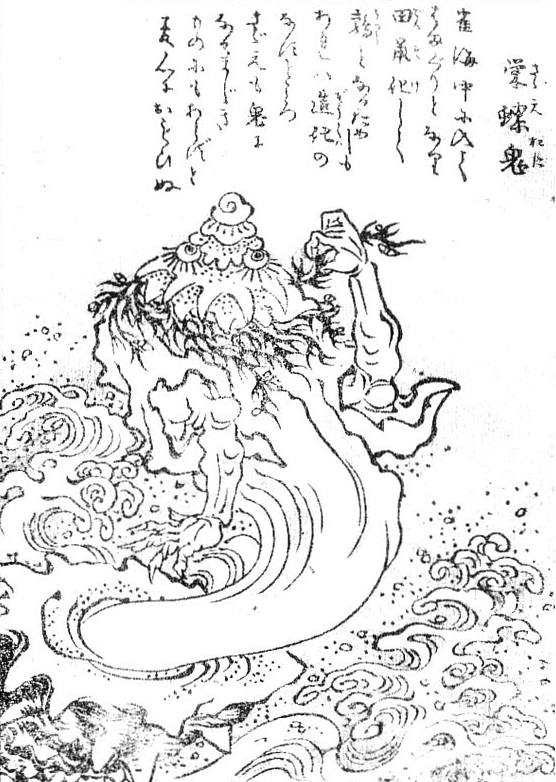
Sazae-oni
sazae-oni
Also known as: Turban Shell Demon、Sazae Demon
A sea demon from Kyushu formed when a turban shell (sazae) transforms into an oni after years in the ocean. Said to sink boats and attack fishermen, it was illustrated by Toriyama Sekien as a shell-bodied female demon.
- Era
- Edo Period
- Region
- Kyushu
- Type
- Sea Yokai、Animal Yokai、Oni
Overview
The sazae-oni is a sea demon that takes form when a turban shell — the sazae (Turbo cornutus), a common Japanese sea snail — accumulates supernatural power over many years and transforms into a monster with demonic features. Most at home in the sea legends of Kyushu, particularly its northern and western coastal communities, the sazae-oni represents the ancient Japanese belief that marine creatures, like long-lived animals on land, can transcend their natural state and become yokai. The creature was illustrated by Toriyama Sekien in his Gazu Hyakki Yagyō (1776), where it appears as a spiral-shelled demon with a woman's face and arms emerging from its shell.
Appearance
Sekien's influential depiction shows the sazae-oni as a hybrid being — the characteristic spiraling shell of a turban snail, from which emerge humanoid arms and a striking, almost beautiful female face. This combination of familiar seafood and monstrous femininity is deeply unsettling. The creature's shell is its armor and its essence; the demon within uses it both as a home and as a weapon. In later traditions, the sazae-oni is described as possessing tremendous strength, enough to capsize fishing boats.
Legends from Kyushu's Coast
Among the fishing communities of northern and western Kyushu, stories circulated of strange encounters with impossibly large sazae at sea. A fisherman might pull up what seemed like an enormous turban shell in his net, only to have it suddenly unfurl into a demon that attacks the boat. Other versions describe the sazae-oni rising from the water during storms, using its spiraling shell as a weapon against unlucky sailors.
The mechanism of transformation is consistent with broader Japanese folk belief: any living thing that reaches exceptional age — a turtle, a fox, a snake, a tanuki — can cross the boundary into the supernatural. For a sazae to become a demon, it simply needs to have lived long enough in the depths of the sea for malevolent energy to accumulate within its shell.
Marine Yokai in Japanese Folk Belief
The sazae-oni belongs to a rich tradition of sea creatures transformed into monsters. Sharks, octopuses, crabs, and various shellfish all have yokai counterparts in Japanese folk belief. The ocean was understood as a realm apart — an "other world" that operated by different rules — and its creatures were potential vehicles for supernatural power. The distinctive spiral shape of the turban shell, with its tight coiling and hard exterior, lent the sazae a natural symbolism of contained force and stubborn resistance, qualities fitting for a demon.
The Sazae-oni as Cultural Reflection
The sazae-oni reflects the dual relationship Japan's coastal peoples had with the sea: it was their livelihood and their sustenance, but also an unpredictable force that could take lives without warning. A common food item like the sazae becoming monstrous captures the sense that nothing from the ocean could ever be entirely trusted. In modern Japanese culture, the sazae-oni has achieved renewed recognition through its appearances in anime and manga, and through its connection to the beloved anime series Sazae-san — though the titular character Sazae is very different from her monstrous namesake.
Sources
- 『Gazu Hyakki Yagyō』 Toriyama Sekien (1776)
Related Yokai
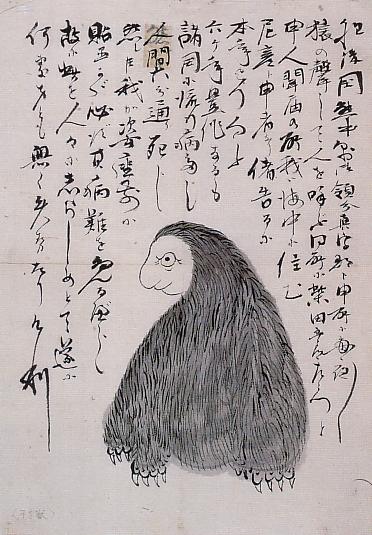
Amabie
amabie
An 1846 sea spirit that foretold plague, asking its image be shown to the sick.
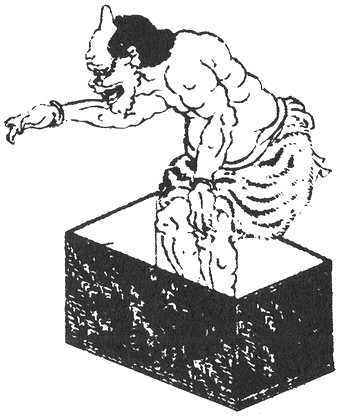
Amanojaku
amanojaku
A small, perverse demon that reads human hearts and does the opposite of what is desired. Famous as the villain of folk tales like Uriko-hime, and depicted in Buddhist sculpture as a creature trampled underfoot by guardian deities.
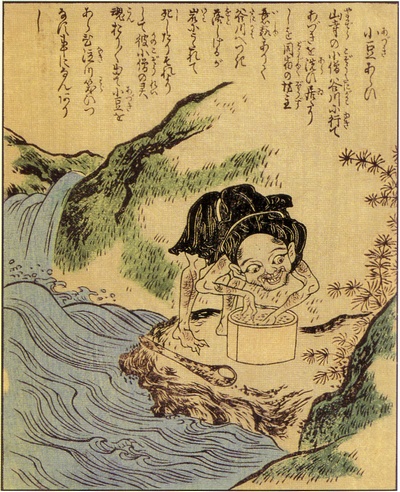
Azuki-Arai
azuki-arai
A yokai heard but rarely seen, washing azuki beans by a riverbank at night.