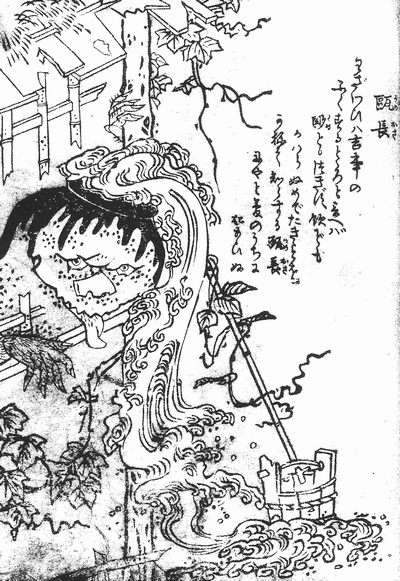
Kameosa
kameosa
Also known as: Jar Spirit
A tsukumogami born from an old ceramic jar or sake vessel, joining the procession of the Hyakki Yagyō as one of many animated household objects.
- Era
- Edo Period
- Region
- Nationwide
- Type
- Tsukumogami
Overview
Kameosa is a tsukumogami — an animated spirit inhabiting an old object — that takes the form of a large ceramic storage jar (kame) that has grown legs and a long, stretching neck. It appears in Toriyama Sekien's Gazu Hyakki Yagyō as a participant in the Hyakki Yagyō, the legendary night parade of one hundred demons. The name combines kame (jar) with osa, which can mean "elder" or refer to the elongated neck that stretches from the vessel's mouth.
Appearance
Sekien's illustration shows a bulbous ceramic jar walking on stubby legs, with a stretched neck and expressive face emerging from the jar's opening. The contrast between the heavy, rounded body of the vessel and the surprisingly mobile neck creates an unsettling yet almost comical image. The jar would originally have stored sake or other liquids, and its transformation suggests that years of use have left it saturated with memory and intent.
The Tsukumogami Tradition
The belief that old objects could transform into spirits is one of the most distinctive features of Japanese folk religion. The concept appears clearly in the Tsukumogami Emaki, a picture scroll from the Muromachi period depicting discarded household objects banding together to take revenge on the humans who had abandoned them. Large ceramic vessels like the one kameosa represents were central to Japanese domestic and commercial life — used to store water, sake, miso, and grain — and their long service made them ideal candidates for spiritual animation.
Role in the Night Parade
The Hyakki Yagyō (Night Parade of One Hundred Demons) is a legendary procession in which all manner of yokai march through the streets after dark. Encountering the parade was considered extremely dangerous, and ordinary people were advised to stay indoors. Sekien's systematic depictions of the parade transformed a vague folk tradition into a comprehensive catalog of supernatural beings, and kameosa's inclusion established it as a recognized member of the yokai world. The presence of humble household objects in such a grand supernatural procession speaks to the democratic spirit of Japanese animism, in which even the most ordinary things may harbor extraordinary power.
Sources
- 『Gazu Hyakki Yagyō』 Toriyama Sekien (1776)
Related Yokai
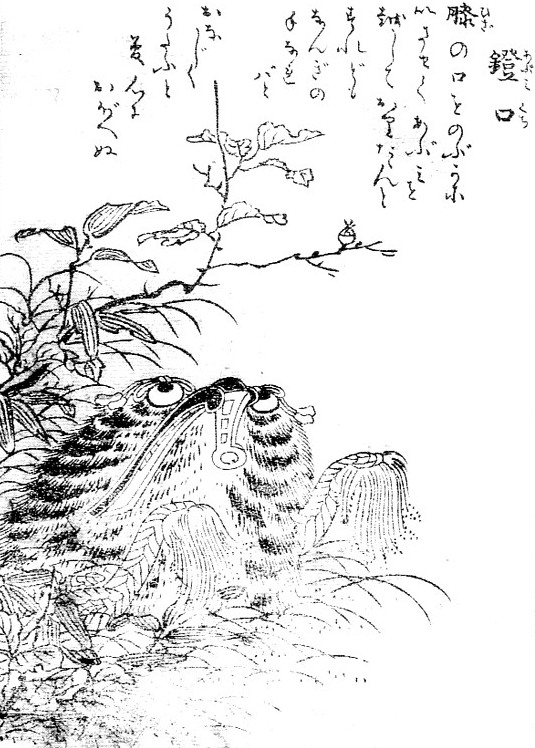
Abumi-guchi
abumi-guchi
A tsukumogami born from a horse's stirrup abandoned on a battlefield, still waiting for the master who never returned — grief and loyalty made monstrous.
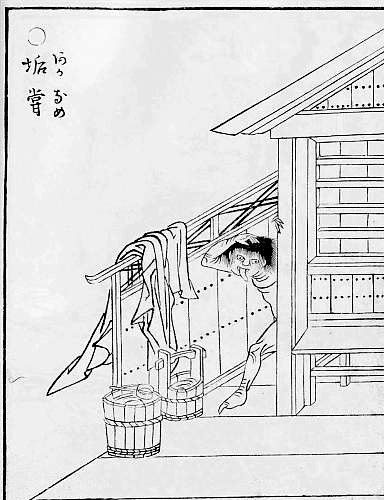
Aka-name
aka-name
A yokai that visits neglected bathrooms to lick up the accumulated grime and scum — harmless to people, but a vivid supernatural reminder to keep the bath clean.
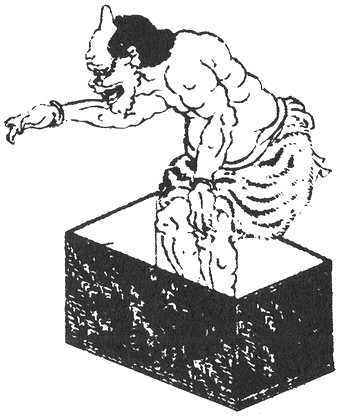
Amanojaku
amanojaku
A small, perverse demon that reads human hearts and does the opposite of what is desired. Famous as the villain of folk tales like Uriko-hime, and depicted in Buddhist sculpture as a creature trampled underfoot by guardian deities.