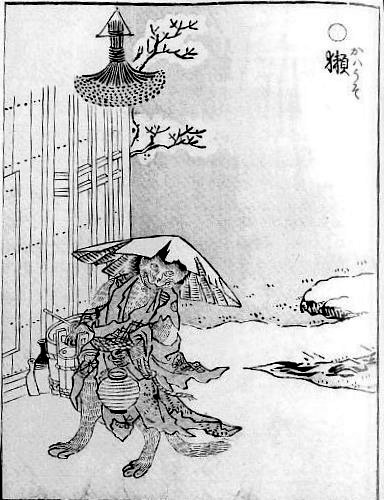
Kawa-uso
kawa-uso
Also known as: River Otter Spirit、Otter Yokai
A supernatural otter yokai that haunts Japan's rivers and ponds. After living many years, ordinary otters were believed to gain shapeshifting powers, transforming into humans to play tricks on unsuspecting villagers.
- Era
- Unknown
- Region
- Nationwide
- Type
- Water Yokai、Animal Yokai
Overview
The kawa-uso is a yokai born when an ordinary river otter (kawausō) lives long enough to acquire supernatural powers. In Japanese folk belief, animals that survive to an exceptional old age were thought to gain spiritual abilities — a concept applied to foxes, tanuki, cats, and otters alike. The kawa-uso is classified alongside the fox (kitsune) and tanuki as one of Japan's classic shapeshifting trickster animals, and stories of its antics appear in local legends from virtually every region of the country.
Appearance and Abilities
In its natural state, the kawa-uso resembles an ordinary Japanese river otter — a sleek, elongated mammal about sixty centimeters in length, skilled at swimming and feeding on river fish. As a yokai, however, it possesses the ability to transform into human form. It is most commonly said to take the shape of a handsome young man or a beautiful woman, though it also sometimes appears as a child. The transformation is generally convincing enough to fool humans in the dark or at a distance.
Legends and Behavior
Kawa-uso legends range from comic to sinister. On the milder end, stories describe otters disguising themselves as humans to purchase sake at riverside taverns, or accompanying lone travelers along night roads while maintaining casual conversation — only for their true nature to be revealed when someone notices their tail or their strange interest in fish. These comic tales share a tone with tanuki trickster stories and emphasize the kawa-uso's fondness for human company and mischief.
More alarming accounts describe the kawa-uso luring people toward the water to drown them, or spreading disease through riverside communities. In some traditions, the kawa-uso is associated with will-o'-the-wisps appearing over rivers at night.
The encyclopedic work Wakan Sansai Zue (1713) by Terajima Ryōan includes entries on the otter's supernatural qualities, documenting Edo-period scholarly awareness of the belief. The text reflects the widespread conviction that this animal was something more than mere wildlife.
The Extinction of the Japanese Otter
The Japanese river otter (Lutra lutra whiteleyi) was declared extinct by Japan's Ministry of the Environment in 2012, having not been officially confirmed since the 1970s. Once common along rivers throughout Japan, the otter's disappearance has made kawa-uso legends feel increasingly distant to modern audiences. However, recent sightings in Ehime Prefecture's Uwakai coastal area have raised the possibility that a remnant population may survive.
Cultural Context
The kawa-uso shares its place in East Asian supernatural animal lore with similar traditions in China and Korea, where otters are also sometimes treated as supernatural beings. Within Japanese yokai taxonomy, the kawa-uso is generally considered the most benign of the shapeshifting animals — less malicious than the fox and less comedically destructive than the tanuki. This relatively gentle reputation, combined with the otter's actual extinction, has given the kawa-uso a somewhat melancholic place in modern yokai culture.
Sources
- 『Wakan Sansai Zue』 Terajima Ryōan (1713)
Related Yokai
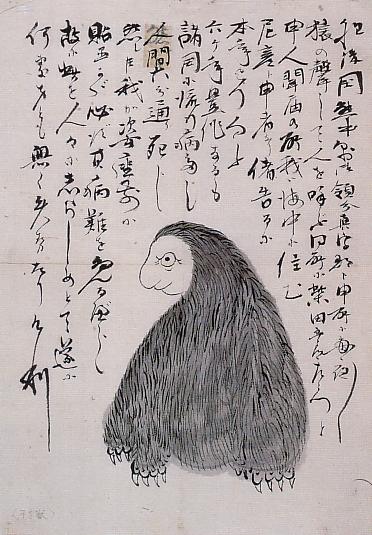
Amabie
amabie
An 1846 sea spirit that foretold plague, asking its image be shown to the sick.
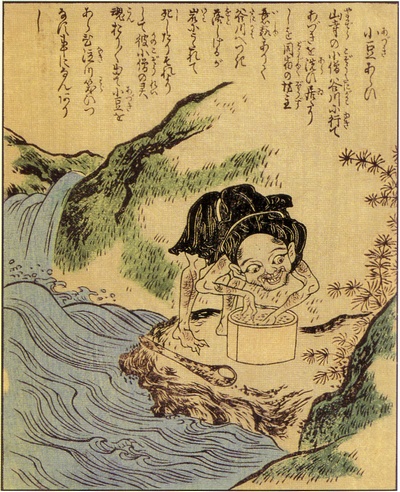
Azuki-Arai
azuki-arai
A yokai heard but rarely seen, washing azuki beans by a riverbank at night.

Azuki-Babaa
azuki-babaa
A dangerous old-woman yokai who scrapes azuki beans in mountain streams. Related to the azuki-arai but more specifically formed and more actively threatening.