
Kekkaigen
kekkaigen
Also known as: Keukegen、Hairy House Spirit
A small, shaggy creature covered in long hair that lurks in damp, shadowy corners of houses. The kekkaigen brings illness and misfortune to those who share a home with it.
- Era
- Edo Period
- Region
- Nationwide
- Type
- House Yokai
Overview
The kekkaigen (also transliterated as keukegen) is a small, deeply unsettling household yokai entirely covered in a thick mass of long, tangled hair or fur, making its body shape nearly impossible to determine. It lives in the humid, poorly lit corners of homes — beneath the porch, behind cluttered storage areas, in damp garden spots where sunlight never reaches. The kekkaigen was depicted in Toriyama Sekien's influential yokai encyclopedia Gazu Hyakki Yagyo (1776), which gives it a visual identity as a puffball-like mass of hair crouching in shadow. Those who share a house with a kekkaigen are said to suffer from persistent illness and misfortune.
Appearance
In Sekien's illustration, the kekkaigen appears as a roughly spherical or ovoid mass of unkempt hair, from which a pair of eyes peer out. No limbs, face, or other features are distinctly visible — the creature is defined entirely by its surface of disheveled fur or hair. This ambiguity of form is part of what makes the kekkaigen unsettling: it is difficult to determine whether one is looking at a creature or simply a clump of debris, making it easy to overlook until it is too late.
The name itself is somewhat obscure in etymology. One interpretation connects it to the Japanese word "keukege" or "keuke," suggesting something of repulsive or uncanny character. Another reading parses it as "hair feather hair appear," referencing its overwhelmingly hirsute presentation.
Behavior and Effects
The kekkaigen does not actively attack or pursue humans. Rather, its malevolent effect is passive: its mere presence in a household introduces a miasma of illness and bad luck. Family members in a house inhabited by a kekkaigen will suffer from frequent colds, persistent fatigue, and accidents. The creature itself may be completely unaware of the harm it causes — it simply exists in the home's damp margins, and its supernatural nature radiates misfortune as a matter of course.
The connection between kekkaigen and illness may reflect pre-modern Japanese understanding of the relationship between dampness, poor sanitation, and disease. Humid, poorly maintained corners of old wooden houses were genuine breeding grounds for mold, vermin, and pathogens. The kekkaigen gives supernatural form to the health consequences of household neglect.
Cultural Significance
The kekkaigen represents the Japanese tradition of personalizing environmental threats within the home. Rather than understanding illness as purely biological, folk belief attributed disease to the presence of supernatural beings, giving families a way to conceptualize and respond to misfortune. Cleaning the home, airing out damp spaces, and maintaining the household in good order were practical measures that also served spiritual purposes — keeping the kekkaigen and similar spirits from finding comfortable habitation.
Sources
- 『Gazu Hyakki Yagyo』 Toriyama Sekien (1776)
Related Yokai
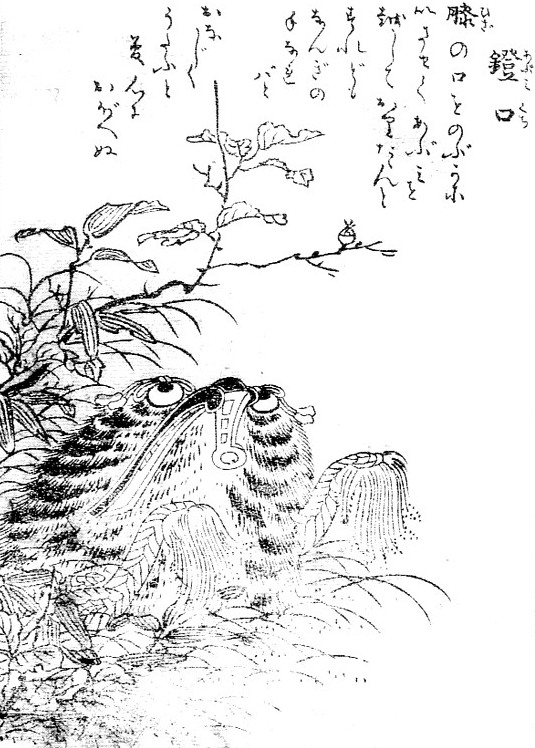
Abumi-guchi
abumi-guchi
A tsukumogami born from a horse's stirrup abandoned on a battlefield, still waiting for the master who never returned — grief and loyalty made monstrous.
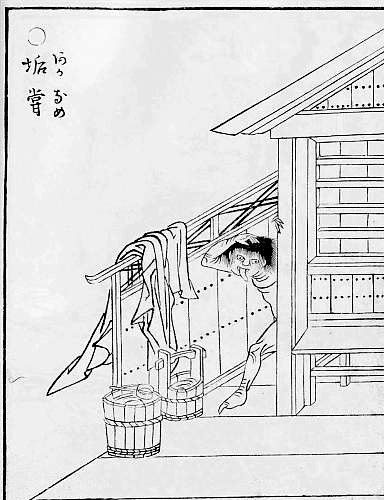
Aka-name
aka-name
A yokai that visits neglected bathrooms to lick up the accumulated grime and scum — harmless to people, but a vivid supernatural reminder to keep the bath clean.
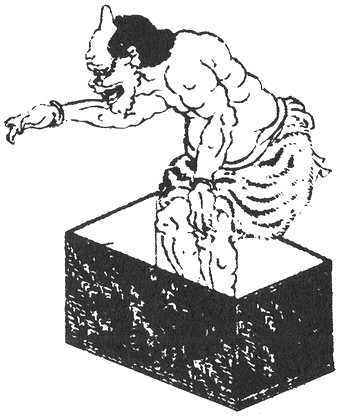
Amanojaku
amanojaku
A small, perverse demon that reads human hearts and does the opposite of what is desired. Famous as the villain of folk tales like Uriko-hime, and depicted in Buddhist sculpture as a creature trampled underfoot by guardian deities.