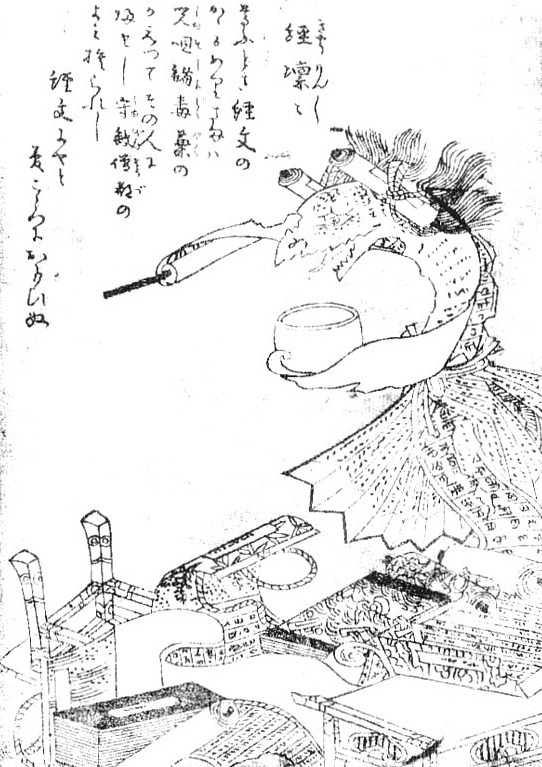
Kyorinrin
kyorinrin
Also known as: Sutra Spirit、Animated Scripture
A tsukumogami born from an old Buddhist sutra scroll, whose sacred characters come alive and whose scrolls chant on their own in empty temple halls at night.
- Era
- Edo Period
- Region
- Nationwide
- Type
- Tsukumogami
Overview
Kyorinrin is a tsukumogami born from an old Buddhist sutra scroll (kyōkan or kyōmaki) that has accumulated centuries of spiritual energy through ritual use. Appearing in Toriyama Sekien's Gazu Hyakki Yagyō, it takes the form of an animated scroll whose sacred characters dance and writhe with independent life. The name's second element, "rinrin," evokes something crisp, sharp, and spiritually charged — befitting a yokai born from scripture. Ghostly sutra chanting heard in empty temple halls at night is sometimes attributed to this spirit.
Appearance
In Sekien's depiction, the kyorinrin appears as an unrolled sutra scroll, with its classical characters animated and twisting into something resembling a face or a figure. Some versions show the scroll wrapped around a humanoid form, with the text itself becoming the creature's skin. The overall effect is deeply strange — something sacred and familiar, the written word of the Buddha, transformed into something autonomous and slightly threatening.
Scripture as Sacred Object
In Japanese Buddhism, sutras are not merely texts conveying information — they are considered to physically embody the Buddha's teaching and to carry concentrated spiritual power. Copying sutras by hand (shakyō) is itself a meditative and meritorious act. Old sutra scrolls that have been chanted over hundreds of thousands of times in services for the dead and dying accumulate extraordinary spiritual charge. The transformation of such a scroll into a tsukumogami is thus the logical extreme of this belief: the object has become so saturated with sacred power that it develops its own agency.
Language, Spirit, and the Yokai of Writing
The kyorinrin represents a unique category within the tsukumogami tradition. Where most animated object spirits are born from physical use — the wear of hands and feet on everyday tools — the kyorinrin is animated by meaning itself. Language, sacred writing, and spiritual energy fuse into a single entity. This makes it philosophically the most complex of all tsukumogami, a creature that blurs the boundary between text and spirit, between the human act of writing and the divine.
Sources
- 『Gazu Hyakki Yagyō』 Toriyama Sekien (1776)
Related Yokai
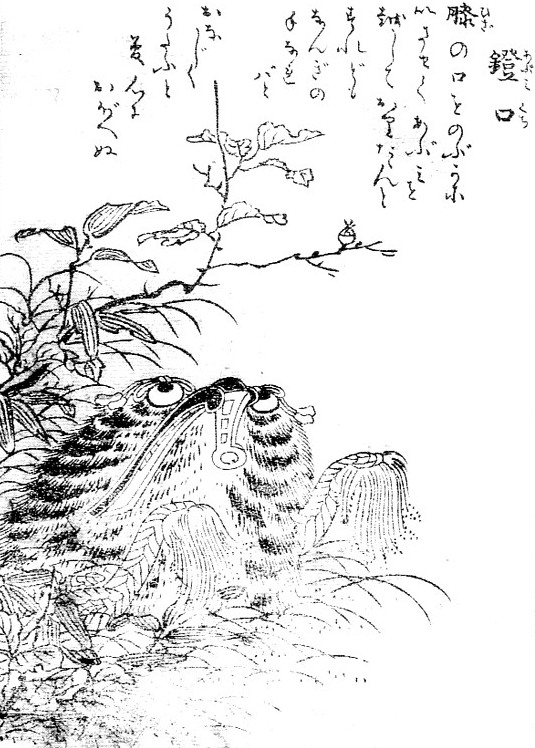
Abumi-guchi
abumi-guchi
A tsukumogami born from a horse's stirrup abandoned on a battlefield, still waiting for the master who never returned — grief and loyalty made monstrous.
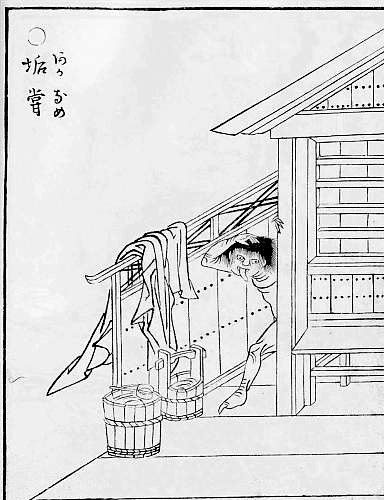
Aka-name
aka-name
A yokai that visits neglected bathrooms to lick up the accumulated grime and scum — harmless to people, but a vivid supernatural reminder to keep the bath clean.
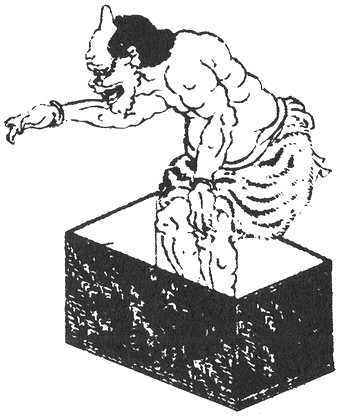
Amanojaku
amanojaku
A small, perverse demon that reads human hearts and does the opposite of what is desired. Famous as the villain of folk tales like Uriko-hime, and depicted in Buddhist sculpture as a creature trampled underfoot by guardian deities.