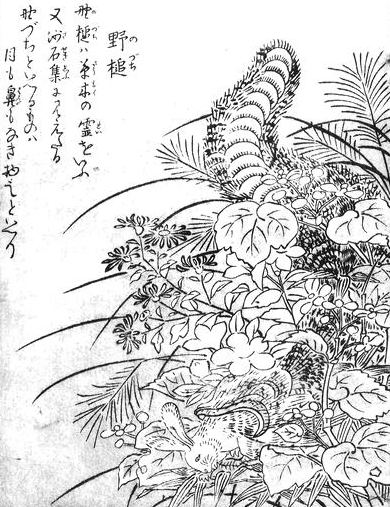
Nozuchi
nozuchi
Also known as: Field Hammer、Barrel Snake
A mysterious barrel-shaped creature from Japanese mountain folklore with no discernible head or tail, said to roll or slither through highland fields. It is considered a possible predecessor of the modern cryptid "tsuchinoko."
- Era
- Unknown
- Region
- Nationwide
- Type
- Mountain Yokai、Animal Yokai
Overview
The nozuchi is one of the most enigmatic creatures in Japanese supernatural tradition — sitting at the boundary between yokai and cryptid, between folk legend and natural history. Its name means roughly "field hammer" or "wild mallet," referring to its distinctive shape: a short, thick, barrel-like body with both ends rounded, making it impossible to distinguish head from tail. Records of the nozuchi appear in Edo-period encyclopedias and natural histories, where scholars debated whether it was a real but unusual species of snake, a supernatural being, or something else entirely. Today it is widely regarded as a likely prototype for the tsuchinoko, a cryptid that became a national sensation in Japan during the 1980s and 1990s.
Appearance
The nozuchi's most characteristic feature is its cylindrical, mallet-like body — uniformly thick from end to end, with rounded terminations that could be either a head or a tail. This is the opposite of a typical snake, which tapers at both ends. Accounts consistently describe a scaly surface, placing it in the category of reptiles, and a venomous bite is sometimes mentioned. Some versions describe it moving by rolling, while others say it moves like a conventional snake but with a strange, lurching gait due to its proportions.
The Wakan Sansai Zue (1713) includes a description of the nozuchi as a snake-like mountain creature with unusual body proportions. Edo-period natural historians took it seriously as a potential real species, citing multiple eyewitness accounts from specific mountain regions including the Oku-Tama area, the Nara basin, and the Kii Peninsula.
The Tsuchinoko Connection
The tsuchinoko — a popular Japanese cryptid (UMA, or Unidentified Mysterious Animal) — shares virtually all the physical characteristics of the nozuchi: short, stout body, rounded ends, venomous, found in mountain areas. The two names are sometimes used interchangeably in folk tradition, and folklorists generally treat the tsuchinoko as the modern descendant of the nozuchi legend.
The tsuchinoko experienced a major cultural moment in Japan in the 1980s and 1990s, when television programs, celebrity hunts, and substantial cash rewards offered by municipalities for a captured specimen kept it in the national spotlight. Despite hundreds of claimed sightings, no verified specimen has ever been produced. The persistent belief reflects the deep roots of the nozuchi tradition, now channeled through the framework of cryptozoology rather than folk belief.
On the Boundary Between Yokai and Animal
The nozuchi occupies a uniquely ambiguous position in the Japanese supernatural taxonomy. Unlike the kappa or tengu, which are clearly supernatural in nature, the nozuchi was treated by Edo-period scholars as potentially a real zoological species — just an unusual or poorly understood one. This quasi-scientific treatment mirrors how many creatures that would later be classified purely as yokai were approached during the Edo period, when the boundaries between natural history, folk belief, and supernatural legend were not yet sharply defined.
In modern Japanese culture, the nozuchi represents the possibility that not every mysterious creature in the folklore is purely imaginary — and that the mountains of Japan might still hold surprises for those who look carefully.
Sources
- 『Wakan Sansai Zue』 Terajima Ryōan (1713)
Related Yokai

Azuki-Babaa
azuki-babaa
A dangerous old-woman yokai who scrapes azuki beans in mountain streams. Related to the azuki-arai but more specifically formed and more actively threatening.
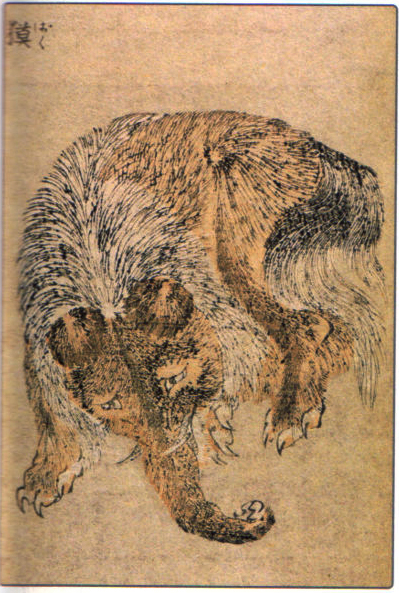
Baku
baku
A chimeric dream-eater invoked after nightmares to consume ill omens.
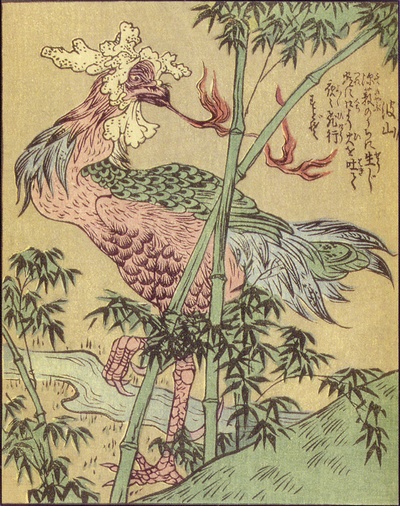
Basan
basan
A fire-breathing rooster yokai from the Kinki and Chūgoku regions of Japan. It appears at night with a distinctive flapping sound, breathes flames, and vanishes before anyone can get a clear look at it.