Omukade
omukade
Also known as: Giant Centipede Demon、Great Centipede
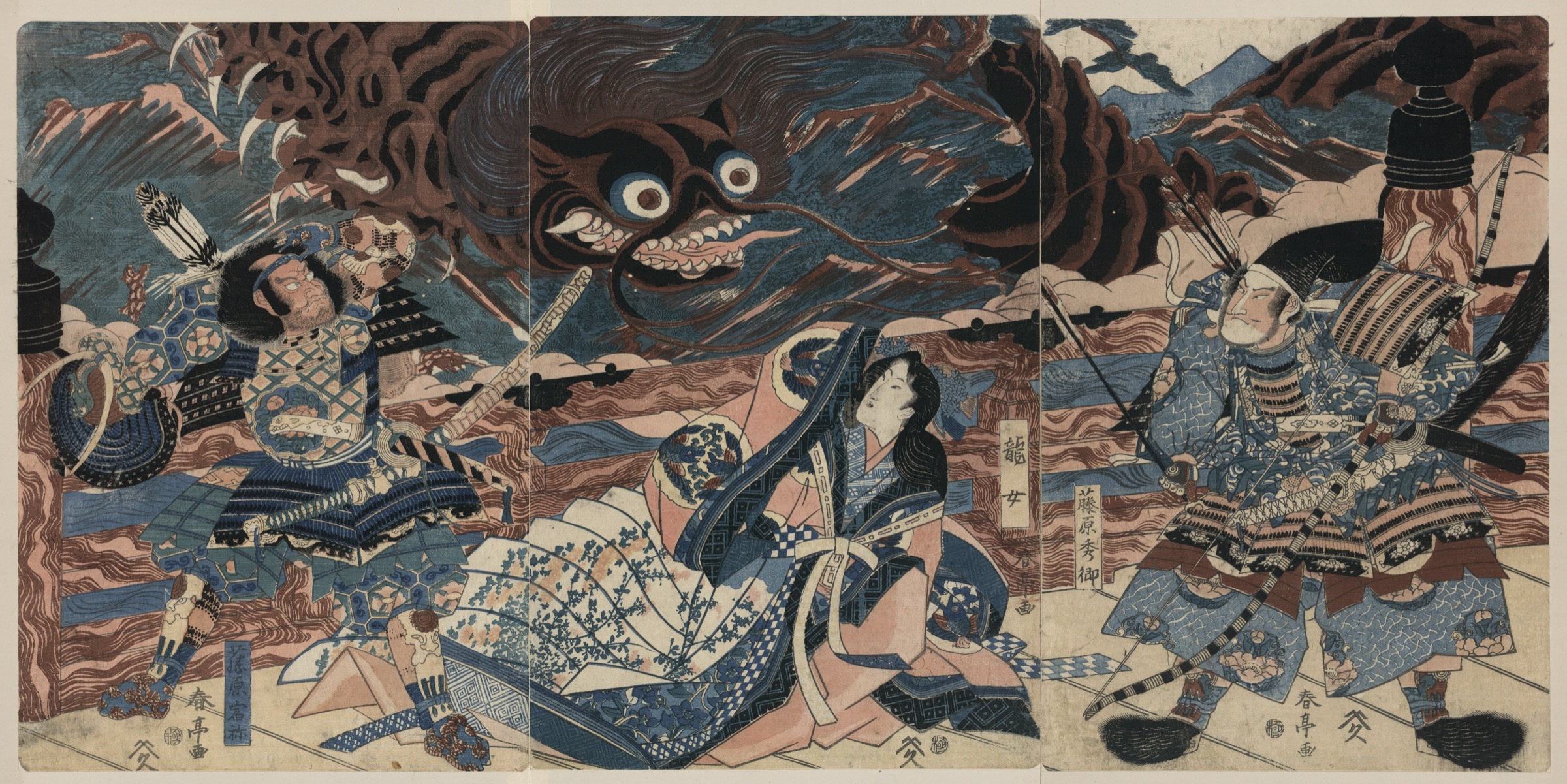
A monstrous giant centipede yokai from the shores of Lake Biwa. Famous from the legend of Tawara Tōda, a warrior who slew the creature at the request of a lake dragon god using a saliva-tipped arrow.
- Era
- Heian Period
- Region
- Kinki
- Type
- Mountain Yokai、Animal Yokai
Overview
The omukade is a giant, supernaturally powerful centipede yokai. While oversized centipedes appear in various Japanese traditions, the most famous omukade legend is connected to Mount Mikamiyama and Lake Biwa in Shiga Prefecture, where the creature terrorized the resident dragon deity until slain by the legendary warrior Fujiwara no Hidesato, known by his popular epithet Tawara Tōda. This story, preserved in the Konjaku Monogatarishū and other classical texts, is one of Japan's most celebrated monster-slaying tales.
The Legend of Tawara Tōda
The legend begins when Fujiwara no Hidesato approaches the Seta no Karahashi bridge in Ōmi Province (modern Shiga Prefecture) and finds a gigantic dragon — or serpent — lying across it. While everyone else turns back in fear, the bold warrior simply steps over the creature and continues on his way. That night, the dragon's true form — the dragon god of Lake Biwa — appears to him in human shape with a desperate plea: a monstrous centipede living on Mount Mikamiyama has been preying on the dragon's family and subjects for years. Seeing in Hidesato a man of extraordinary courage, the dragon god begs for his help.
Hidesato agrees and confronts the omukade on the mountain. His arrows bounce harmlessly off the creature's impenetrable armored hide. In a moment of inspiration, Hidesato wets his final arrow with his own saliva and fires it directly between the centipede's eyes. To his astonishment, the saliva-coated arrow pierces the tough exoskeleton and kills the omukade instantly.
As a reward, the grateful dragon god gives Hidesato a magic rice bag that never empties, a roll of silk that never diminishes, and a great bell — treasures that became part of his legendary wealth.
The Centipede in Japanese Belief
The centipede occupies a paradoxical place in Japanese folk religion. On one hand, it is associated with Bishamonten, the Buddhist god of fortune and war, and centipede motifs appear on armor and amulets as symbols of military success. The creature's many legs were thought to symbolize wealth and forward momentum. On the other hand, the centipede's venom, speed, and alien appearance made it an object of fear, and the giant centipede naturally emerged as a powerful enemy in heroic legends.
The omukade's weakness to human saliva is a recurring motif. Human saliva was widely believed in East Asian folk medicine and magic to have purifying and spiritually potent qualities, capable of countering supernatural evil.
Regional Variations
Giant centipede legends exist across Japan, not only around Lake Biwa. Similar tales from Toyama (former Etchū Province) and various mountain regions follow the same narrative structure: a benevolent deity (dragon god, mountain god, or water deity) is oppressed by a monstrous centipede and calls upon a brave human hero for help. The structural consistency suggests the omukade legend type reflects deeper patterns in Japanese mountain and water deity belief.
Cultural Legacy
The Tawara Tōda legend remains one of Japan's most beloved monster-slaying tales, appearing in picture books, historical novels, and stage performances. In modern fantasy games and anime, the omukade is a standard entry in the bestiary of fearsome creatures, typically depicted as a massive, fast-moving arthropod with near-impenetrable defenses. The legend's theme — that true courage and wit can overcome seemingly invincible evil — continues to resonate across generations.
Sources
- 『Konjaku Monogatarishū』 Various authors (1120)
Related Yokai

Azuki-Babaa
azuki-babaa
A dangerous old-woman yokai who scrapes azuki beans in mountain streams. Related to the azuki-arai but more specifically formed and more actively threatening.
Baku
baku
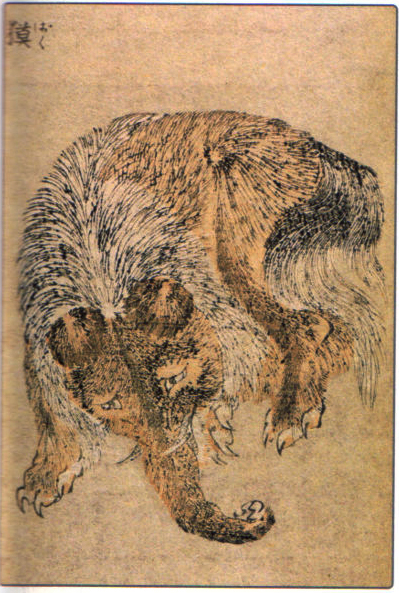
A chimeric dream-eater invoked after nightmares to consume ill omens.
Basan
basan
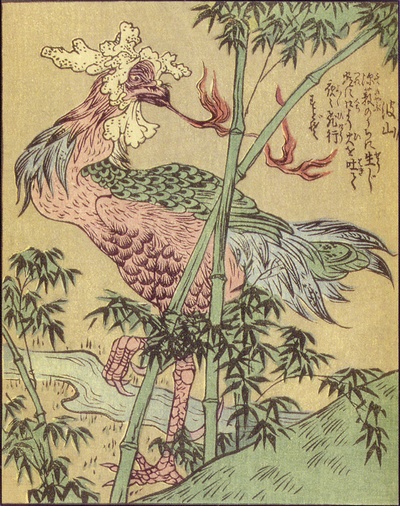
A fire-breathing rooster yokai from the Kinki and Chūgoku regions of Japan. It appears at night with a distinctive flapping sound, breathes flames, and vanishes before anyone can get a clear look at it.