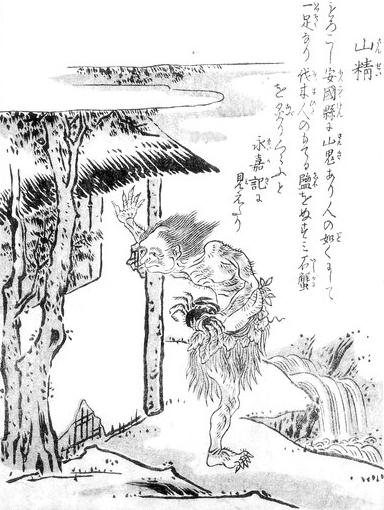
Sansei
sansei
Also known as: mountain spirit、sansho
A mountain spirit from Chinese and Japanese tradition, often depicted as a one-legged elder who understands human speech. Also used as a general term for mountain supernatural phenomena.
- Era
- Unknown
- Region
- Nationwide
- Type
- Mountain Yokai
Overview
The sansei ("mountain spirit") is both a specific supernatural entity and a general concept encompassing the mysterious forces believed to inhabit deep mountain ranges. It originates in Chinese classical literature, was incorporated into Japanese learning during the Nara and Heian periods, and evolved into a framework for understanding the many unexplained phenomena encountered in Japan's mountainous interior.
Chinese Origins
In Chinese tradition, shanjing (山精) or shanxiao (山魈) are spirits that haunt remote mountains. Classical Chinese texts describe them variously as one-legged, as able to mimic human speech, as resembling aged men or apes, and as capable of both harming travelers and rewarding those who show proper respect. This complexity — neither purely malevolent nor benign — made them a compelling model for the spirits of mountain wilderness.
Transmission to Japan
The concept entered Japan through the Sino-Japanese scholarly tradition. Terajima Ryōan's encyclopedic Wakan Sansai Zue (1713) describes the sansei, situating it within a framework that blended Chinese natural philosophy with Japanese local lore. Edo-period intellectuals used the concept to systematize encounters with mountain spirits that otherwise resisted categorization.
In Japan, sansei frequently functions as a general term rather than a specific creature — a category that encompasses tengu, kodama (tree spirits), and the various unnamed presences that inhabit high places.
Mountain Worship
Japan's indigenous tradition of mountain worship (sangaku shinkō) regards mountains as the dwelling places of gods and ancestral spirits. Sansei fits naturally into this framework as a personification of the mountain's spiritual power — punishing those who violate its sanctity, protecting those who approach with reverence.
In the shugendo tradition of mountain asceticism, encounters with mountain spirits form part of the practitioner's transformative ordeal. The sansei thus carries religious and philosophical dimensions that go beyond simple supernatural menace.
Modern Resonance
The concept of mountain spirits remains a living framework in Japan. Inexplicable sounds, lights, and presences reported by modern hikers and mountaineers are often interpreted within a tradition that descends directly from the sansei — the ancient acknowledgment that the mountain knows you are there.
Sources
- 『Wakan Sansai Zue』 Terajima Ryōan (1713)
Related Yokai

Azuki-Babaa
azuki-babaa
A dangerous old-woman yokai who scrapes azuki beans in mountain streams. Related to the azuki-arai but more specifically formed and more actively threatening.
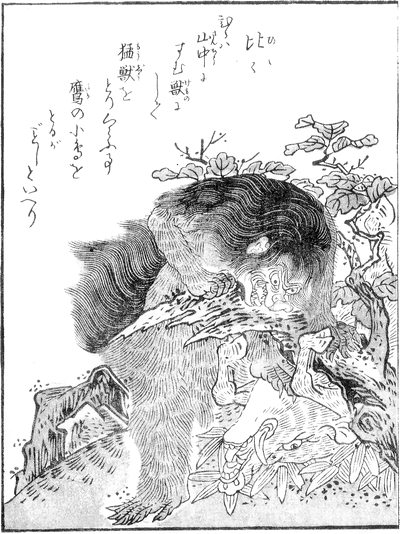
Hihi
hihi
A gigantic ape-like mountain demon known for abducting villagers. Despite its fearsome strength, it has a notorious weakness for sake, and many folk tales describe heroes using alcohol to defeat it.
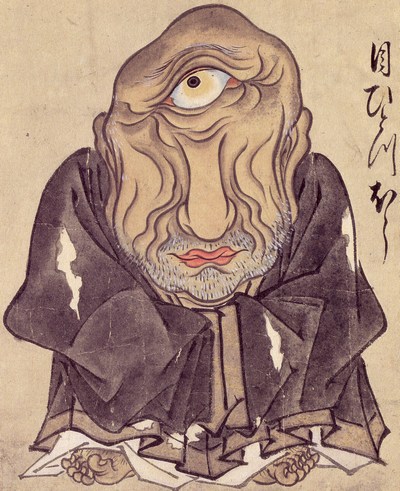
Hitotsume-nyudo
hitotsume-nyudo
A giant monk-shaped yokai with a single enormous eye in the center of its face, which appears on mountain roads and night paths. The hitotsume-nyudo combines the cyclops archetype with Japan's tradition of supernatural "nyudo" priest spirits.