Te-no-me
te-no-me
Also known as: hand-eyes、the blind man who sees with his hands
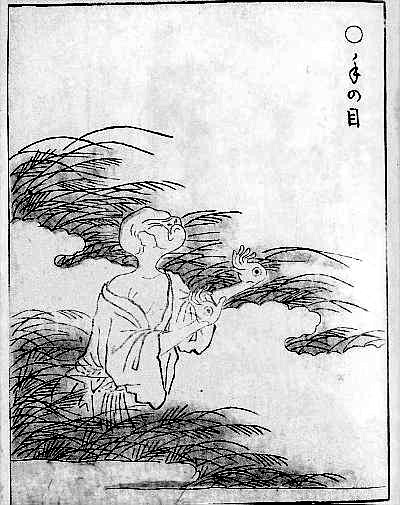
A blind old man with no eyes in his face, whose sight is replaced by eyeballs set into the palms of his hands, said to be the vengeful ghost of a murdered man.
- Era
- Edo Period
- Region
- Nationwide
- Type
- Undead
Overview
The Te-no-me ("eyes in the hands") is a yokai depicted by Toriyama Sekien in his 1776 Gazu Hyakki Yagyō. It appears as a lean, aged man whose eye sockets are hollow and empty — he is blind in the conventional sense — but whose palms each contain a functioning eyeball, set into the flesh where the center of the hand would be. The creature wanders dark mountain paths and lonely roads, raising its hands to "see" the way ahead. According to the most common origin legend, it is the vengeful spirit of a man who was murdered by bandits who gouged out his eyes, and whose obsessive desire to see again warped his ghost into this strange form.
Appearance
Sekien's rendering shows a hunched, emaciated old man with smooth, featureless hollows where his eyes should be. His mouth is downturned in sorrow or suffering. His hands are held slightly raised before him, and within the central folds of each palm sits a single, clear-eyed eyeball, alert and forward-facing. A staff in one hand completes the image of a wandering, sightless pilgrim — except that this pilgrim sees through his hands. The overall impression is of displacement and inversion: sight moved from its natural home to an unexpected, liminal place.
Origin Stories
The Te-no-me's most frequently cited origin is the ghost of a man blinded and killed by mountain bandits. His desperate longing to recover his sight — a need that outlasted his life — manifested in the afterlife by relocating sight to his hands, the instruments through which a blind person learns to perceive the world. Another tradition links the Te-no-me to elderly mountain ascetics (yamabushi) whose years of practice gave them the power of non-ordinary perception — a spiritual "sight" that eventually became physical.
Symbolism of Inverted Vision
The Te-no-me is philosophically fascinating as a meditation on perception. The eyes — the body's primary instrument of knowledge and social connection — are gone from the face, where they belong, and relocated to the hands, associated with touch, labor, and reaching into the world. This inversion suggests that the Te-no-me perceives the world through direct contact rather than distant observation. Some scholars read this as a symbol of a different, perhaps deeper kind of knowledge — tactile, intimate, earned through suffering rather than given by birth.
Cultural Influence
The Te-no-me has inspired numerous horror artists and game designers, with the motif of eyes set into unexpected places — hands, backs, mouths — becoming a recurring element in Japanese horror aesthetics. Sekien's original illustration remains the definitive image, its stark composition communicating a quiet, uncanny sorrow.
Sources
- 『Gazu Hyakki Yagyō』 Toriyama Sekien (1776)
Related Yokai
Abumi-guchi
abumi-guchi
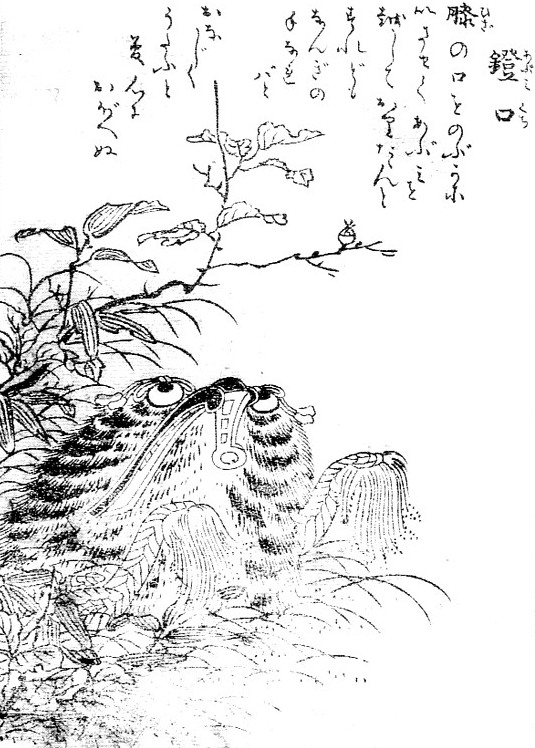
A tsukumogami born from a horse's stirrup abandoned on a battlefield, still waiting for the master who never returned — grief and loyalty made monstrous.
Aka-name
aka-name
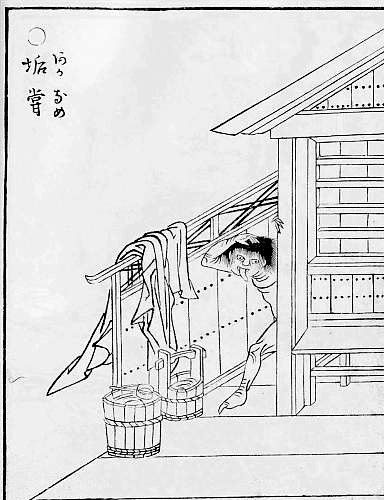
A yokai that visits neglected bathrooms to lick up the accumulated grime and scum — harmless to people, but a vivid supernatural reminder to keep the bath clean.
Amanojaku
amanojaku
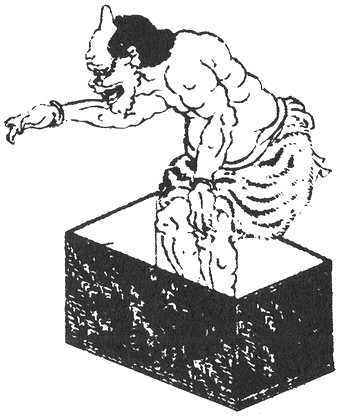
A small, perverse demon that reads human hearts and does the opposite of what is desired. Famous as the villain of folk tales like Uriko-hime, and depicted in Buddhist sculpture as a creature trampled underfoot by guardian deities.