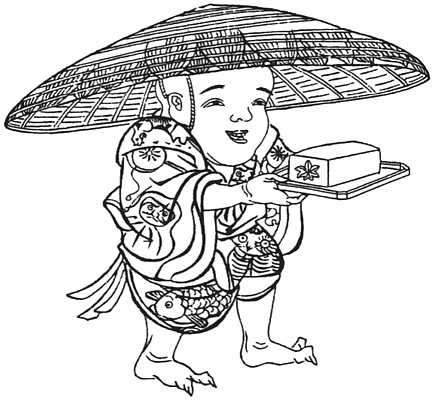
Tofu-Kozō
tofu-kozo
Also known as: tofu boy
A harmless child yokai carrying tofu — Edo Japan's earliest cute-monster craze.
- Era
- Edo Period
- Region
- Kanto
- Type
- House Yokai
Overview
The tofu-kozō ("tofu boy") is a yokai depicted as a small child wearing an oversized hat and carrying a leaf-topped block of tofu. What makes it extraordinary among Japanese monsters is its utter harmlessness — it does not attack, curse, or terrify. It simply offers tofu. Some accounts warn that eating the tofu will cause red mold to grow on the body, but even this consequence is more unpleasant than lethal.
Edo-Period Craze
During the late Edo period, tofu-kozō became a genuine pop-culture sensation. It appeared in cheap illustrated chapbooks (kusazōshi) sold throughout the city, was reproduced as merchandise, and even featured on signage for tofu shops. For a yokai to become a character brand in this way was remarkable — scholars now regard tofu-kozō as an ancestor of the modern cute-character industry.
What It Represents
Author Natsuhiko Kyogoku explored the tofu-kozō in his 2001 novel Tofu-Kozō Sugoroku Dōchū Furidashi, framing the creature as the embodiment of existential aimlessness: a yokai with no purpose, no power, and no fear factor. This ironic reading resonated with modern readers and sparked renewed academic interest in the figure as evidence of Edo-period playfulness toward the supernatural.
Legacy
The tofu-kozō demonstrates how Edo-period Japan transformed yokai from objects of genuine dread into entertainment commodities. Its lineage is visible in every cute monster of modern Japanese media, from Pokémon to Yo-kai Watch.
Sources
- 『Tofu-Kozō Sugoroku Dōchū Furidashi』 Natsuhiko Kyogoku (2001)
Related Yokai
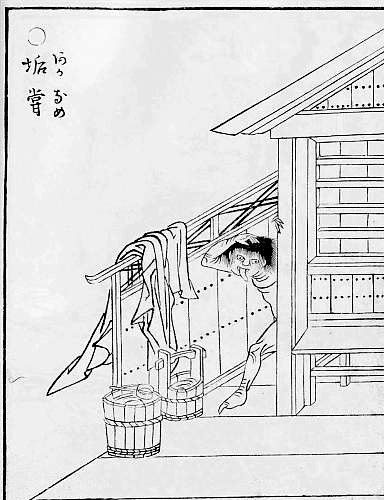
Aka-name
aka-name
A yokai that visits neglected bathrooms to lick up the accumulated grime and scum — harmless to people, but a vivid supernatural reminder to keep the bath clean.
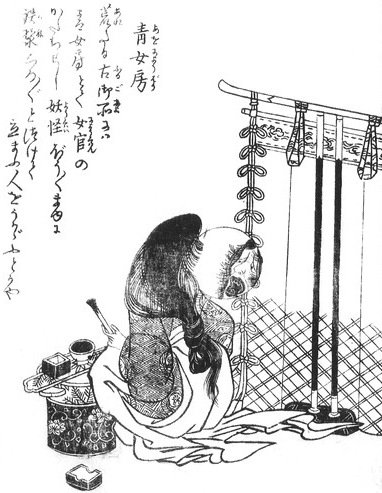
Aonyōbō
aonyobo
The spirit of a Heian court lady who haunts ruined aristocratic mansions, still applying her blackened teeth makeup centuries after her death.
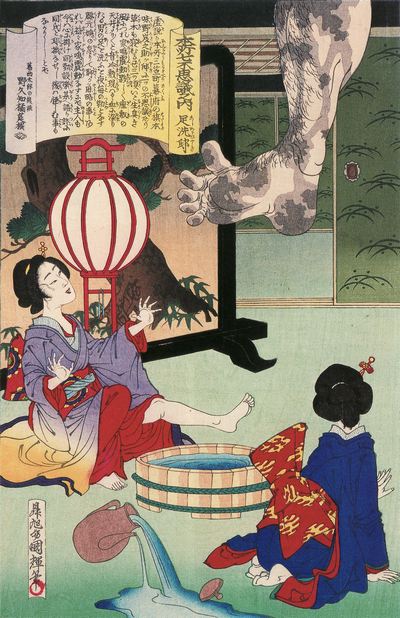
Ashiarai Yashiki
ashiarai-yashiki
A haunted Edo mansion terrorized by an enormous disembodied foot that crashes through the ceiling demanding to be washed. This famous Edo kaidan is one of Japan's most distinctively absurd ghost stories.