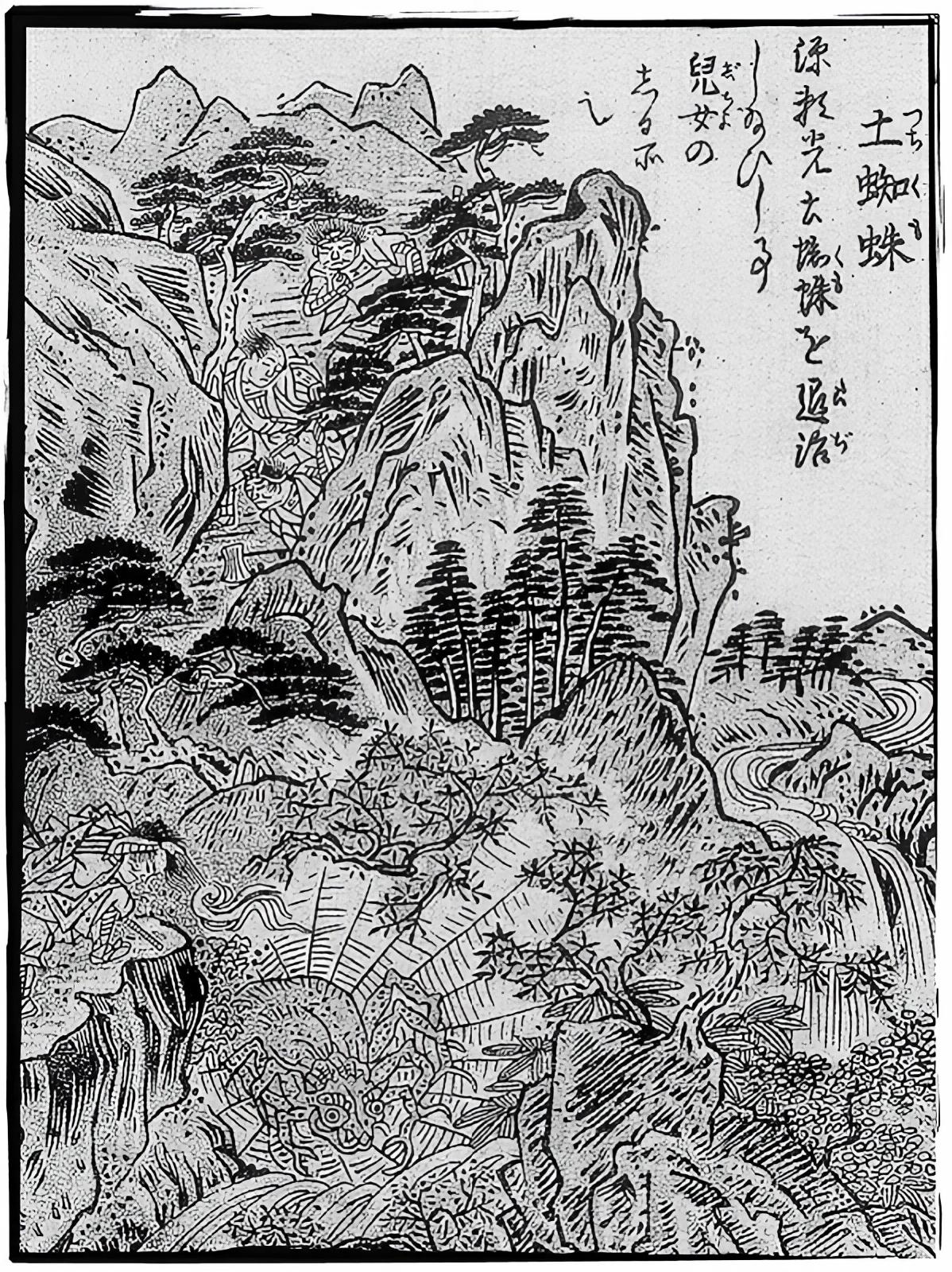
Tsuchigumo
tsuchigumo
Also known as: earth spider、ground spider
A monstrous earth spider defeated by Minamoto no Yorimitsu in Heian legend.
- Era
- Heian Period
- Region
- Kinki
- Type
- Animal Yokai
Overview
The tsuchigumo ("earth spider") exists on two levels. In Japan's earliest chronicles — the Nihon Shoki (720 CE) — the name refers to clans of people who lived in the mountains and resisted incorporation into the imperial state. In later folklore, the same name attached to a giant supernatural spider that preys on humans. The two meanings never fully separated.
The Ancient Label
In the Nihon Shoki, the imperial forces describe certain mountain-dwelling peoples as tsuchigumo — a derogatory term evoking something low, unrefined, and resistant to civilization. Crushing the tsuchigumo was part of the narrative of imperial expansion. Scholars debate whether these were genuinely distinct ethnic groups, political rebels, or simply anyone who refused to submit — but the label marked them as inhuman.
Minamoto no Yorimitsu and the Spider
By the Heian period (794–1185), tsuchigumo had become a supernatural monster. The most famous legend involves the warrior Minamoto no Yorimitsu (Raikō), who fell mysteriously ill. In a feverish dream — or perhaps in waking reality — a monstrous spider appeared and bound him in silk threads. Yorimitsu cut it with his sword and tracked the trail of blood to a burial mound, where a giant spider lay dying. Killing it cured the illness. His four loyal retainers, the Shitennō, assisted throughout.
The Spider as Symbol
Spiders build webs to trap prey, wait in ambush, and operate through concealment — qualities that made them natural symbols of treachery and hidden threat in many cultures. In Japan, the tsuchigumo distilled these associations into a single mythic creature, a monster that is both a dangerous beast and a memory of human resistance stamped out by the state.
Sources
- 『The Tale of the Heike』 Unknown (1243)
- 『Gazu Hyakki Yagyō』 Toriyama Sekien (1776)
- 『Nihon Shoki』 Unknown (720)
Related Yokai
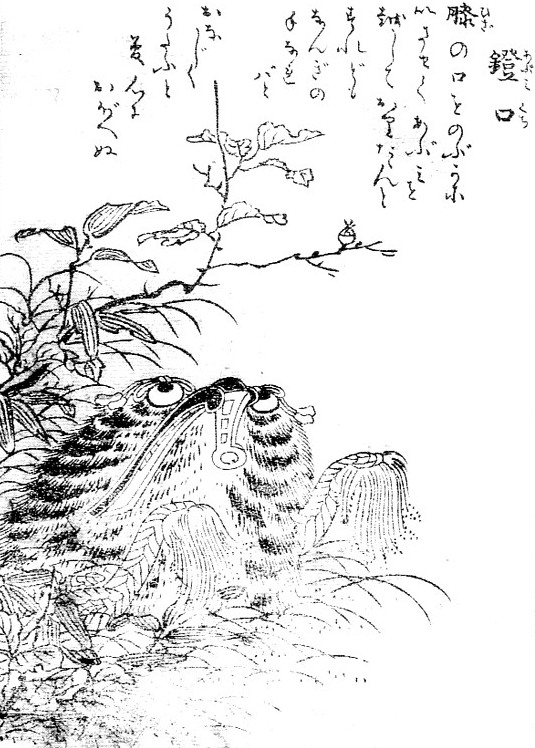
Abumi-guchi
abumi-guchi
A tsukumogami born from a horse's stirrup abandoned on a battlefield, still waiting for the master who never returned — grief and loyalty made monstrous.
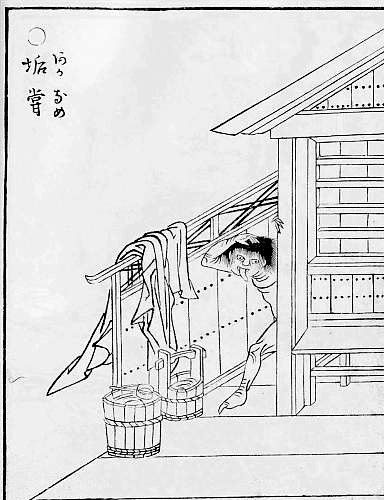
Aka-name
aka-name
A yokai that visits neglected bathrooms to lick up the accumulated grime and scum — harmless to people, but a vivid supernatural reminder to keep the bath clean.
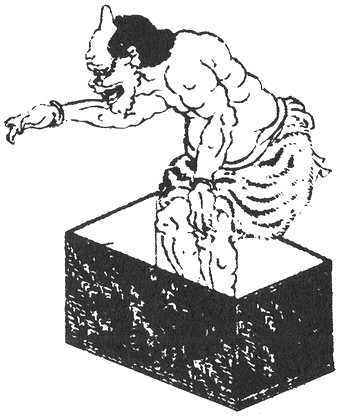
Amanojaku
amanojaku
A small, perverse demon that reads human hearts and does the opposite of what is desired. Famous as the villain of folk tales like Uriko-hime, and depicted in Buddhist sculpture as a creature trampled underfoot by guardian deities.