Ungaikyo
ungaikyo
Also known as: Mirror Beyond the Clouds、Haunted Mirror
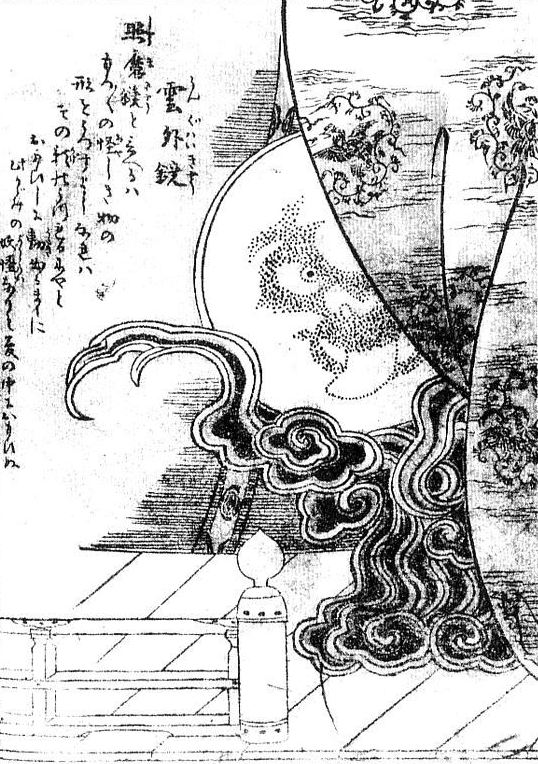
A tsukumogami inhabiting an old bronze mirror, which reflects monstrous faces and otherworldly visions instead of the viewer's true reflection.
- Era
- Edo Period
- Region
- Nationwide
- Type
- Tsukumogami
Overview
Ungaikyo is a tsukumogami born from an old bronze mirror (kagami) that has been used so long it has developed an independent spiritual will. Illustrated by Toriyama Sekien in his Hyakki Tsurezure Bukuro, the ungaikyo is a mirror whose surface no longer reflects the viewer's face but instead shows strange, distorted visages — the faces of demons, spirits, or those who have gazed into it across the centuries. The name combines "ungai" (beyond the clouds) with "kyō" (mirror), suggesting a reflective surface connected to realms beyond human perception.
Appearance
In Sekien's depiction, an ornate circular bronze mirror displays on its surface a face that is unmistakably not the viewer's — something between human and demon, with exaggerated features and an expression of malevolent awareness. Some interpretations suggest that the mirror shows the viewer's true spiritual nature, stripped of social masks, or that it reflects the accumulated faces of everyone who has ever looked into it over the centuries.
Mirrors in Japanese Sacred Tradition
In Japanese culture, mirrors hold exceptional spiritual significance. One of the Three Imperial Treasures, the Yata no Kagami (Eight-Span Mirror), is enshrined at Ise and is considered a symbol of the sun goddess Amaterasu. Mirrors were placed in shrines as divine dwelling places, used in purification rituals, and believed to reflect spiritual truth rather than mere physical appearance. The transformation of a sacred mirror into a tsukumogami thus represents the corruption or inversion of one of the most powerful sacred objects in Japanese religion.
The Mirror as Threshold
Throughout Japanese folklore, mirrors appear at the boundary between the living world and the spirit world. Ghost stories frequently feature mirrors that show figures standing behind the viewer, or that reveal a different world within their depths. The ungaikyo embodies this tradition in tsukumogami form: a mirror that has accumulated so much spiritual charge from decades of use — absorbing the images and emotions of everyone who has gazed into it — that it has become a portal to somewhere else entirely. It watches, and what it shows is not flattering.
Sources
- 『Hyakki Tsurezure Bukuro』 Toriyama Sekien (1784)
Related Yokai
Abumi-guchi
abumi-guchi
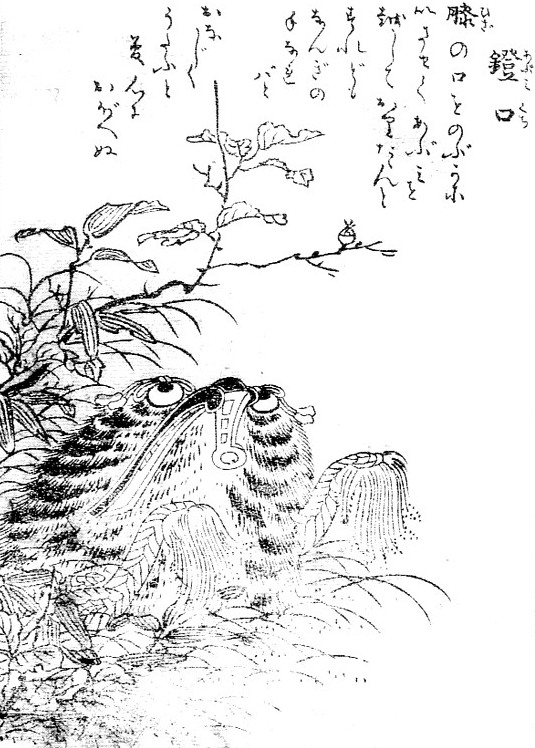
A tsukumogami born from a horse's stirrup abandoned on a battlefield, still waiting for the master who never returned — grief and loyalty made monstrous.
Aka-name
aka-name
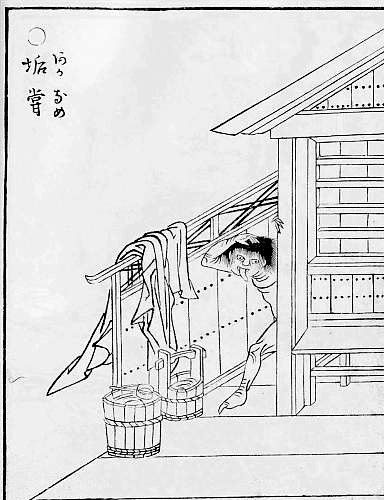
A yokai that visits neglected bathrooms to lick up the accumulated grime and scum — harmless to people, but a vivid supernatural reminder to keep the bath clean.
Amanojaku
amanojaku
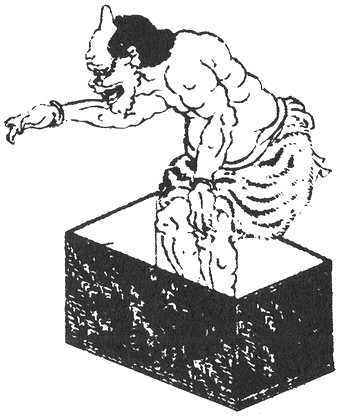
A small, perverse demon that reads human hearts and does the opposite of what is desired. Famous as the villain of folk tales like Uriko-hime, and depicted in Buddhist sculpture as a creature trampled underfoot by guardian deities.