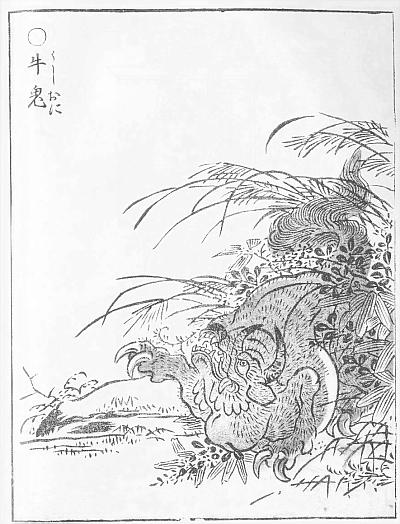
Ushi-oni
ushi-oni
Also known as: Ox Demon、Cow Demon
A massive sea and mountain demon with the head of a bull and the body of a monster. It terrorizes coastal regions of western Japan, devouring humans and livestock.
- Era
- Unknown
- Region
- Chugoku、Kyushu
- Type
- Sea Yokai、Animal Yokai、Oni
Overview
The ushi-oni, literally "cow demon" or "ox demon," is a fearsome yokai said to inhabit the coastal areas and mountain passes of western Japan, particularly in the Chūgoku, Shikoku, and Kyushu regions. It is typically described as a massive creature with the head of a bull and the body of a spider, crab, or other monstrous form — though its exact appearance varies considerably by region. For centuries, fishermen and coastal villagers have told stories of encounters with this terrifying beast, which is said to devour humans and animals alike.
Appearance
The ushi-oni defies a single canonical description. What remains consistent across accounts is its bovine head — often featuring sharp horns — and its enormous, powerful body. In the Uwajima area of Ehime Prefecture, the most famous ushi-oni tradition depicts the creature with a bull's head and a spider-like torso, lurking among coastal rocks and sea inlets. Other regional traditions describe it with tentacle-like legs resembling an octopus, or as a giant black bull with supernatural powers. It is sometimes said to exhale poisonous breath, and its claws or hooves are described as capable of tearing a person apart instantly.
Legends and Behavior
Ushi-oni legends are concentrated along the western coasts of Japan. Stories commonly describe fishermen encountering the beast at sea, or travelers on coastal paths being ambushed and eaten. In some accounts, the creature rises from the water during storms, while in others it lurks at the boundaries between mountains and sea — territories considered liminal and dangerous in Japanese folk belief.
In Uwajima, Ehime Prefecture, the ushi-oni has been transformed into the centerpiece of a major local festival. A giant papier-mâché ushi-oni carried on poles parades through the streets during the Uwajima Ushi-oni Festival, a tradition intended to ward off the creature's malevolence and pray for safety at sea. This festival represents one of the most striking examples of a feared yokai being domesticated into a cultural symbol.
Regional Variation
The ushi-oni appears under similar names and forms across a wide geographic range. In Shimane and Tottori Prefectures along the San'in coast, it is described as a mountain-dwelling beast that appears near waterfalls and river pools. In Wakayama and Kōchi Prefectures, local variants are associated with rivers and mountain streams. Northern Kyushu also preserves traditions of coastal demons bearing the ushi-oni name. This widespread distribution suggests the ushi-oni represents a deep-rooted cultural archetype of the boundary between civilization and the untamed natural world.
Cultural Significance
In modern popular culture, the ushi-oni gained broader national recognition through Shigeru Mizuki's manga works, and it now appears in video games, anime, and fantasy literature. The city of Uwajima has embraced the creature as a civic symbol, incorporating it into local branding and tourism. The transformation from object of dread to beloved mascot reflects how many once-feared yokai have been reinterpreted through the lens of contemporary Japanese popular culture.
Sources
- 『Konjaku Hyakki Shūi』 Toriyama Sekien (1781)
Related Yokai
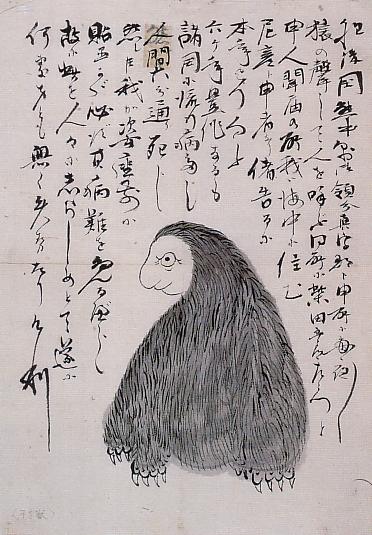
Amabie
amabie
An 1846 sea spirit that foretold plague, asking its image be shown to the sick.
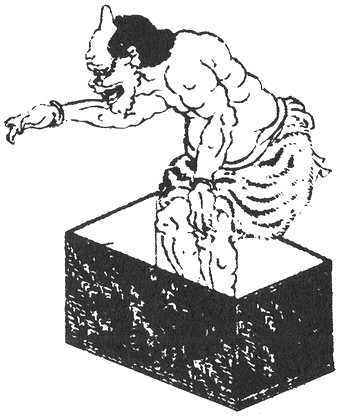
Amanojaku
amanojaku
A small, perverse demon that reads human hearts and does the opposite of what is desired. Famous as the villain of folk tales like Uriko-hime, and depicted in Buddhist sculpture as a creature trampled underfoot by guardian deities.
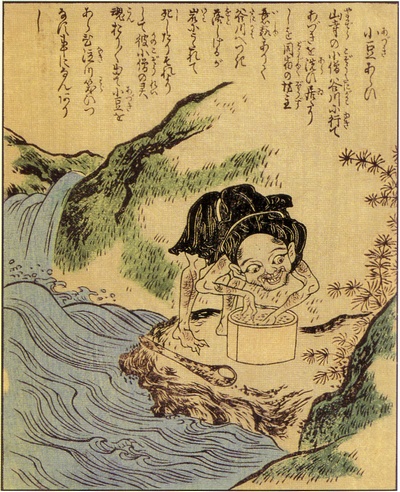
Azuki-Arai
azuki-arai
A yokai heard but rarely seen, washing azuki beans by a riverbank at night.