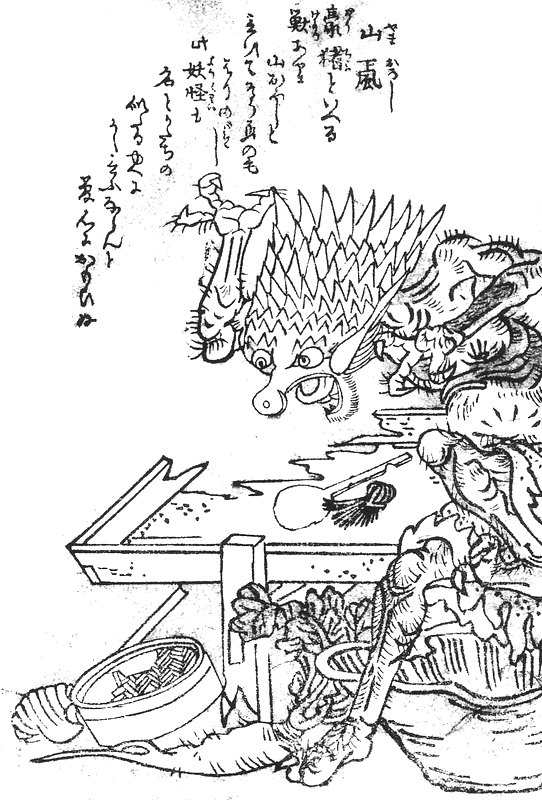
Yama-oroshi
yama-oroshi
Also known as: Mountain Wind Spirit、Mountain Gale
A supernatural spirit inhabiting the fierce winds that blow down from mountain peaks. The yama-oroshi represents the mountain god's breath or wrath, made manifest as a devastating gale.
- Era
- Unknown
- Region
- Nationwide
- Type
- Mountain Yokai、Weather Yokai
Overview
The yama-oroshi — "mountain wind" or "mountain gale blowing down" — is the supernatural spirit or force that inhabits the powerful winds that descend from mountain peaks. In Japanese, "oroshi" (颪) is a meteorological term for wind that blows down from mountains to lower elevations, and different regions have their own named oroshi: the Akagi-oroshi of Gunma Prefecture, the Hira-oroshi of Shiga, the Rokko-oroshi of Kobe. Each of these regional winds has its own character, and each was traditionally understood as carrying something of the mountain's spiritual force with it — the breath of the mountain gods made physical, capable of leveling forests, capsizing boats, and stripping crops from fields.
The Mountain Wind as Spirit
Unlike many yokai that take human or animal form, the yama-oroshi is fundamentally a natural phenomenon given spiritual identity. It does not typically manifest as a distinct creature with a recognizable body; rather, it is the wind itself that is understood as spiritually charged. The devastation caused by strong mountain winds — broken trees, collapsed structures, agricultural losses — was attributed to the active will of the mountain spirit rather than to purely physical causes.
In some regional traditions, the yama-oroshi does take a more personified form: an old man with wild hair and a long beard who rides the wind down from the peaks, or a large, translucent giant whose breath is the gale. These personifications make the spirit more narratable, allowing for stories of encounters and outcomes rather than simply descriptions of weather events.
Mountain Gods and Wind
The association between the yama-oroshi and mountain deities reflects the broader Japanese tradition of mountains as divine spaces governed by potent spirits. Mountain gods — yama no kami — were worshipped across Japan as guardians of forests, sources of water, and arbiters of hunting and gathering success. When the mountain sent wind down to the inhabited lowlands, it was understood as the mountain speaking — whether in wrath, blessing, or simple display of power. This reading of weather as divine communication is a fundamental feature of the animistic spirituality that underlies Japanese folk religion.
Woodcutters and farmers who worked near mountain slopes would offer prayers and small gifts before beginning work during oroshi season, hoping to propitiate the spirit of the mountain wind and prevent it from causing catastrophic damage. Mountain passes — the places where descending winds were most concentrated and dangerous — were often marked by small shrines to the mountain deity.
Named Regional Winds
The regional specificity of Japan's named mountain winds reflects the way Japanese folk tradition personalizes natural phenomena by connecting them to specific landscapes. The Akagi-oroshi brings cold to the Kanto plain in winter; the Hira-oroshi signals seasonal changes around Lake Biwa; the Rokko-oroshi shapes the climate of Kobe and Osaka. Each of these winds, by virtue of having a name and a character, becomes something more than meteorological fact — it becomes a relationship between the mountain and the people in its shadow, a seasonal presence as recognizable and significant as any animate yokai.
Cultural Legacy
The yama-oroshi tradition persists in Japanese culture through the named winds that continue to be recognized in weather forecasting, haiku poetry, and regional identity. The idea that a particularly fierce wind carries something of the mountain's spirit with it remains part of how many Japanese people intuitively experience strong winds in mountain regions, even if the explicitly supernatural interpretation has faded from everyday belief.
Sources
- 『Yokai Dangi』 Yanagita Kunio (1956)
Related Yokai
Ame-onna
ame-onna
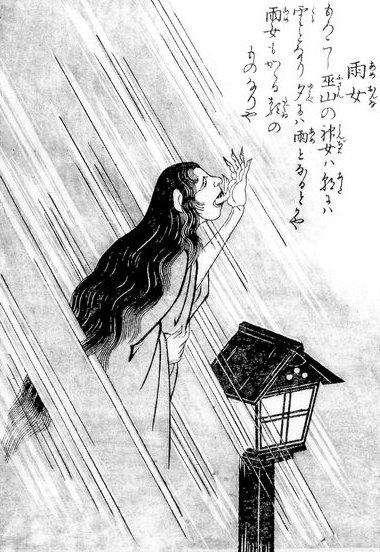
A woman yokai associated with rainfall, appearing on rainy nights as a drenched figure sometimes carrying an infant, connected to both weather spirits and the spirits of women who died in childbirth.
Amefuri-Kozo
amefuri-kozo
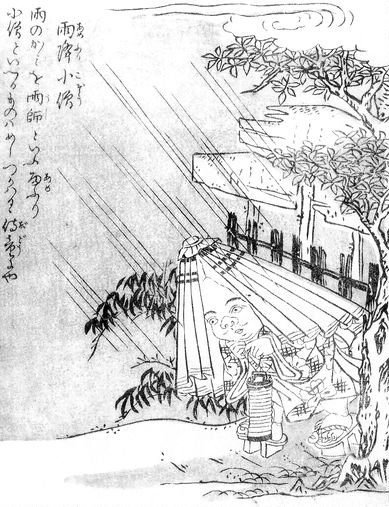
A rain sprite from Edo-period illustration, depicted as a small boy in a straw hat and rain cloak whose appearance heralds or brings rainfall.

Azuki-Babaa
azuki-babaa
A dangerous old-woman yokai who scrapes azuki beans in mountain streams. Related to the azuki-arai but more specifically formed and more actively threatening.