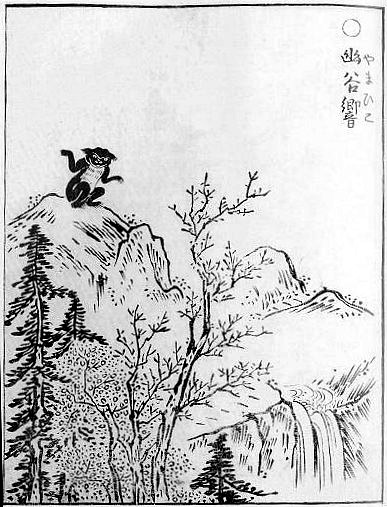
Yamabiko
yamabiko
Also known as: Echo Spirit
A small mountain spirit that mimics sounds and voices in mountain valleys. The yamabiko is the yokai personification of echoes heard in the mountains.
- Era
- Edo Period
- Region
- Nationwide
- Type
- Mountain Yokai
Overview
The yamabiko is a small, fuzzy mountain spirit that embodies the phenomenon of mountain echoes. Its name combines "yama" (mountain) and "hibiko" (echo), and it is the yokai personification of the strange, repeating sounds heard when shouting into valleys and ravines. Depicted in Toriyama Sekien's Gazu Hyakki Yagyo (1776), the yamabiko appears as a small, round creature clinging to mountain crags, mimicking any sounds it hears from travelers below.
Appearance and Behavior
In Sekien's illustration, the yamabiko resembles a small, grey, dog-like or bear-like creature with large ears, perched on a cliff overlooking mountain passes. It listens carefully to any sound that reaches its rocky home and immediately mimics it with perfect fidelity. The yamabiko does not act with malice — it simply repeats whatever it hears, whether voices, animal calls, the crack of axes, or the rumble of distant thunder. Some accounts describe multiple yamabiko living together in the same valley, creating layers of overlapping echoes.
Legends and Folk Belief
Before the natural phenomenon of sound reflection was widely understood, mountain echoes were considered deeply mysterious and often attributed to spiritual causes. Mountain travelers who called out and heard their voices returned were said to be receiving a response from the yamabiko. In some traditions, a yamabiko that returned a greeting was considered a good omen for safe passage through the mountains. Conversely, hearing one's voice echo in an unusual pattern — too many times, or with a strange delay — was seen as a warning from the mountain spirit.
In older accounts, the yamabiko was sometimes associated with mountain illness. The ancient term "yamabiko-yamai" (yamabiko sickness) described a condition in which someone fell ill after traveling through the mountains, attributed to the spirit's influence. This connection between mountain echoes and sickness points to the deep unease that isolated mountain environments evoked in pre-modern Japanese people.
Cultural Significance
The yamabiko is one of the more benign yokai in Japanese tradition — a spirit of natural phenomena rather than a malevolent monster. In modern Japanese culture, it remains a popular yokai figure, particularly in children's literature and folklore collections where its echo-mimicking behavior is portrayed as charming rather than frightening. The word "yamabiko" itself is still used in everyday Japanese to mean "echo," keeping the spirit's name alive in the language long after its origins as a yokai have faded from everyday awareness.
Sources
- 『Gazu Hyakki Yagyo』 Toriyama Sekien (1776)
Related Yokai
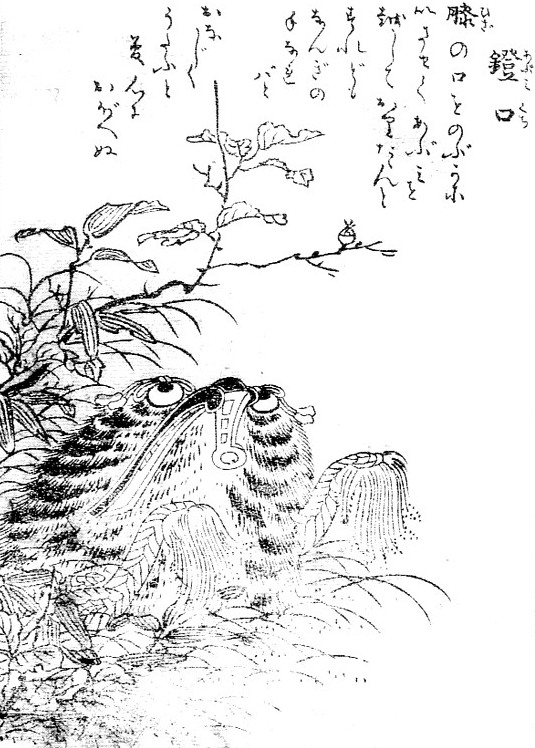
Abumi-guchi
abumi-guchi
A tsukumogami born from a horse's stirrup abandoned on a battlefield, still waiting for the master who never returned — grief and loyalty made monstrous.
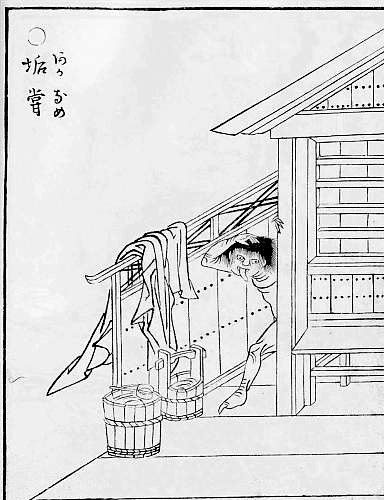
Aka-name
aka-name
A yokai that visits neglected bathrooms to lick up the accumulated grime and scum — harmless to people, but a vivid supernatural reminder to keep the bath clean.
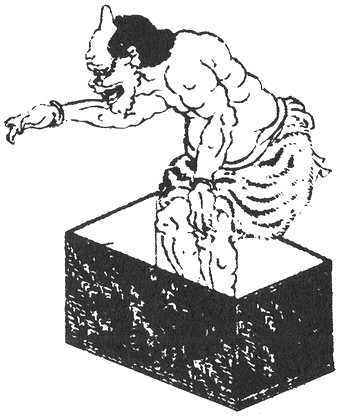
Amanojaku
amanojaku
A small, perverse demon that reads human hearts and does the opposite of what is desired. Famous as the villain of folk tales like Uriko-hime, and depicted in Buddhist sculpture as a creature trampled underfoot by guardian deities.