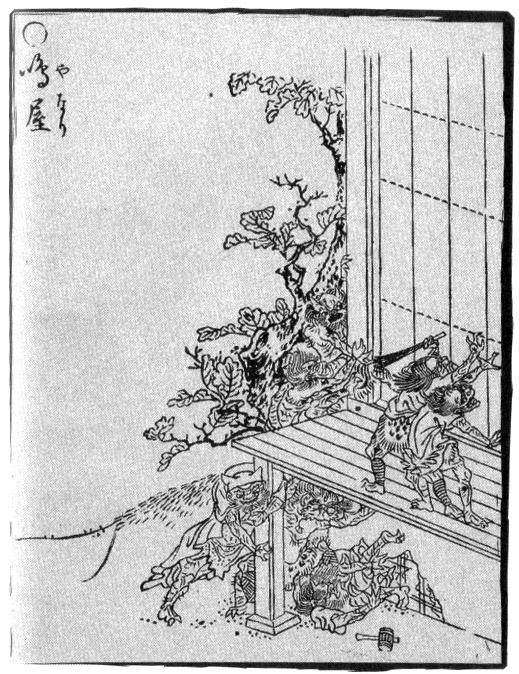
Yanari
yanari
Also known as: House Creaking Spirit
A yokai responsible for the creaking and groaning sounds that houses make at night — tiny oni said to shake the beams and walls from unseen places.
- Era
- Edo Period
- Region
- Nationwide
- Type
- Tsukumogami、House Yokai
Overview
Yanari is the yokai behind the mysterious creaks, pops, and groans that echo through a house at night. The name literally means "house noise" (ya = house, nari = sound), and this spirit represents the Japanese folk tradition of attributing unexplained domestic phenomena to supernatural causes. Toriyama Sekien included yanari in his Gazu Hyakki Yagyō, depicting them as a cluster of tiny horned demons gleefully rattling the beams and pillars of a house from the inside.
Appearance
In Sekien's illustration, yanari appear as small, imp-like creatures working together to shake a building's structural elements. They are described as being roughly the size of a hand or a small child, and can number in the dozens when they gather in force. Their defining characteristic is their invisibility to ordinary senses — they are heard but never seen, and the sounds they make seem to come from within the very walls. This unseen quality makes them especially unnerving.
Folk Explanation of a Real Phenomenon
The "house-creaking" phenomenon that yanari supposedly cause has a straightforward physical explanation: the thermal expansion and contraction of wooden building materials as temperatures shift overnight. Japan's traditional wooden architecture, with its complex post-and-beam construction, is particularly susceptible to such sounds. Yet for Edo-period inhabitants, for whom scientific explanations were unavailable, the attribution of these sounds to invisible creatures inhabiting the structure offered a compelling and culturally coherent explanation.
House Spirits in Japanese Belief
Yanari fits into a broader category of spirits associated with domestic spaces in Japanese folklore. While some house spirits, such as the zashiki-warashi, are protective and beneficial, yanari are more ambiguous — merely noisy and unsettling rather than actively malicious. They remind inhabitants that a house is never entirely their own space; other entities may share it, active in the darkness when human senses are dulled by sleep.
Sources
- 『Gazu Hyakki Yagyō』 Toriyama Sekien (1776)
Related Yokai
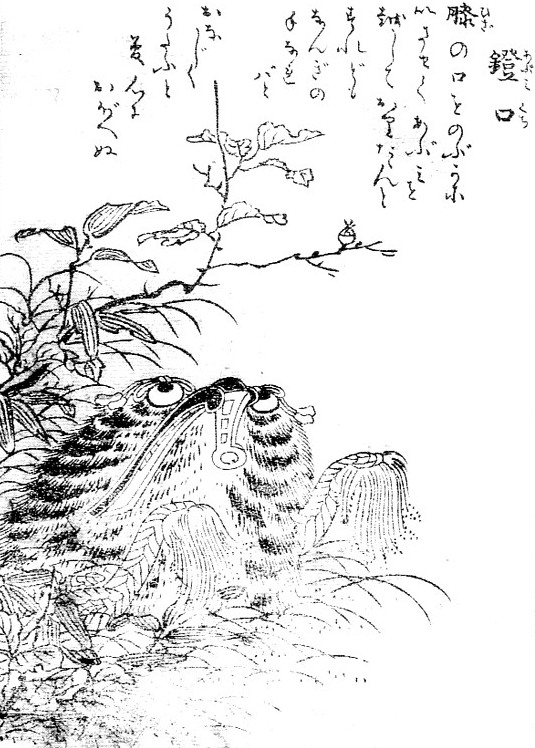
Abumi-guchi
abumi-guchi
A tsukumogami born from a horse's stirrup abandoned on a battlefield, still waiting for the master who never returned — grief and loyalty made monstrous.
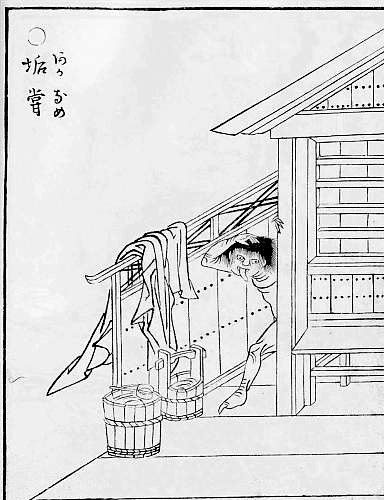
Aka-name
aka-name
A yokai that visits neglected bathrooms to lick up the accumulated grime and scum — harmless to people, but a vivid supernatural reminder to keep the bath clean.
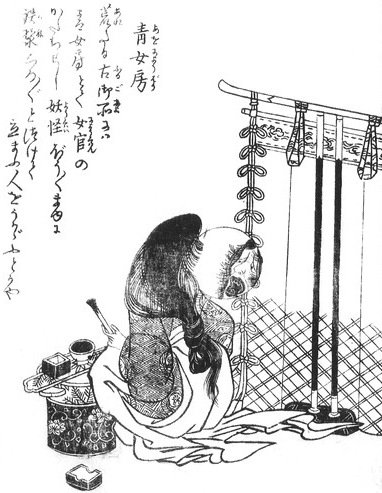
Aonyōbō
aonyobo
The spirit of a Heian court lady who haunts ruined aristocratic mansions, still applying her blackened teeth makeup centuries after her death.