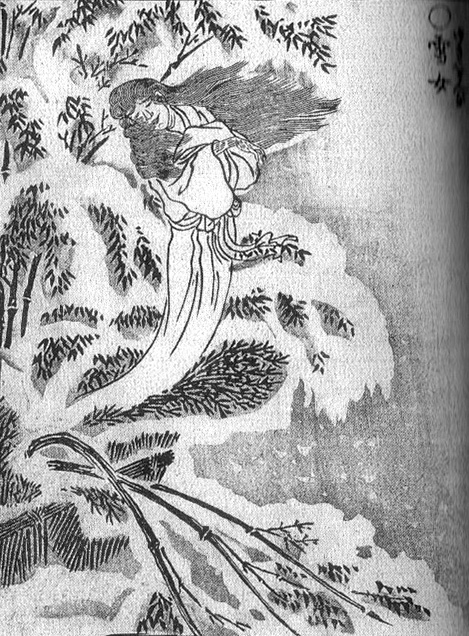
Yuki-onna
yuki-onna
Also known as: Snow Woman、Yuki-jorō
A pale winter spirit that freezes travelers or becomes a tragic mortal bride.
- Era
- Muromachi Period
- Region
- Tohoku、Chubu
- Type
- Weather Yokai
Overview
The yuki-onna (Snow Woman) is one of Japan's most evocative spirits — beautiful, deadly, and achingly sad. She appears on winter nights as a tall, pale woman in white robes, gliding across the snow without leaving footprints.
Two Natures
Yuki-onna legends divide into two broad types. In the first, she is a death bringer: her freezing breath or gaze kills travelers who become lost in blizzards. In the second, she is a tragic lover: she marries a human man, bears his children, then vanishes into snow when her true nature is revealed.
Lafcadio Hearn's "Yuki-onna"
The most famous version comes from Lafcadio Hearn's 1904 collection Kwaidan. Two woodcutters are caught in a blizzard; the yuki-onna kills the elder but spares the youth Mosaku, warning him never to speak of what he has seen. Years later he marries a woman named Yuki — only to recognize her as the spirit when he breaks his promise. She departs in a swirl of snow, leaving only their children behind.
Regional Traditions
Variants appear across Japan's snowy regions under names such as "Yuki-jorō" and "Yuki-musume." Each locale adds its own detail — some portray her as protective of children lost in storms, others as purely malevolent.
Cultural Legacy
Yuki-onna appears in Noh theater, countless novels, films, and anime. She endures as an emblem of winter's beauty and cruelty, and of the bittersweet tension between the human and supernatural worlds.
Sources
- 『Gazu Hyakki Yagyō』 Toriyama Sekien (1776)
- 『Kwaidan』 Lafcadio Hearn (1904)
Related Yokai
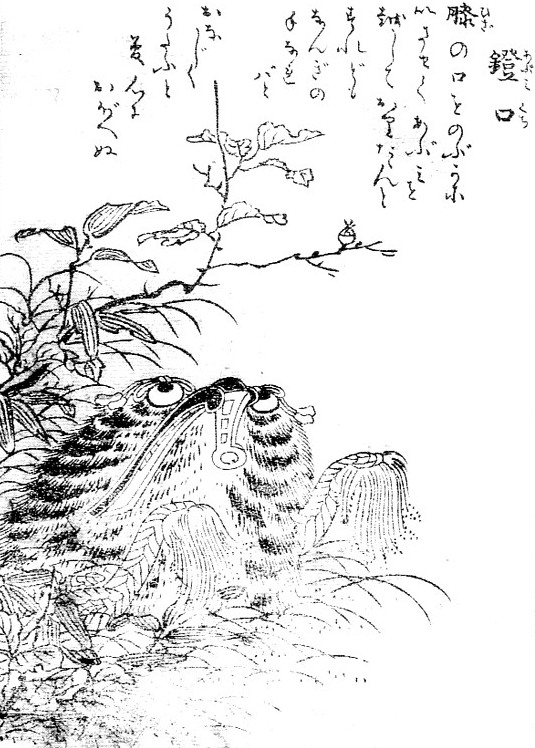
Abumi-guchi
abumi-guchi
A tsukumogami born from a horse's stirrup abandoned on a battlefield, still waiting for the master who never returned — grief and loyalty made monstrous.
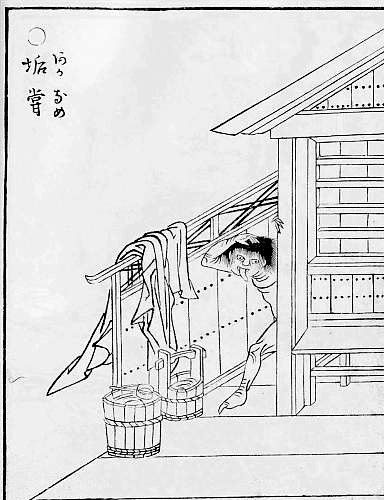
Aka-name
aka-name
A yokai that visits neglected bathrooms to lick up the accumulated grime and scum — harmless to people, but a vivid supernatural reminder to keep the bath clean.
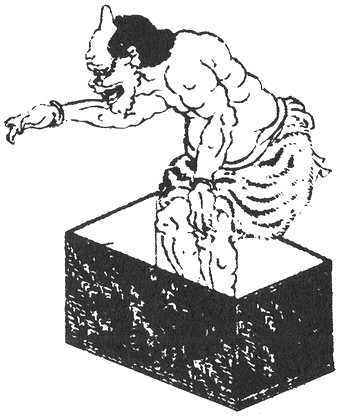
Amanojaku
amanojaku
A small, perverse demon that reads human hearts and does the opposite of what is desired. Famous as the villain of folk tales like Uriko-hime, and depicted in Buddhist sculpture as a creature trampled underfoot by guardian deities.