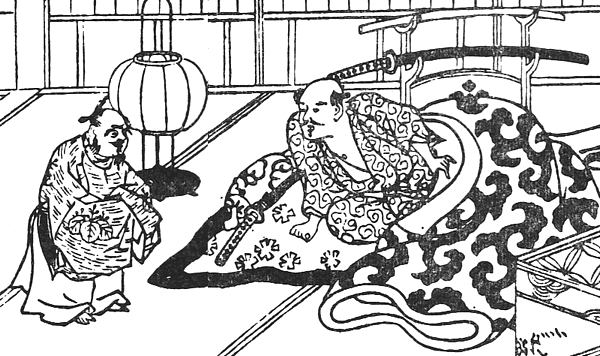
Zashiki-warashi
zashiki-warashi
Also known as: Parlor Child、House Spirit
A child spirit of Tohoku manor houses that brings fortune while it stays.
- Era
- Edo Period
- Region
- Tohoku
- Type
- House Yokai
Overview
The zashiki-warashi (座敷童子, "parlor child") is a household spirit found in old manor houses of the Tōhoku region — particularly Iwate Prefecture. It appears as a rosy-cheeked child of five or six, with bobbed hair, seen flitting through tatami rooms or playing in storage alcoves. As long as it inhabits a house, that family prospers; when it departs, decline and misfortune follow swiftly.
Documented Traditions
Kunio Yanagita recorded multiple zashiki-warashi accounts in his 1910 Tōno Monogatari. Household members might hear the sound of a child playing in an empty room at night, feel a small body settling beside them in bed, or glimpse a red-faced child in the corridor — only for the apparition to vanish. Some families even kept the spirit's favorite toys and sweets as offerings.
Signs of Departure
A departing zashiki-warashi announces itself through omens:
- A family member dreams of seeing it pack its belongings
- Unexplained sounds echo through the house
- The spirit says a quiet farewell
Shortly after, misfortune — bankruptcy, illness, death — befalls the household.
Origins
Scholars have suggested the zashiki-warashi may represent the spirit of a child who died in the house, perhaps before birth, whose lingering presence is both protective and bittersweet.
Modern Pilgrimages
Several inns in Iwate claim to host a zashiki-warashi. Guests hoping for luck book rooms where the spirit is said to reside; the phenomenon reflects an enduring folk belief that prosperity is bound to invisible, childlike forces beyond human control.
Sources
- 『Tōno Monogatari』 Kunio Yanagita (1910)
Related Yokai
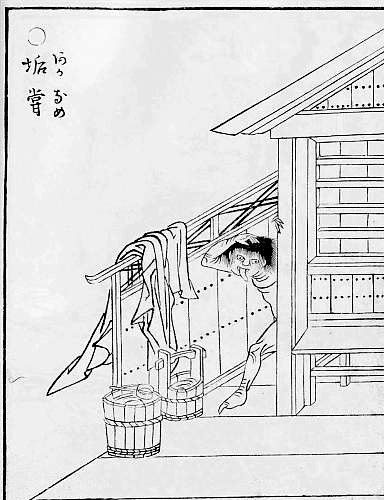
Aka-name
aka-name
A yokai that visits neglected bathrooms to lick up the accumulated grime and scum — harmless to people, but a vivid supernatural reminder to keep the bath clean.
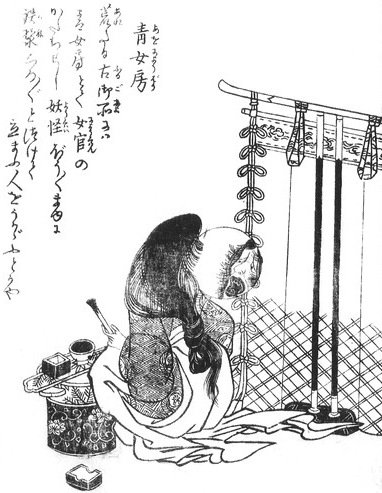
Aonyōbō
aonyobo
The spirit of a Heian court lady who haunts ruined aristocratic mansions, still applying her blackened teeth makeup centuries after her death.
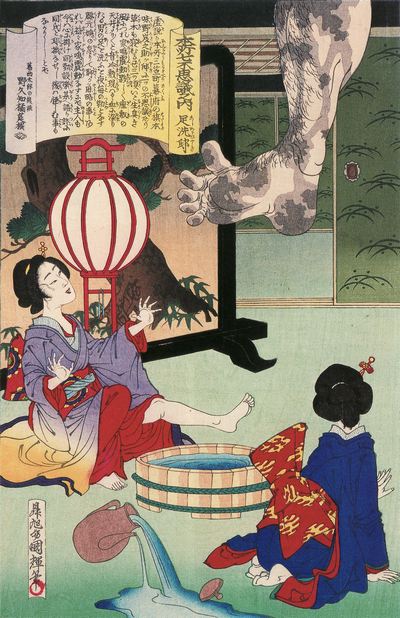
Ashiarai Yashiki
ashiarai-yashiki
A haunted Edo mansion terrorized by an enormous disembodied foot that crashes through the ceiling demanding to be washed. This famous Edo kaidan is one of Japan's most distinctively absurd ghost stories.