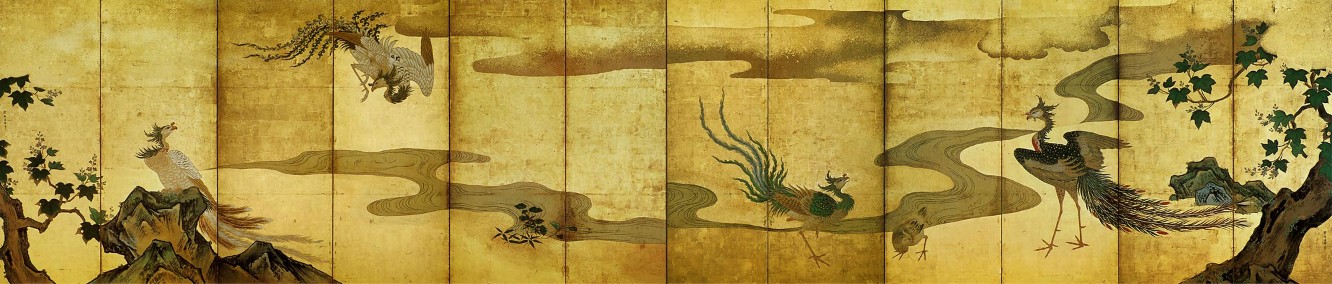
Hō-ō
ho-o
Also known as: Fenghuang、Chinese Phoenix、Ho-oh
The undying divine bird of East Asian tradition, whose appearance heralds a virtuous reign — it perches only in the paulownia tree, drinks only pure water, and eats only bamboo fruit.
- Era
- Ancient
- Region
- Nationwide
- Type
- Divine Beasts
Overview
The hō-ō (known in Chinese as the fenghuang) is the supreme auspicious bird of East Asian civilization, the avian counterpart to the kirin and the dragon in the hierarchy of divine beasts. It appears when a truly virtuous ruler governs the land, flying down from the south as a living announcement that an era of peace and righteousness has arrived. It disappears in times of disorder and tyranny. In Japan, the hō-ō became one of the most important symbols of imperial and Buddhist authority, adorning the rooftops of the greatest buildings in the land.
Appearance
The hō-ō is described as a composite creature combining the finest features of multiple birds: the head of a chicken, the body of a mandarin duck, the neck of a snake, the tail of a fish, the back of a tortoise, the beak of a swallow, and the legs of a crane. Its plumage blazes in the five sacred colors — red, yellow, blue, white, and black — and the patterns on its feathers are said to contain all the characters needed to write any text. It perches only in the paulownia (kiri) tree, eats only the fruit produced when bamboo flowers, and drinks only pure spring water. It will never feed on living creatures.
Japanese Architecture and the Hō-ō
Some of the finest examples of Japanese Buddhist architecture feature the hō-ō as their defining ornament. The Byōdōin Phoenix Hall (Hōōdō) in Uji, built in 1053, takes its very name from the gilt-bronze hō-ō statues mounted on its roof ridge. These statues — still surviving today — represent the height of Heian-period artistic achievement and the deep identification of the ruling Fujiwara clan with the divine virtue the bird symbolizes. The Byōdōin's hō-ō image appears on the Japanese ten-yen coin, ensuring that this celestial bird remains present in everyday Japanese life.
The Hō-ō and the Suzaku
In Japanese tradition, the hō-ō is sometimes identified with the Suzaku, the Vermilion Bird that guards the southern quarter of the cosmos in the Chinese four directional deity system. While the two beings have distinct mythological origins — the fenghuang as a ruler's omen, the Suzaku as a cosmic guardian — their shared association with the south and with fire-like plumage led to frequent conflation in Japanese onmyōdō and Shinto practice. Today the two names are often used interchangeably in popular culture.
Sources
- 『Shanhaijing』 Ancient Chinese Classic (-300)
- 『Wakan Sansai Zue』 Terajima Ryōan (1713)
Related Yokai
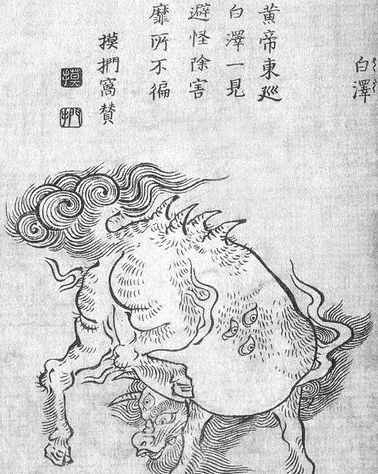
Hakutaku
hakutaku
A legendary Chinese divine beast that appeared before the Yellow Emperor and recited the names and natures of all supernatural beings in existence — the original encyclopedia of monsters.
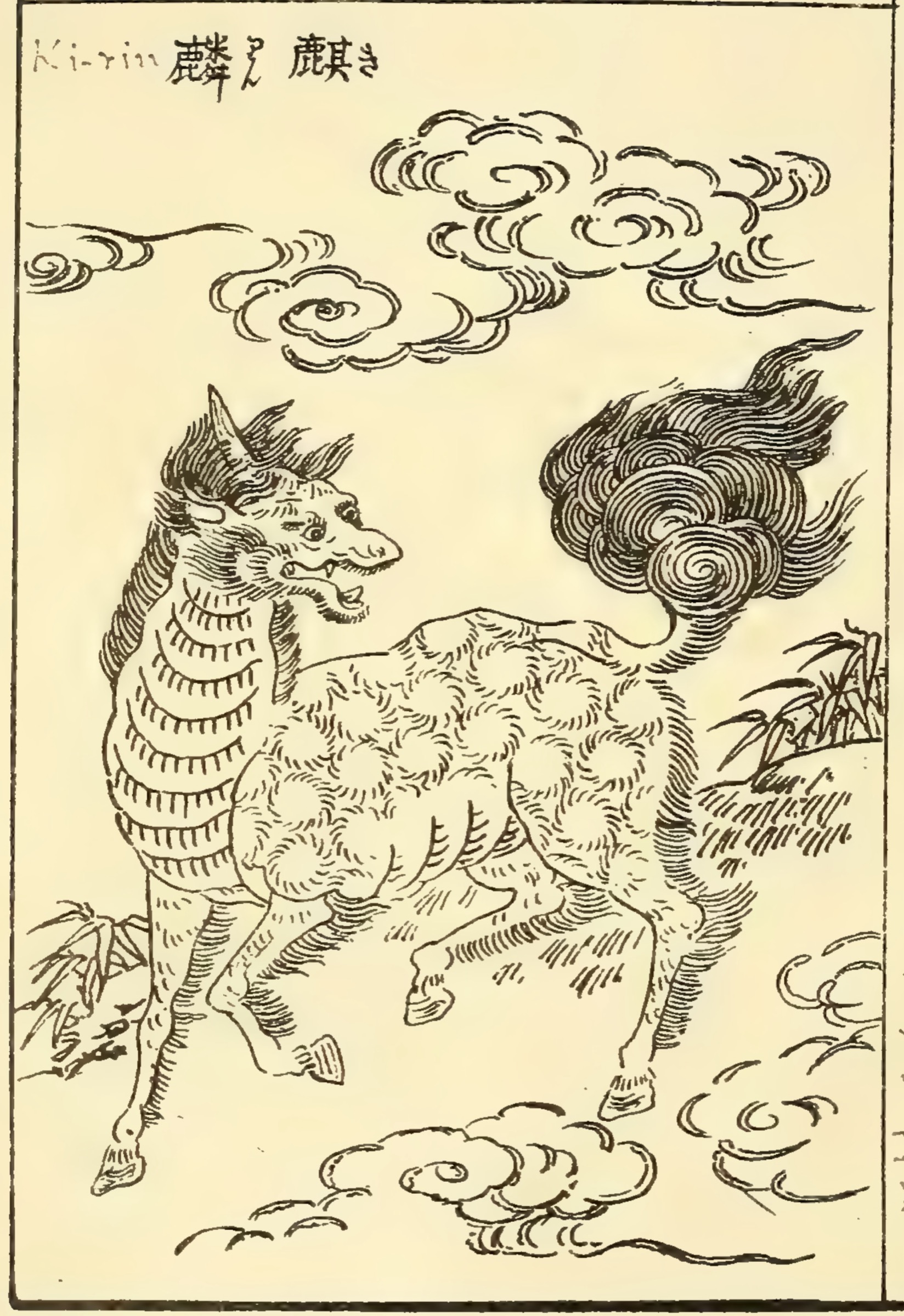
Kirin
kirin
The supreme auspicious beast of East Asian tradition — a chimeric creature with a dragon's scales and a deer's grace that heralds the reign of a virtuous ruler.
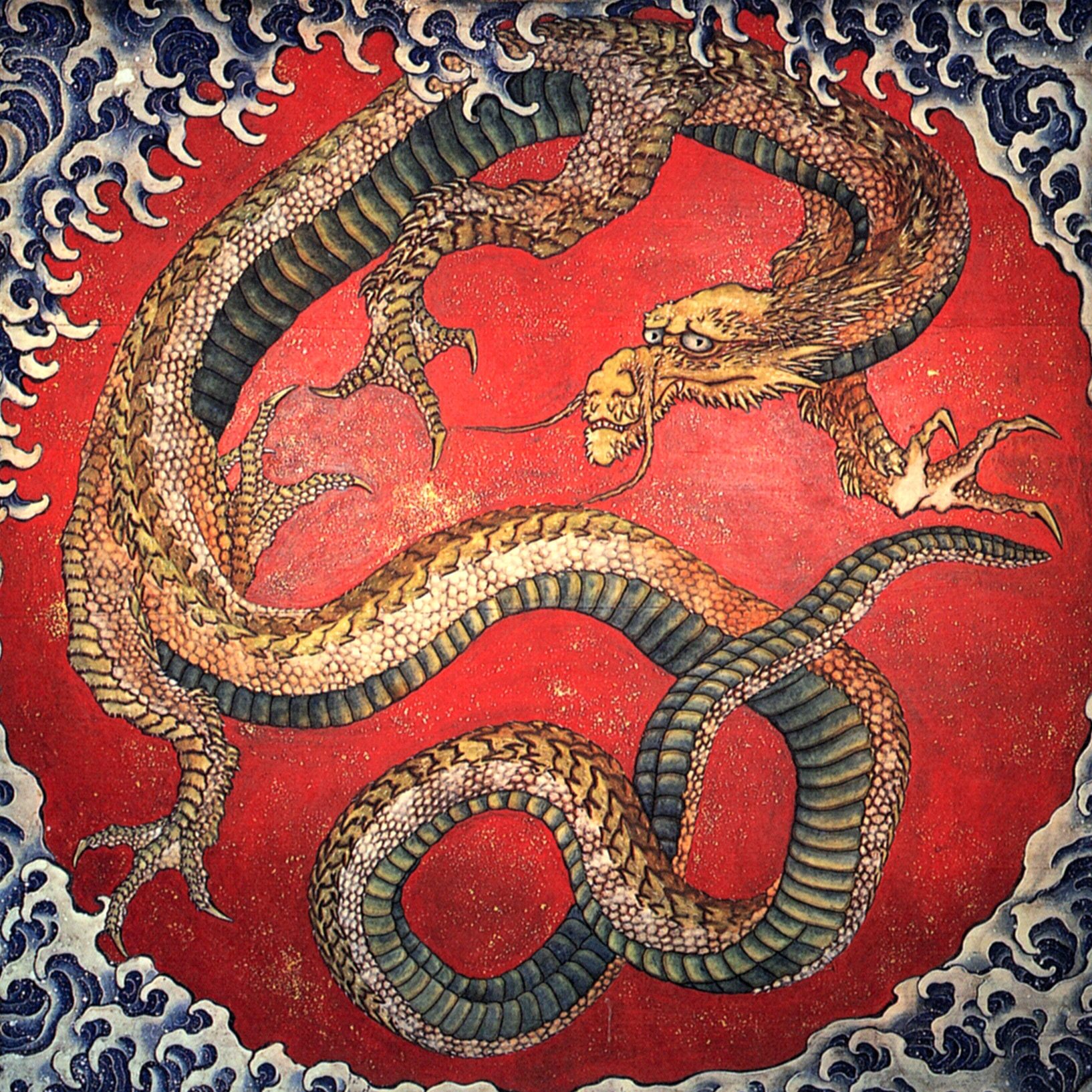
Ryū
ryu
The sacred water-dragon of Japan — a fusion of imported Chinese dragon lore and indigenous serpent deity worship that became the guardian of seas, rivers, and rain.