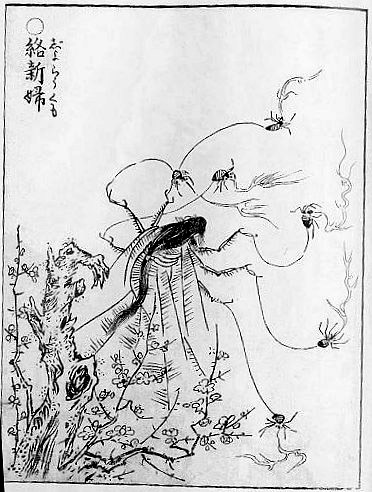
Jorō-gumo
jorougumo
Also known as: Spider Woman、Binding Bride
A spider become woman, luring men with beauty before binding them in silk.
- Era
- Edo Period
- Region
- Chubu
- Type
- Animal Yokai
Overview
The jorō-gumo (絡新婦, "entangling bride") is a spider that, after four centuries of life, gains the power to transform into a beautiful woman. It then uses this disguise to seduce men — often by playing shamisen music to draw them in — before binding them in silk and consuming them.
Name and Appearance
"Jorō-gumo" echoes the name of the real joro spider (Nephila clavata), Japan's large golden orb-weaver. In yokai form, Toriyama Sekien depicted her as half-woman, half-spider, her human upper body graceful and alluring, her eight legs spread beneath. She typically commands a network of smaller spider minions.
Shinano Province Legends
The richest jorō-gumo traditions cluster around Nagano Prefecture (old Shinano Province), particularly near the Ōtaki Falls at Kiso. The waterfall's mist and thunderous pool are her domain; fishermen who venture too close are said to disappear. In one famous tale, a samurai sees a spider drag a log into the pool and realizes the creature has the strength to kill him — he flees just in time.
The Shamisen Trap
A recurring motif: a strange woman appears in a deserted house or mountain road, playing shamisen. As the bewitched listener falls into a trance, smaller spiders begin to spin silk around his limbs. Only the alert or spiritually strong escape.
Legacy
Jorō-gumo appears in Edo-period ghost story anthologies, Kabuki, and — extensively — modern manga and video games, where the spider-woman archetype of dangerous beauty underlies countless characters.
Sources
- 『Gazu Hyakki Yagyō』 Toriyama Sekien (1776)
- 『Shokoku Hyaku Monogatari』 Unknown (1677)
Related Yokai
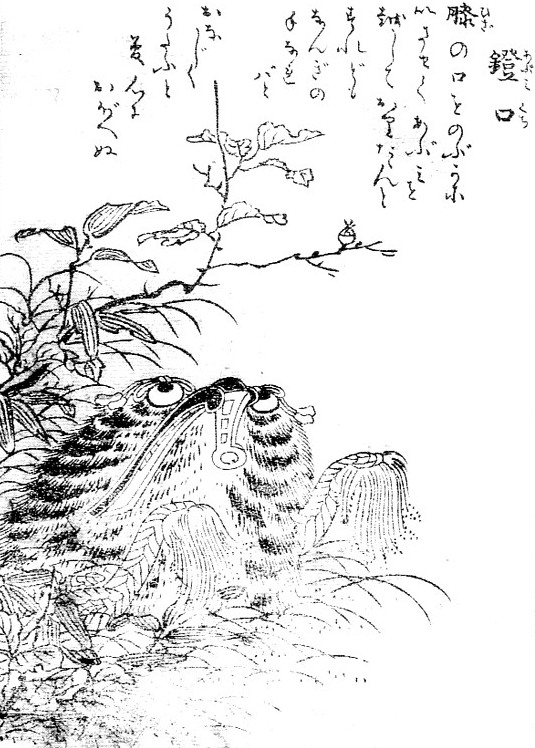
Abumi-guchi
abumi-guchi
A tsukumogami born from a horse's stirrup abandoned on a battlefield, still waiting for the master who never returned — grief and loyalty made monstrous.
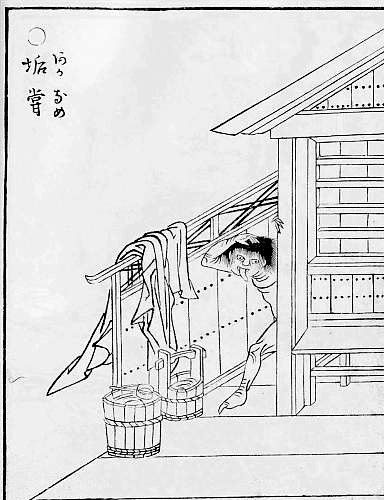
Aka-name
aka-name
A yokai that visits neglected bathrooms to lick up the accumulated grime and scum — harmless to people, but a vivid supernatural reminder to keep the bath clean.
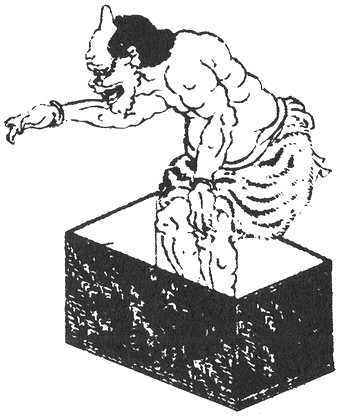
Amanojaku
amanojaku
A small, perverse demon that reads human hearts and does the opposite of what is desired. Famous as the villain of folk tales like Uriko-hime, and depicted in Buddhist sculpture as a creature trampled underfoot by guardian deities.