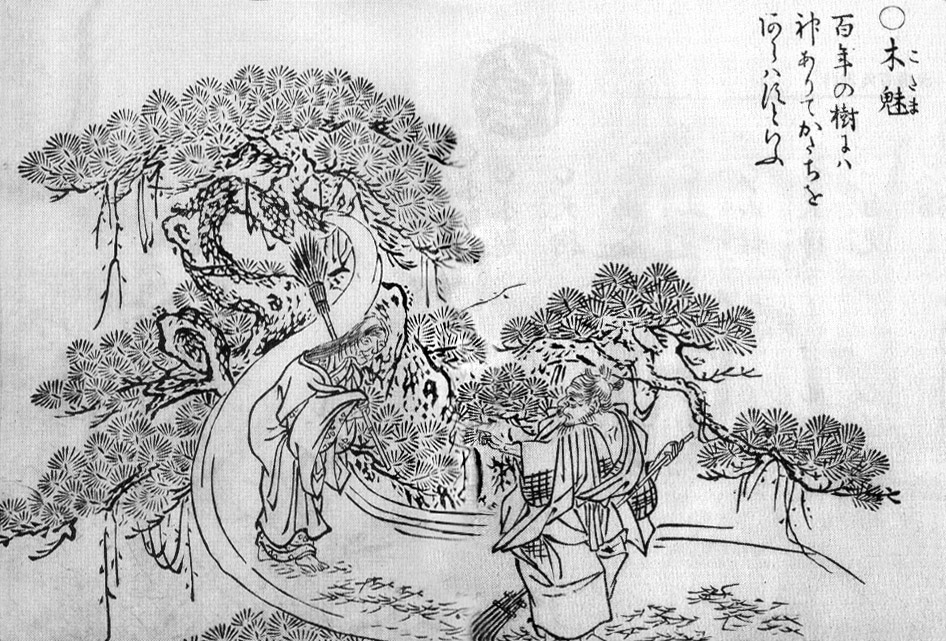
Kodama
kodama
Also known as: tree spirit、wood spirit
Spirits dwelling in ancient trees. The mountain echo is said to be their voice.
- Era
- Ancient
- Region
- Nationwide
- Type
- Mountain Yokai
Overview
The kodama is the spirit believed to inhabit ancient, long-lived trees. The word itself — written with the characters for "tree" (木) and "spirit" (霊) — describes its nature directly. In Japanese, the word kodama also means echo, and the two meanings are linked: the echo that bounces back from a forested mountain was long understood as the tree spirit's response to a human call.
Ancient Roots
Veneration of tree spirits reaches back to Japan's earliest recorded history. The Kojiki (712 CE), Japan's oldest chronicle, references divine power residing in trees, and the practice of marking sacred trees with shimenawa (twisted rice-straw rope) continues at shrines and temples throughout the country. Cutting a sacred tree was believed to bring misfortune; clearing a grove without ritual appeasement risked the wrath of its resident spirits.
The Living Forest
The kodama represents a worldview in which forests are not empty but inhabited — not backdrop but subject. Ancient trees that have stood for centuries accumulate spiritual power proportional to their age. This belief shaped Japan's relationship with its forests, protecting groves around shrines that might otherwise have been felled.
Princess Mononoke
Director Hayao Miyazaki brought the kodama to global audiences in Princess Mononoke (1997), depicting them as small, white, rattle-headed figures that fill the primeval forest. Miyazaki's version made the health of the forest visible: kodama vanish when the woods are damaged, and their absence signals environmental ruin. The film's enormous worldwide success permanently attached this imagery to the word kodama for an entire generation.
Sources
- 『Kojiki』 Ō no Yasumaro (712)
Related Yokai

Azuki-Babaa
azuki-babaa
A dangerous old-woman yokai who scrapes azuki beans in mountain streams. Related to the azuki-arai but more specifically formed and more actively threatening.
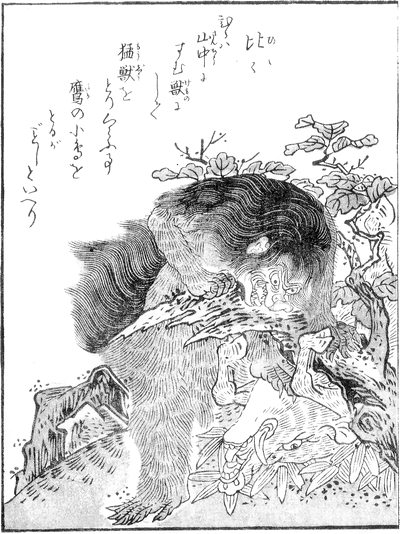
Hihi
hihi
A gigantic ape-like mountain demon known for abducting villagers. Despite its fearsome strength, it has a notorious weakness for sake, and many folk tales describe heroes using alcohol to defeat it.
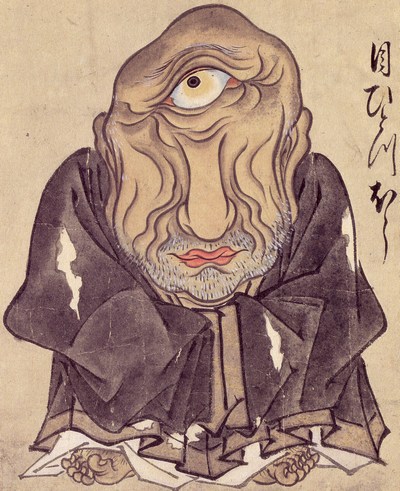
Hitotsume-nyudo
hitotsume-nyudo
A giant monk-shaped yokai with a single enormous eye in the center of its face, which appears on mountain roads and night paths. The hitotsume-nyudo combines the cyclops archetype with Japan's tradition of supernatural "nyudo" priest spirits.