
Konaki-jijī
konaki-jiji
Also known as: crying old man、baby-crying grandfather
A yokai from Shikoku that mimics the cry of an abandoned infant to lure travelers, then becomes crushingly heavy when lifted, trapping or killing those who try to help.
- Era
- Unknown
- Region
- Shikoku
- Type
- Mountain Yokai、Animal Yokai
Overview
The Konaki-jijī ("crying old man") is a yokai indigenous to the mountains of Shikoku, Japan's fourth main island, particularly the mountainous interior of Tokushima prefecture. Despite its name — "jijī" means old man or grandfather — the creature uses the cry of a newborn infant to lure its victims. When a traveler, moved by the sound and fearing an abandoned baby, stops and picks the creature up, the Konaki-jijī begins to grow heavier and heavier without limit. The traveler cannot put it down or escape from it, and is eventually crushed or left immobile in the wilderness to die of exposure.
Appearance
The Konaki-jijī is typically described as a small figure resembling an elderly man with an infant's face — wrinkled, white-haired, but somehow with the proportions and bawling expression of a newborn. This mismatch of age and helplessness is central to the creature's horror: it looks like something that needs rescuing, something ancient and vulnerable simultaneously. In Mizuki Shigeru's well-known illustrations, the Konaki-jijī appears as a small, round-faced old man with a cry that could fool any parent.
The Trap of Compassion
The Konaki-jijī's method of attack is deeply sophisticated from a psychological standpoint. It exploits one of the strongest human instincts — the response to an infant's cry — to immobilize its victims. The cry of a baby in distress is among the most difficult sounds for humans to ignore or walk away from. The yokai places its victims in a situation where every protective, caring impulse they have leads directly to harm. The traveler who picks it up is not weak or foolish; they are responding exactly as a compassionate person should. The Konaki-jijī punishes virtue.
Folklore Scholarship
Kunio Yanagita documented the Konaki-jijī as part of the rich tradition of Shikoku mountain folklore. He noted its structural similarity to other "weight yokai" found across Japan — creatures that become inexplicably heavy and immovable when touched or approached. Some scholars have interpreted such stories as cautionary tales about the dangers of mountain travel and the importance of staying on established paths rather than being drawn off course by unusual sounds.
Mizuki Shigeru's Influence
The Konaki-jijī is one of a cluster of yokai that Mizuki Shigeru (who reportedly heard of it in his childhood) brought to national fame through his manga work. Alongside the Sunakake-babā and the Nure-onna, it represents the Tokushima/Shikoku regional tradition. Today a large stone statue of the Konaki-jijī stands in Tokushima, where it has become a point of local pride.
Sources
- 『Yōkai Dangi』 Kunio Yanagita (1956)
- 『Yōkai Daizen』 Mizuki Shigeru (2004)
Related Yokai
Azuki-Babaa
azuki-babaa
A dangerous old-woman yokai who scrapes azuki beans in mountain streams. Related to the azuki-arai but more specifically formed and more actively threatening.
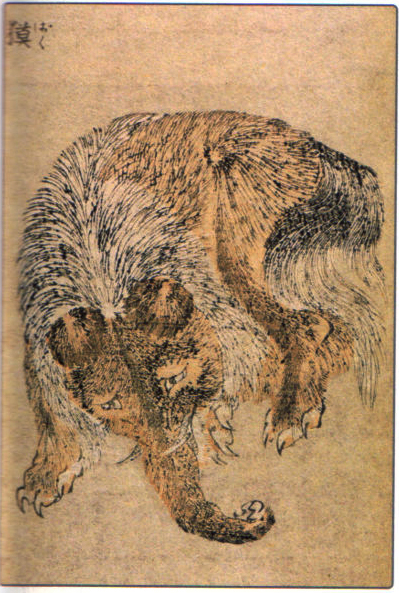
Baku
baku
A chimeric dream-eater invoked after nightmares to consume ill omens.
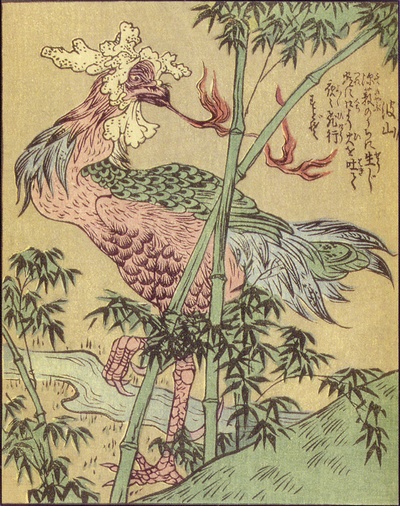
Basan
basan
A fire-breathing rooster yokai from the Kinki and Chūgoku regions of Japan. It appears at night with a distinctive flapping sound, breathes flames, and vanishes before anyone can get a clear look at it.