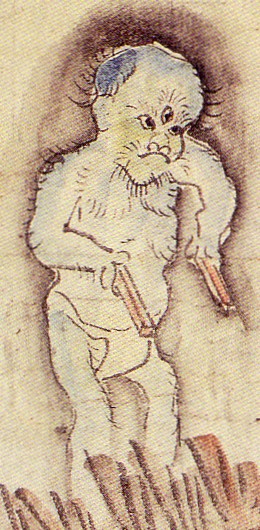
Mitsume-kozō
mitsume-kozo
Also known as: three-eyed monk boy、triple-eyed imp
A child-monk yokai from Edo with a third eye in the center of its forehead, whose supernatural gaze is said to bring misfortune or illness to those it fixes upon.
- Era
- Edo Period
- Region
- Kanto
- Type
- Road Yokai
Overview
The Mitsume-kozō ("three-eyed monk boy") is a yokai from the Kantō region, particularly associated with Edo (present-day Tokyo). Like its better-known cousin the Hitotsume-kozō (one-eyed monk boy), it takes the form of a child in Buddhist acolyte's robes — but where the Hitotsume-kozō is defined by having one eye, the Mitsume-kozō has three: the two natural eyes plus a third, central eye set into the middle of its forehead. This third eye is said to carry a curse or at minimum a supernatural charge; those who meet its gaze may suffer misfortune or illness in the days that follow.
Appearance
The Mitsume-kozō looks like a small child in monk's attire, unremarkable at first glance except for the third eye. This eye, centered in the forehead, is described as larger or more intensely focused than the other two. The creature is typically encountered on nighttime roads and alleys, standing still and staring. Its overall affect is not aggressive but deeply unsettling — a wrong number of eyes in a face that otherwise looks fully human.
The Significance of the Third Eye
In Buddhist and Hindu iconography, the third eye (associated with deities like Shiva and figures in Esoteric Buddhism) represents heightened wisdom, the capacity to see beyond the surface of phenomena, and sometimes the power of destruction. A yokai with a third eye thus carries an ambiguous charge: is its third eye a sign of transcendent awareness, or a weapon? In the case of the Mitsume-kozō, the emphasis is on the dangerous aspects — the stare of the third eye is a source of harm, not enlightenment. The creature has the symbol of divine perception but wields it as a curse.
Relationship to the Hitotsume-kozō
The Mitsume-kozō and Hitotsume-kozō are often discussed together as variants on a single motif: the yokai child monk with an abnormal number of eyes. Both appear on nighttime roads in Kantō, both take the form of children, and both are associated with a supernatural gaze. The key difference is numerical: one eye too few versus one eye too many. Japanese yokai taxonomy often works through these kinds of variations — similar creatures distinguished by a single changed parameter.
Edo Urban Folklore
Both the Mitsume-kozō and Hitotsume-kozō are products of Edo's rich urban folklore tradition. A city of over a million people by the 18th century, Edo generated an enormous volume of ghost stories, yokai sightings, and strange-tale literature. The monk-child yokai fit into a broader pattern of uncanny children and youths that pervades Edo-period horror — figures that look innocent but carry something fundamentally wrong.
Sources
- 『Konjaku Hyakki Shūi』 Toriyama Sekien (1781)
- 『Kankai Ibun』 Matsura Seizan (1821)
Related Yokai
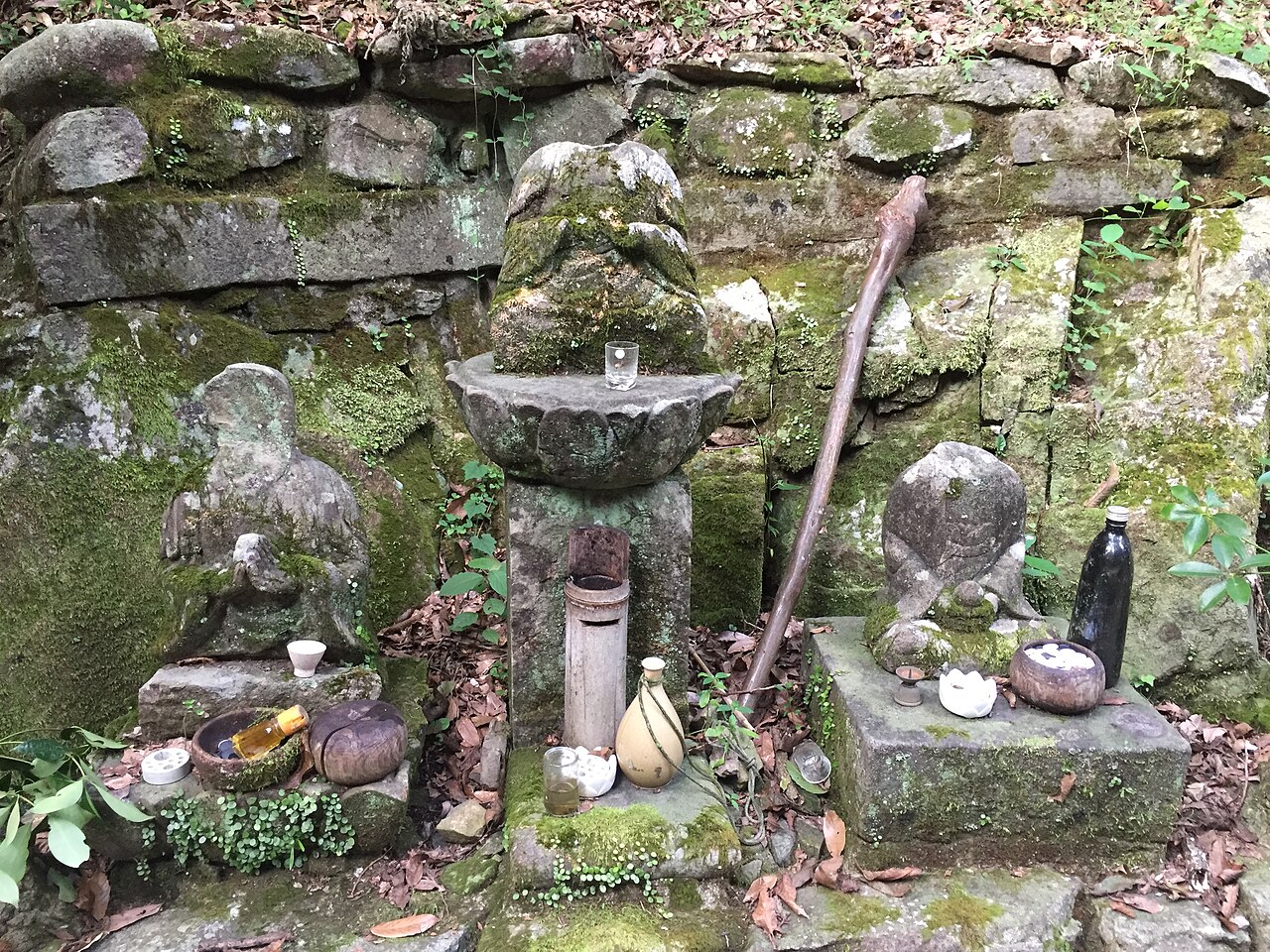
Abura-Sumashi
abura-sumashi
A straw-cloaked figure on a Kumamoto pass who declares his ancestor haunted it.
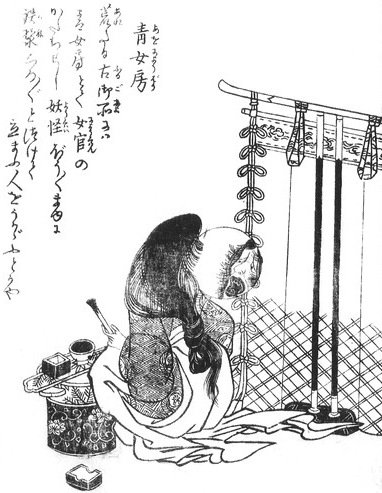
Aonyōbō
aonyobo
The spirit of a Heian court lady who haunts ruined aristocratic mansions, still applying her blackened teeth makeup centuries after her death.
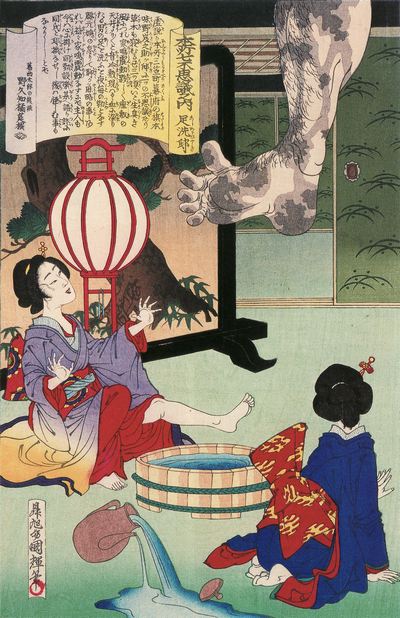
Ashiarai Yashiki
ashiarai-yashiki
A haunted Edo mansion terrorized by an enormous disembodied foot that crashes through the ceiling demanding to be washed. This famous Edo kaidan is one of Japan's most distinctively absurd ghost stories.