Mokumokuren
mokumokuren
Also known as: Many-Eyed Spirit
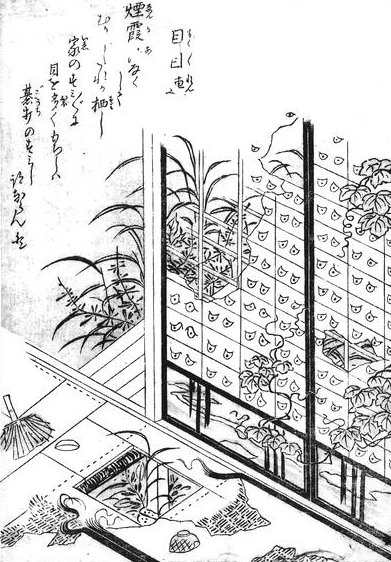
A yokai that manifests as dozens of disembodied eyes appearing in the torn holes of old shoji screens and decayed walls of abandoned houses.
- Era
- Edo Period
- Region
- Nationwide
- Type
- Tsukumogami、House Yokai
Overview
Mokumokuren is a yokai that haunts dilapidated houses, manifesting as a multitude of eyes staring out from the holes and tears in old shoji paper screens or crumbling walls. Made famous by Toriyama Sekien's illustration in Gazu Hyakki Yagyō, this spirit transforms the mundane sight of a worn-out sliding paper door into a deeply unsettling supernatural encounter. The name combines moku (eye) with a reduplication that implies plurality — literally, "eyes upon eyes."
Appearance
In Sekien's definitive depiction, a darkened room is shown with its shoji panels riddled with small tears, and from each opening stares a single eyeball. The eyes vary in size and position, some aligned in rows, others scattered irregularly. Together they create the overwhelming sensation of being watched by an invisible collective presence. According to some accounts, these eyes can move independently, tracking the movements of anyone who enters the room.
The Spirit of the House
Mokumokuren is classified as a tsukumogami, a spirit that inhabits long-used objects or structures. The decayed shoji screens of an abandoned house, saturated with years of human habitation, are thought to retain residual spiritual energy. Some interpretations suggest the eyes are manifestations of the accumulated griefs and unfulfilled wishes of people who once lived — and perhaps died — within the house. In Japanese folk belief, the eye carries powerful symbolic weight as a locus of spiritual force, perception, and divine oversight, making the sudden appearance of many eyes a sign of intense supernatural activity.
Horror and Legacy
The fear evoked by mokumokuren — of being watched by unseen eyes from within the walls — taps into a visceral, universal discomfort. This theme has proven enduringly powerful in Japanese horror, from Edo-period kaidan collections to modern manga and films. The image of eyes appearing where they should not be, staring from within the fabric of the home itself, captures the particular dread of a familiar space becoming alien. Sekien's illustration remains one of the most striking images in the entire canon of Japanese yokai art.
Sources
- 『Gazu Hyakki Yagyō』 Toriyama Sekien (1776)
Related Yokai
Abumi-guchi
abumi-guchi
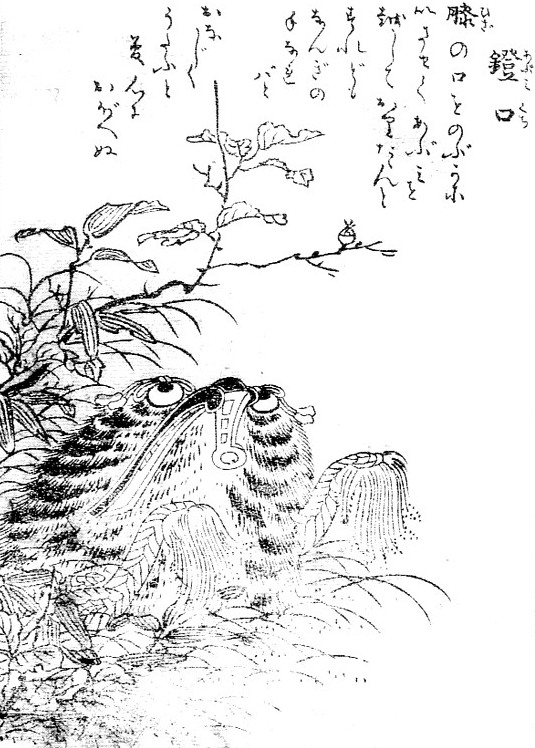
A tsukumogami born from a horse's stirrup abandoned on a battlefield, still waiting for the master who never returned — grief and loyalty made monstrous.
Aka-name
aka-name
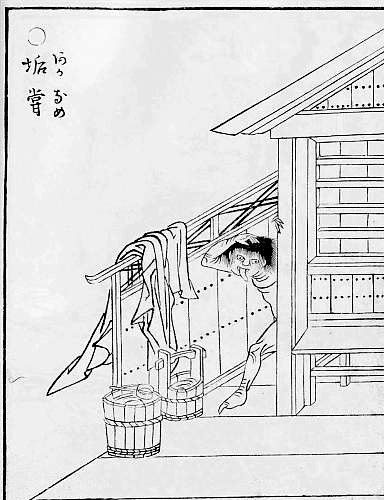
A yokai that visits neglected bathrooms to lick up the accumulated grime and scum — harmless to people, but a vivid supernatural reminder to keep the bath clean.
Amanojaku
amanojaku
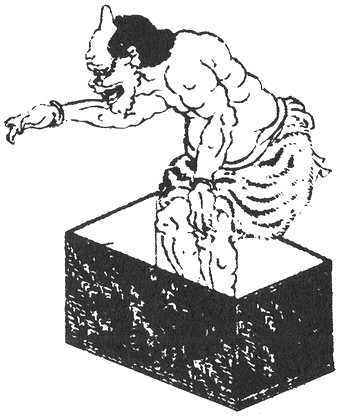
A small, perverse demon that reads human hearts and does the opposite of what is desired. Famous as the villain of folk tales like Uriko-hime, and depicted in Buddhist sculpture as a creature trampled underfoot by guardian deities.