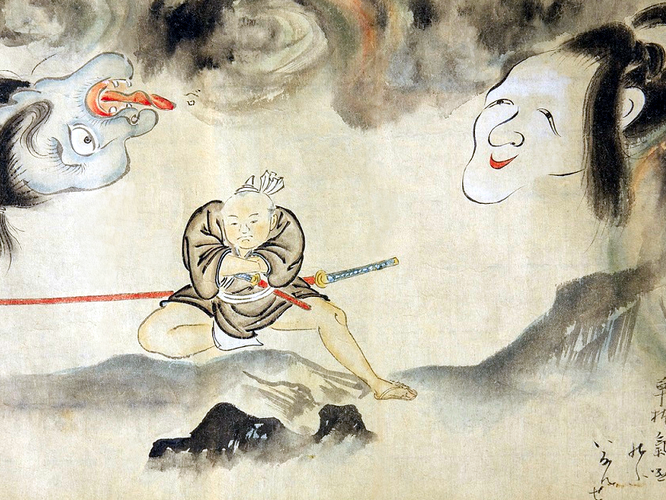
Nukekubi
nukekubi
Also known as: Rokurokubi variant、Detachable Head
A yokai whose head detaches from its body at night and flies freely to attack victims. Unlike the rokurokubi, the nukekubi's head separates completely from its neck.
- Era
- Heian Period
- Region
- Nationwide
- Type
- Undead
Overview
The nukekubi is a disturbing yokai that appears human during the day but undergoes a terrifying transformation at night: its head detaches completely from its body and flies through the darkness, trailing a ghostly light from the severed neck. The term "nukekubi" literally means "slipping neck" or "detachable neck," and it is closely related to — but distinct from — the rokurokubi, whose neck stretches rather than separates entirely. This yokai is often identified as a woman cursed by sin or spiritual transgression, condemned to an existence divided between human normalcy and nocturnal monstrosity.
Appearance and Behavior
During the day, a nukekubi is indistinguishable from an ordinary person. The telltale sign of a nukekubi's true nature is a faint red line encircling the neck, which may be difficult to see unless one looks carefully. At night, when the nukekubi is asleep or in a state of spiritual release, the head separates from the body and floats freely through the air. The flying head is said to emit a hideous screeching sound and to attack humans by biting them. The headless body left behind remains eerily still. If the body is moved while the head is away, the head cannot reattach and the nukekubi will die in agony.
Legends and Origins
Accounts of the nukekubi appear in Konjaku Monogatarishu, the great collection of tales compiled in the late Heian period, where detachable-head demons are mentioned among supernatural threats encountered by travelers. The phenomenon may be related to Chinese accounts of flying-head demons that appear in Tang dynasty texts, suggesting a cultural transmission along Buddhist or trade routes.
The connection to spiritual punishment is central to many nukekubi legends. The afflicted person has typically committed a serious sin in this life or a past life — betrayal, murder, or violation of religious vows — and the head's nightly escape represents the soul's inability to remain contained within the human body. In some versions, the nukekubi is entirely unaware of its own nature and wakes each morning with no memory of the night's activities.
Cultural Significance
The nukekubi's unsettling premise — that a perfectly normal person might secretly be a monster — speaks to deep anxieties about hidden identity and the unreliability of appearances. This theme resonates in horror fiction across cultures. In Japan, the nukekubi has been depicted in numerous illustrated monster books and remained a staple of ghost story collections throughout the Edo period. In modern media, it appears in anime, manga, and video games as one of the more dramatic and visually striking yokai types.
Sources
- 『Konjaku Monogatarishu』 Unknown (1120)
- 『Gazu Hyakki Yagyo』 Toriyama Sekien (1776)
Related Yokai
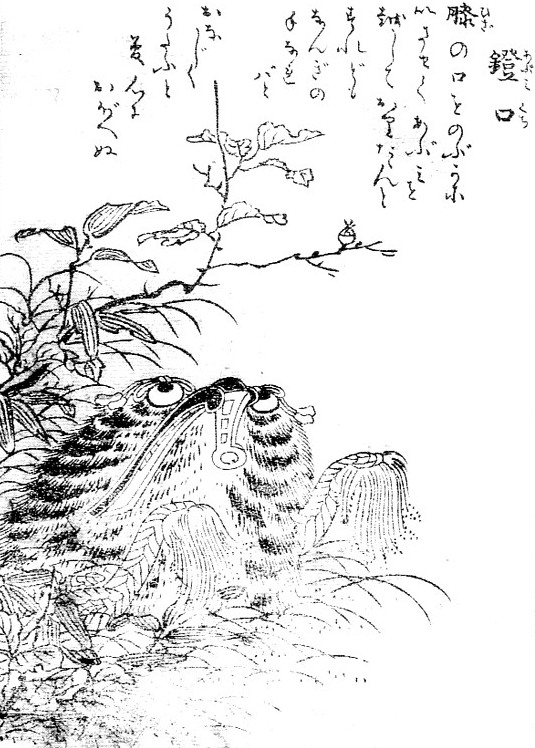
Abumi-guchi
abumi-guchi
A tsukumogami born from a horse's stirrup abandoned on a battlefield, still waiting for the master who never returned — grief and loyalty made monstrous.
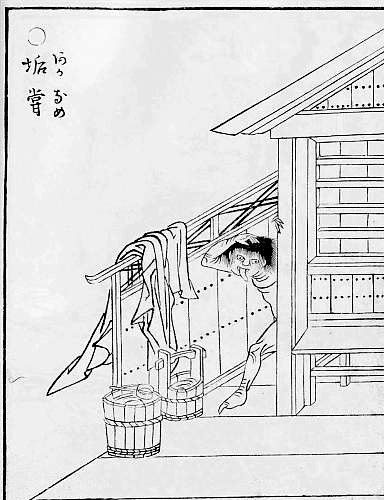
Aka-name
aka-name
A yokai that visits neglected bathrooms to lick up the accumulated grime and scum — harmless to people, but a vivid supernatural reminder to keep the bath clean.
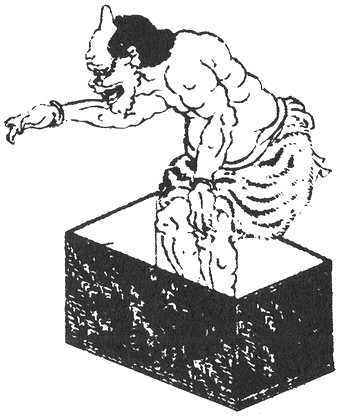
Amanojaku
amanojaku
A small, perverse demon that reads human hearts and does the opposite of what is desired. Famous as the villain of folk tales like Uriko-hime, and depicted in Buddhist sculpture as a creature trampled underfoot by guardian deities.